Article: What Is Nitrided Carbon Steel — and Why Does It Change Everything?
What Is Nitrided Carbon Steel — and Why Does It Change Everything?
Most people who switch to carbon steel do it for the performance. The sear, the heat response, the weight — all better than what they were using before. What they often don't realize is that not all carbon steel is the same, and the difference between a standard carbon steel pan and a nitrided one is significant enough to matter.
What Nitriding Actually Is
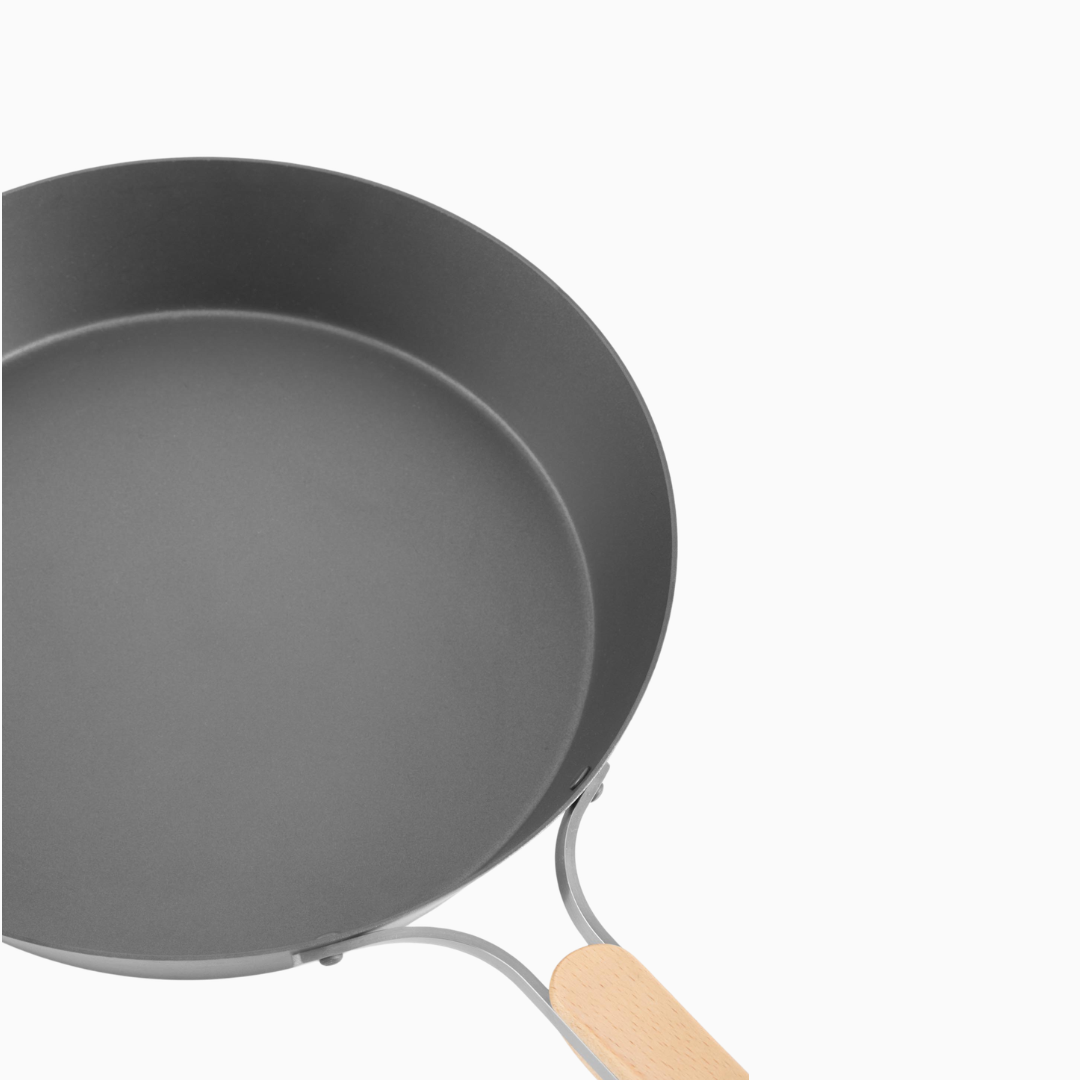
Nitriding is a heat treatment process in which steel is exposed to nitrogen at high temperature. The nitrogen atoms diffuse into the surface of the metal, creating an ultra-hard outer layer — harder than the steel beneath it — without altering the structure underneath. It's not a coating. There's nothing to flake off, chip away, or degrade over time. The surface is the pan.
This process has been used industrially for decades to harden mechanical components. Its application to cookware is more recent, and it produces a surface that behaves meaningfully differently from raw carbon steel in several ways that matter in a kitchen.
What It Does for Your Pan
A nitrided surface is significantly more corrosion-resistant than standard carbon steel. Where an untreated pan can develop surface rust within hours of being left wet, a nitrided surface is far more forgiving. This doesn't mean you should soak it, but the margin for everyday error is meaningfully wider.
The surface is also harder, more resistant to scratching and abrasion from utensils and general use. And because the treatment is not a layer applied on top of the metal, there is nothing to wear away. No flaking. No peeling. No moment at which you wonder whether what you're eating used to be your pan.
For seasoning, the nitrided surface provides better adhesion from the start. At a microscopic level, the texture is more receptive to polymerized oils, which means the natural non-stick patina builds faster and more evenly than it does on raw steel.
Why It Matters in Practice
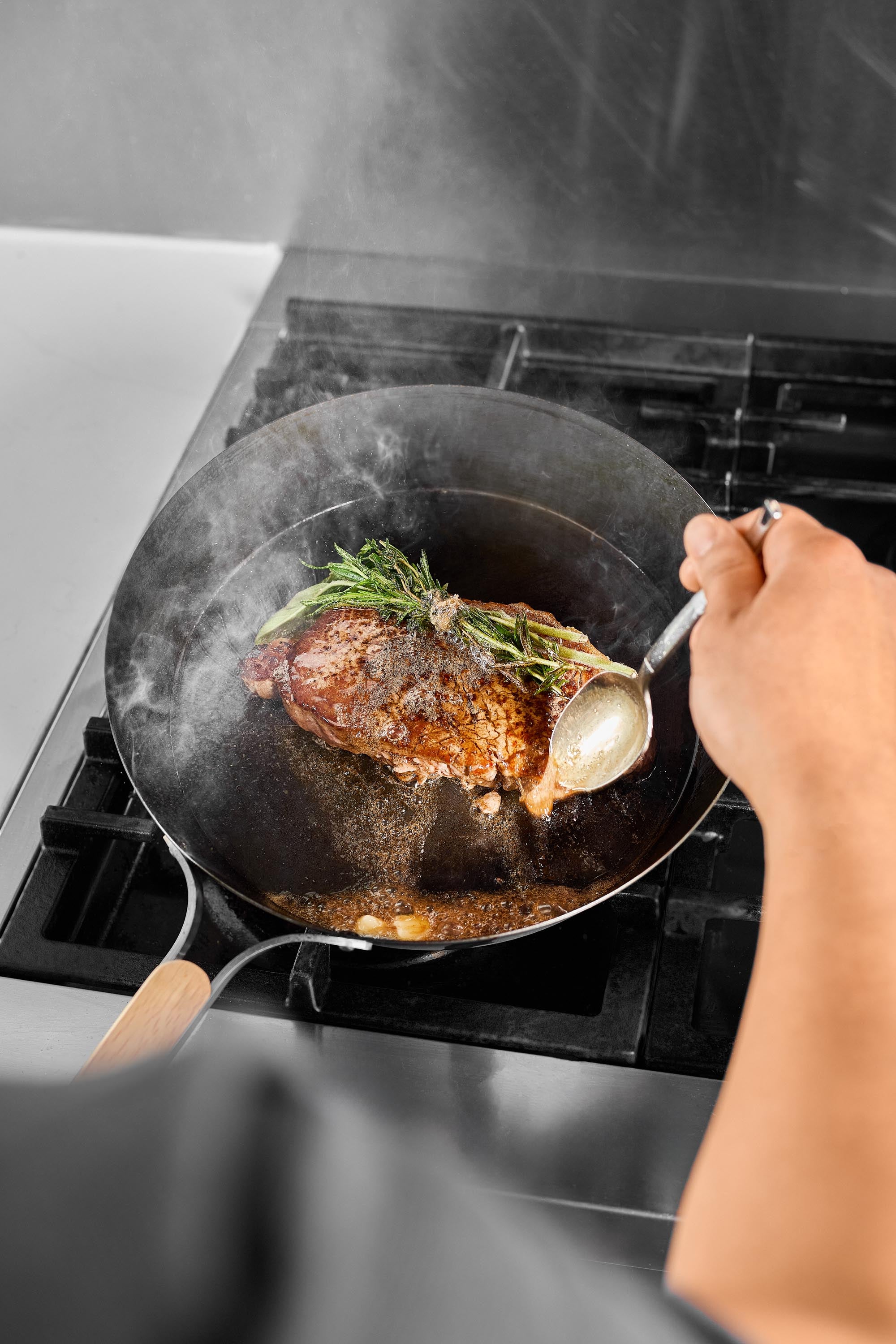
In practical terms, a nitrided carbon steel pan behaves like a more forgiving, more durable version of standard carbon steel. You get the same heat responsiveness, the same ability to handle very high temperatures, the same ease of moving from stovetop to oven — but with a surface that's harder to damage and easier to maintain.
For someone new to carbon steel, the nitrided surface reduces the learning curve considerably. For experienced cooks, it removes a few of the friction points that have always made carbon steel slightly demanding as an everyday pan.
The Bottom Line
Carbon steel is already one of the best materials for a frying pan. Nitrided carbon steel is that, with the rough edges smoothed off. Harder, more corrosion-resistant, and faster to season — it's the version of carbon steel that makes sense as a daily driver, not just for professionals with the time and experience to coax a standard pan into shape.
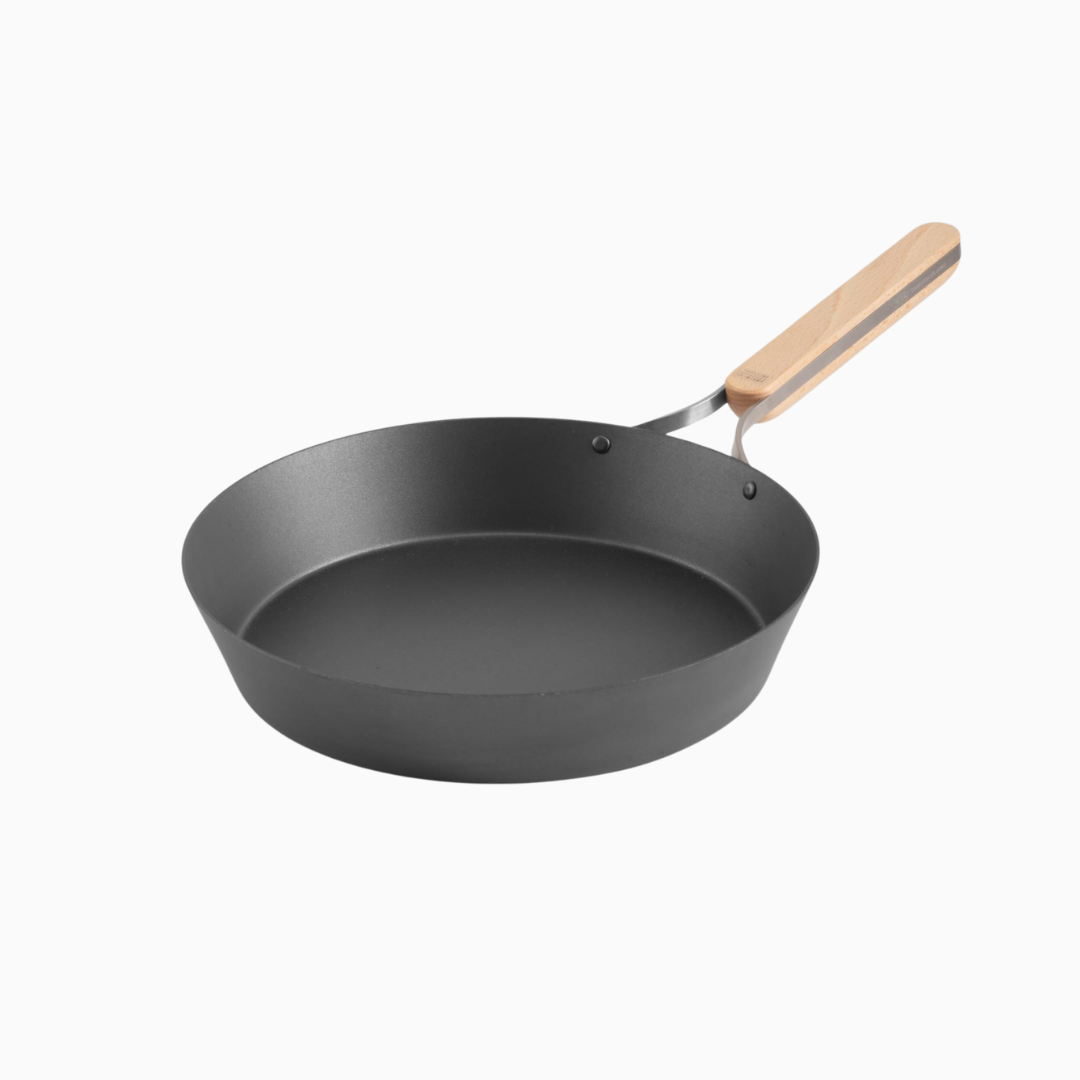
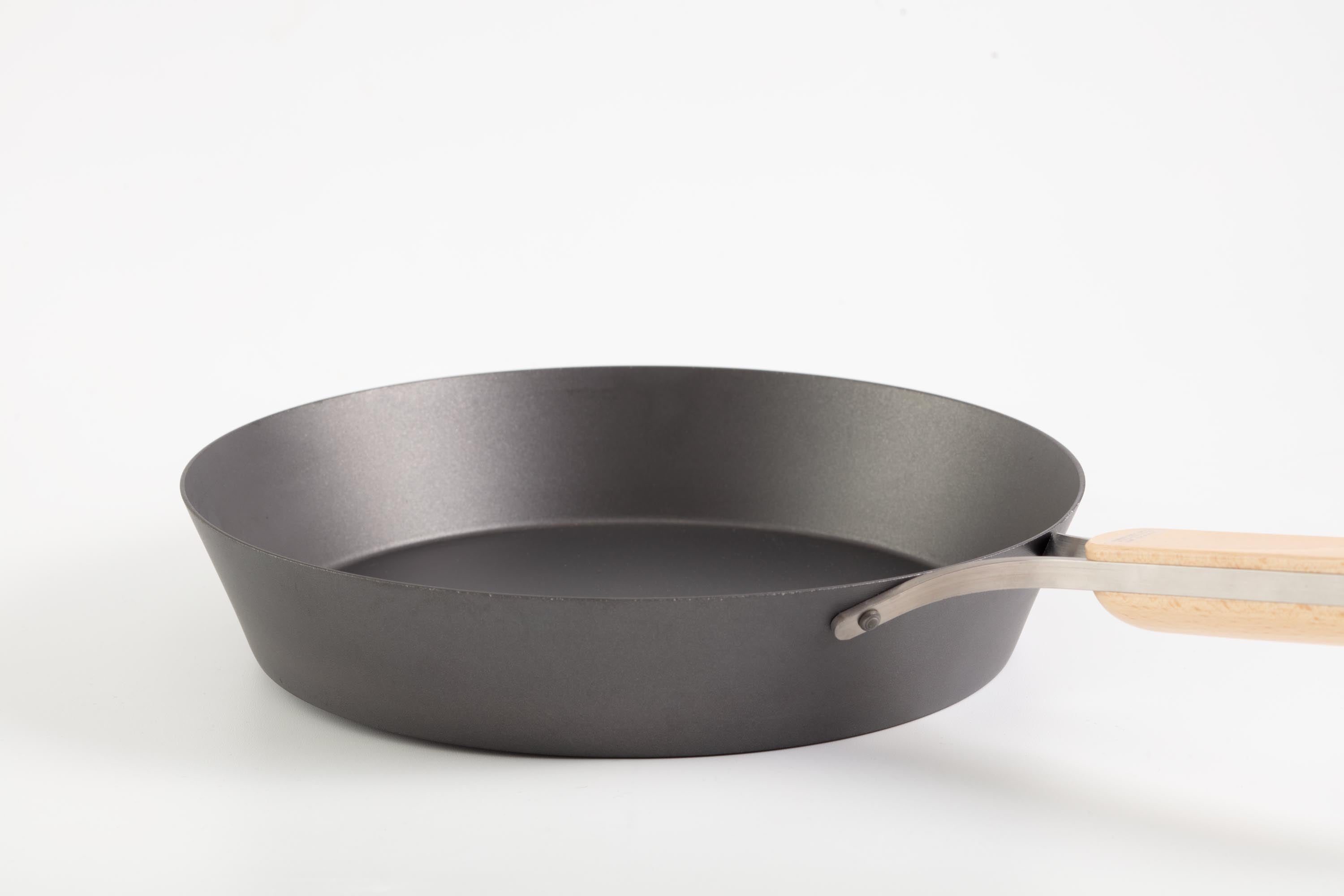
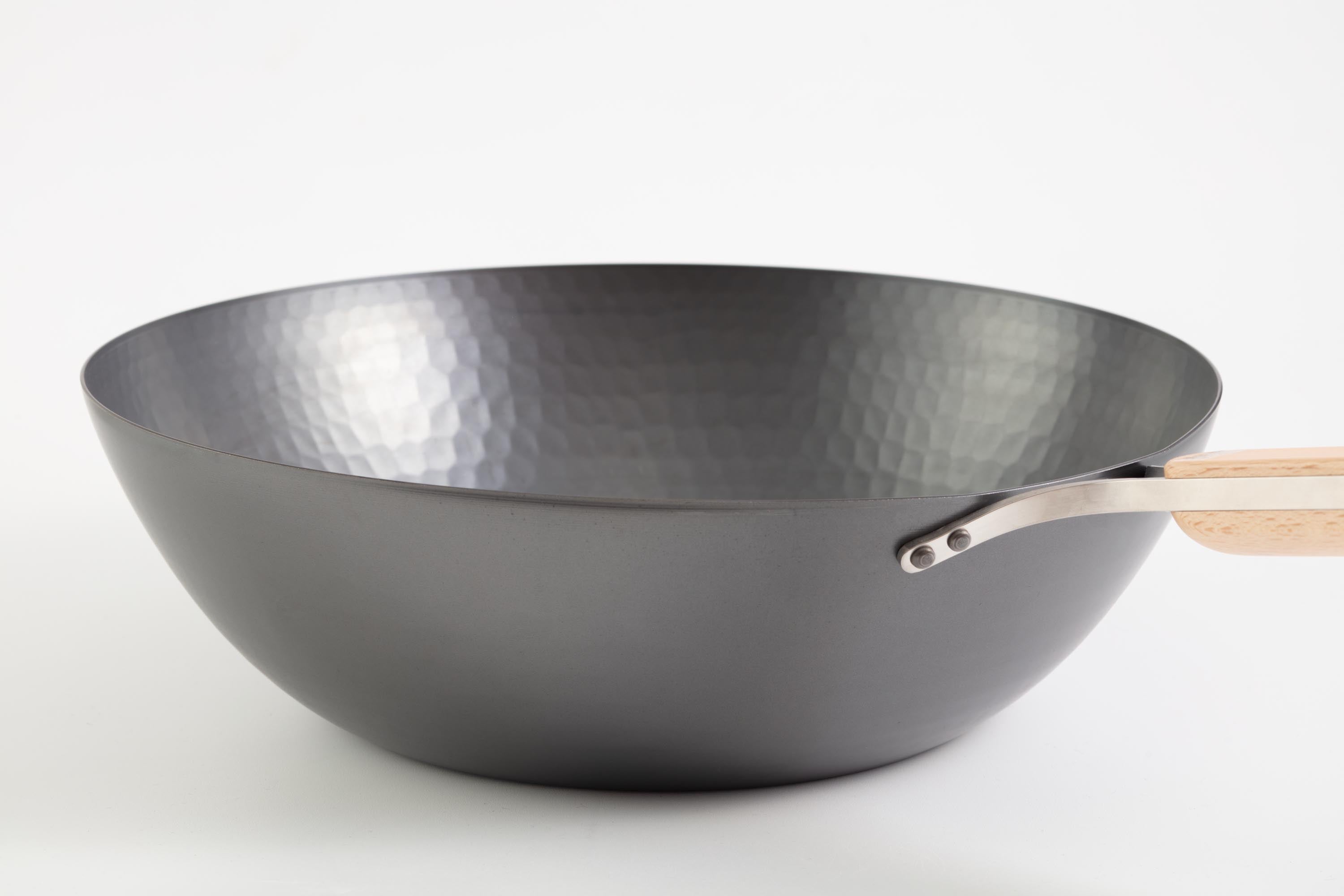
The Julien Enzo Series is made from nitrided carbon steel, crafted in the Tsubame-Sanjo region of Japan — a place with more than four centuries of metalworking tradition. It's built to get better with every cook, and to last well beyond a single lifetime.
Explore the Enzo Series and find the right pan for your kitchen.