The short answer
- A carbon steel pan vs cast iron comes down to feel: carbon steel is lighter and reacts quickly to heat, cast iron is heavier and holds heat longer.
- Both are made of iron, both build a natural non-stick surface through seasoning, and both are coating-free. No PTFE, no PFAS.
- Choose carbon steel for everyday cooking and control. Choose cast iron for searing, baking, and long, steady heat.
- Neither is fussy. Both want to be dried and lightly oiled, and both can last for decades.
Carbon steel and cast iron are cousins. They come from the same family of iron cookware, they both season into a slick, natural surface, and they both skip the synthetic coatings entirely. That is why people who cook on one usually end up curious about the other.
But they do not behave the same way in the kitchen. The differences are real, and once you feel them, choosing gets easier.
What is the actual difference between carbon steel and cast iron?
Both are iron with a little carbon mixed in. The recipe and the making are what set them apart.
Cast iron has more carbon and is poured into molds, so it comes out thick, textured, and heavy. Carbon steel has less carbon and is rolled into sheets, so it is thinner, smoother, and lighter. Same material, different build. That single fact drives almost everything else on this list.
Which one is lighter and easier to handle?
Carbon steel wins here, plainly. A carbon steel pan is noticeably lighter than a cast iron piece of the same size, and the difference shows the moment you lift it. You can swirl it, tilt it, and move it from burner to burner without bracing yourself.
Cast iron asks more of your wrist. That weight is not a flaw so much as a trade, and we will get to what it buys you. But if you cook every day, the lighter option matters more than any spec sheet.
Which heats faster and responds better?
Because carbon steel is thinner, it heats up quickly and, just as importantly, it cools down quickly when you turn the burner low. When you need the pan to listen to you, carbon steel listens. That responsiveness is why it is the standard in a lot of professional kitchens, where a cook is adjusting heat constantly.
Cast iron is the opposite kind of tool. It takes longer to come up to temperature, and it is slow to let go of heat once it gets there. That means it can run hot in spots while it is still warming up, so it rewards a little patience. Preheat it properly and it becomes steady in a way carbon steel cannot match.
Does one hold heat better than the other?
Yes, and this is cast iron's real advantage. All that mass acts like a battery. When you lay a cold steak or a crowd of vegetables into a hot cast iron pan, the temperature barely dips, so the sear keeps going. It is forgiving in exactly the moments a thin pan is not.
Carbon steel gives up a little heat when food hits it, then recovers fast. For most cooking that recovery is quick enough that you never notice. For a heavy, edge-to-edge sear, the extra thermal mass of cast iron is genuinely nice to have.
Do both need seasoning?
They do, and it works the same way for both. Seasoning is just oil that has been heated until it polymerizes into a hard, slick layer bonded to the metal. That layer is what makes bare iron cook like a non-stick pan, and it gets better every time you cook.
The seasoning is not a coating in the manufactured sense. It is oil and heat, nothing more, which is a big part of why so many cooks trust this cookware. If you want the fuller picture on materials and safety, we wrote a separate piece on whether carbon steel cookware is safe.
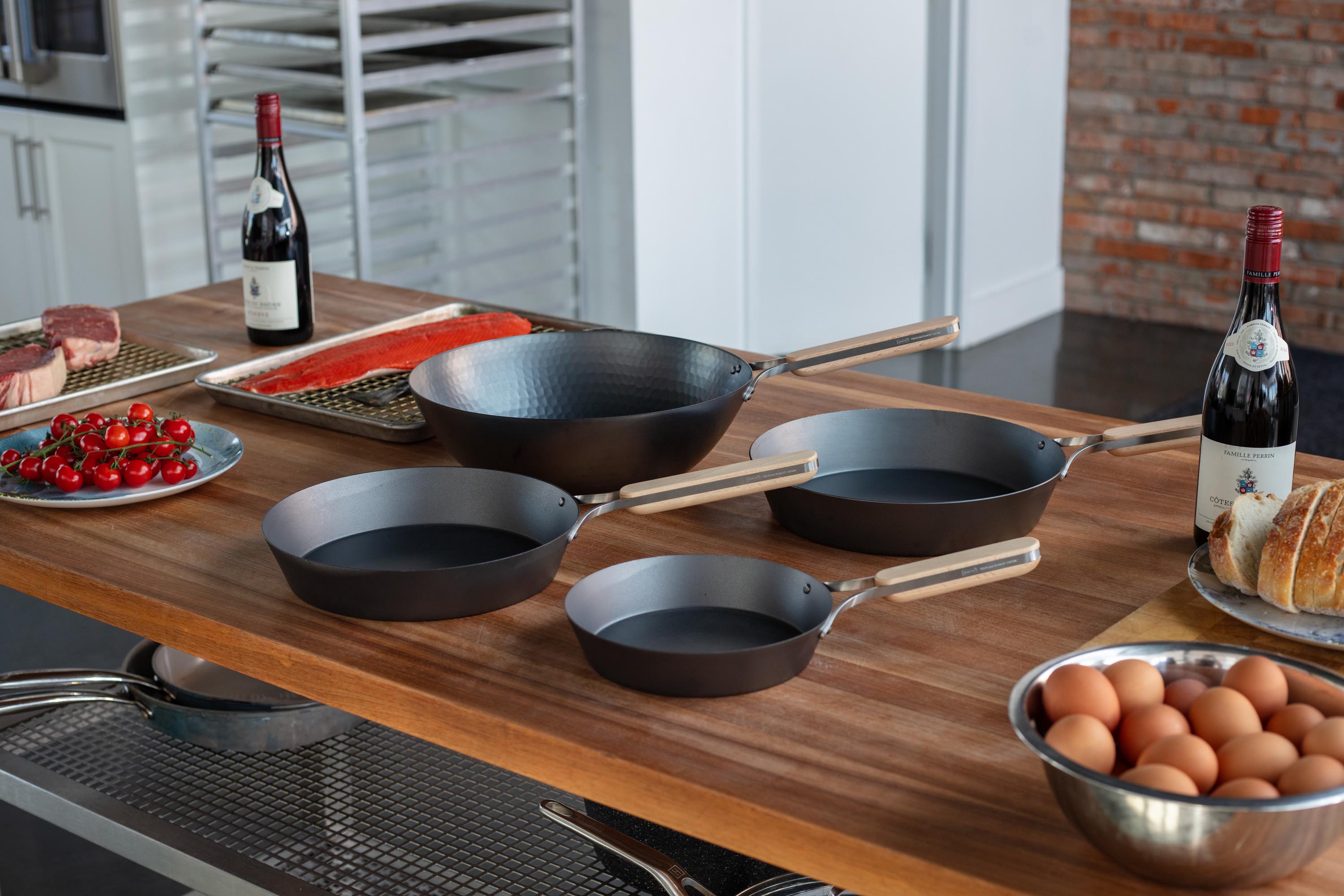
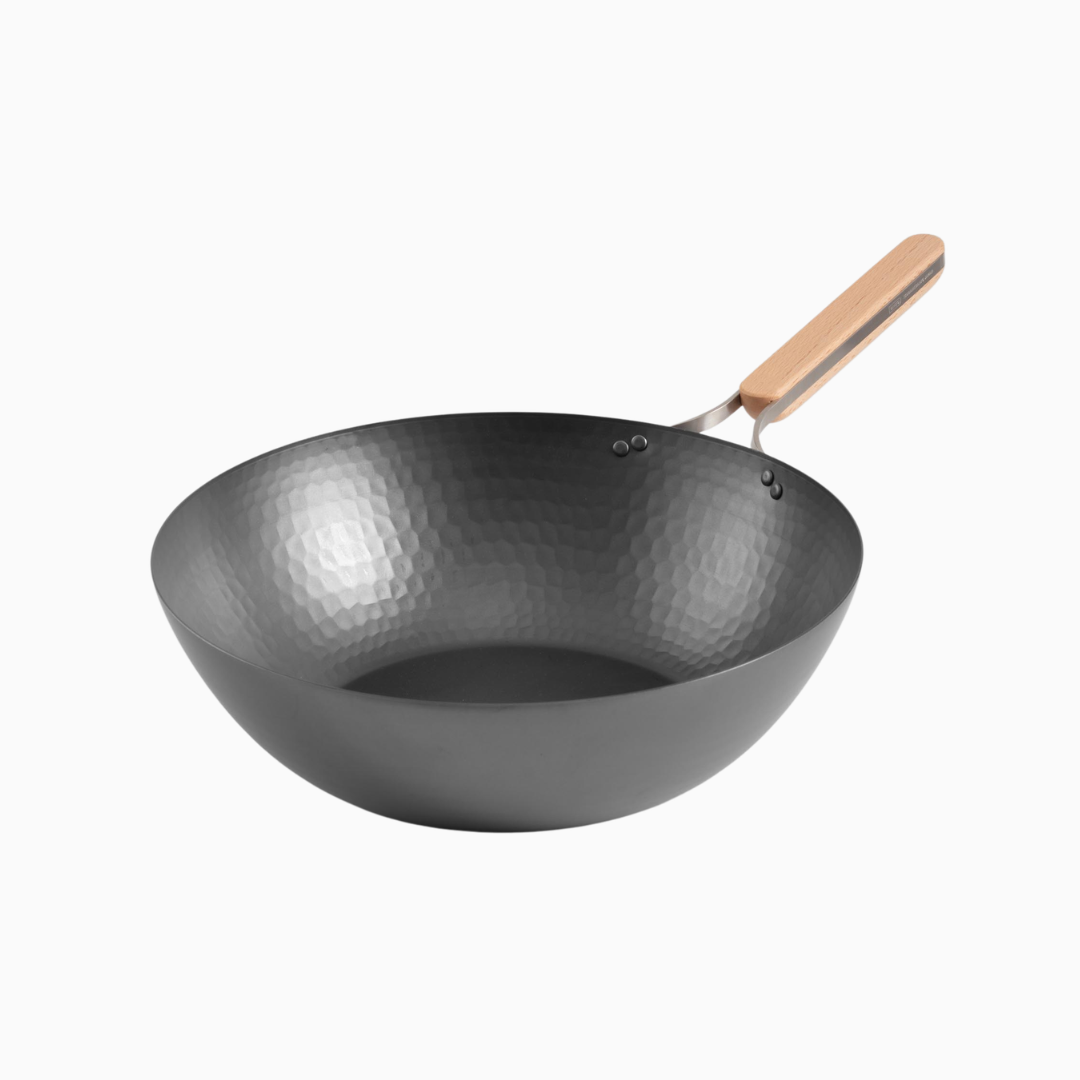
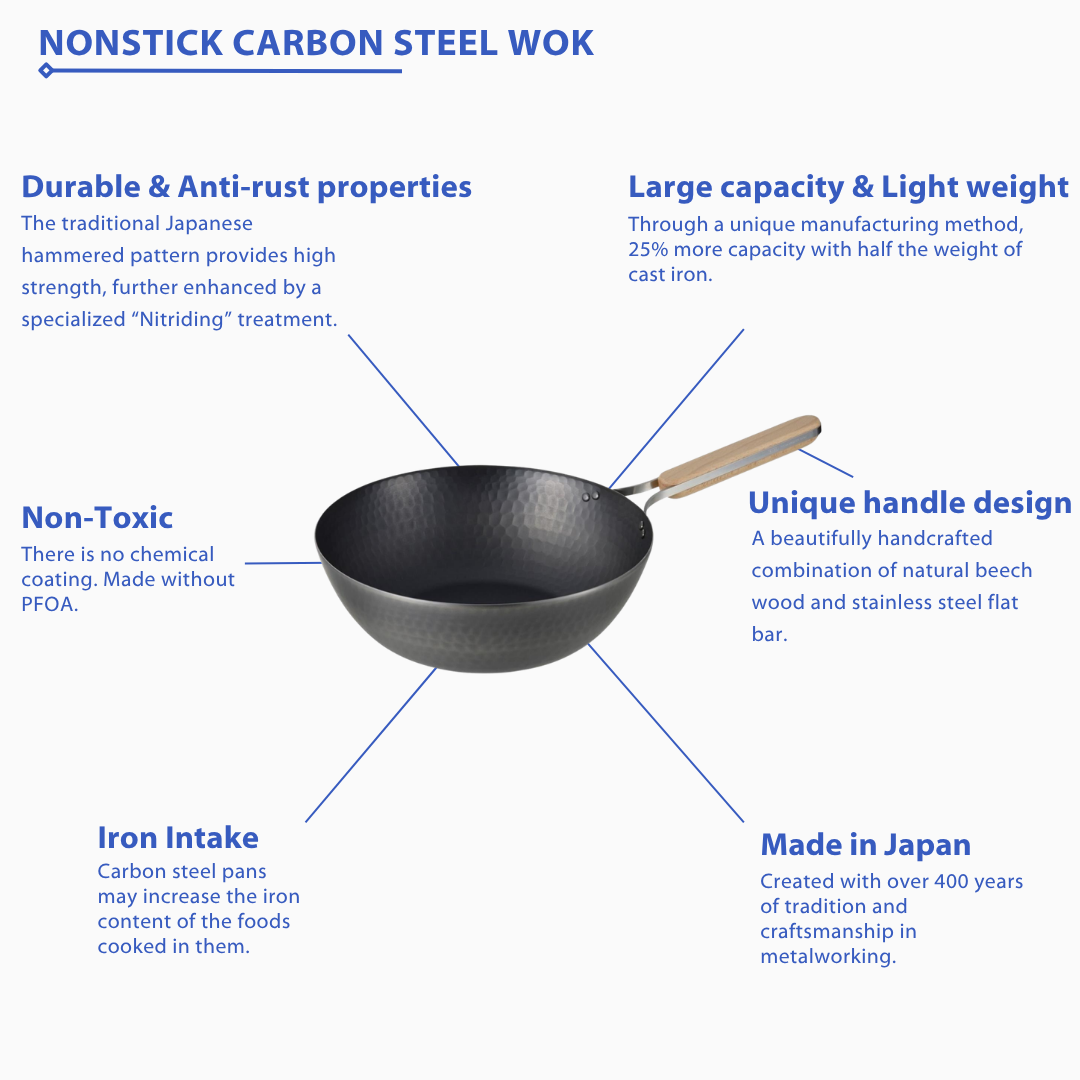
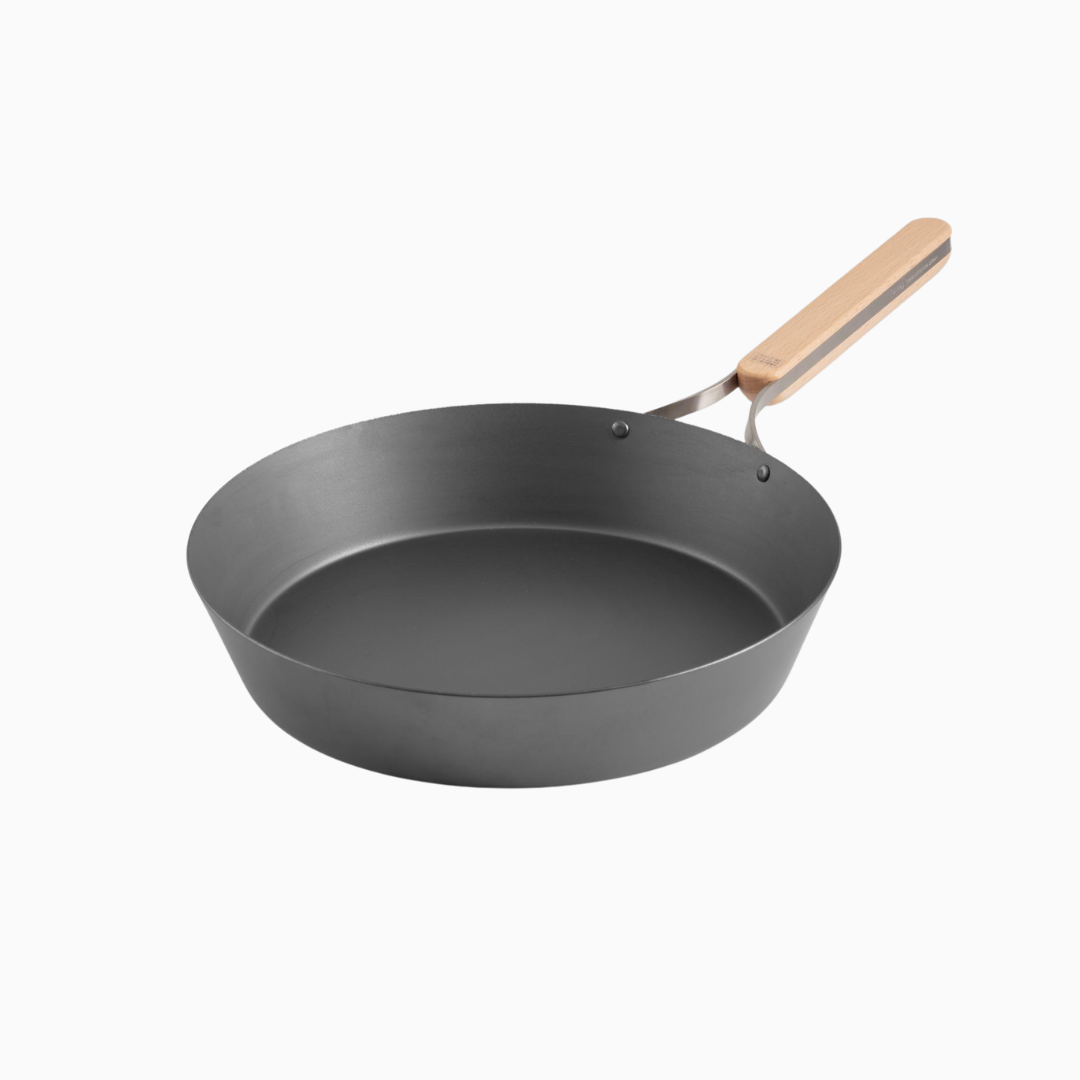
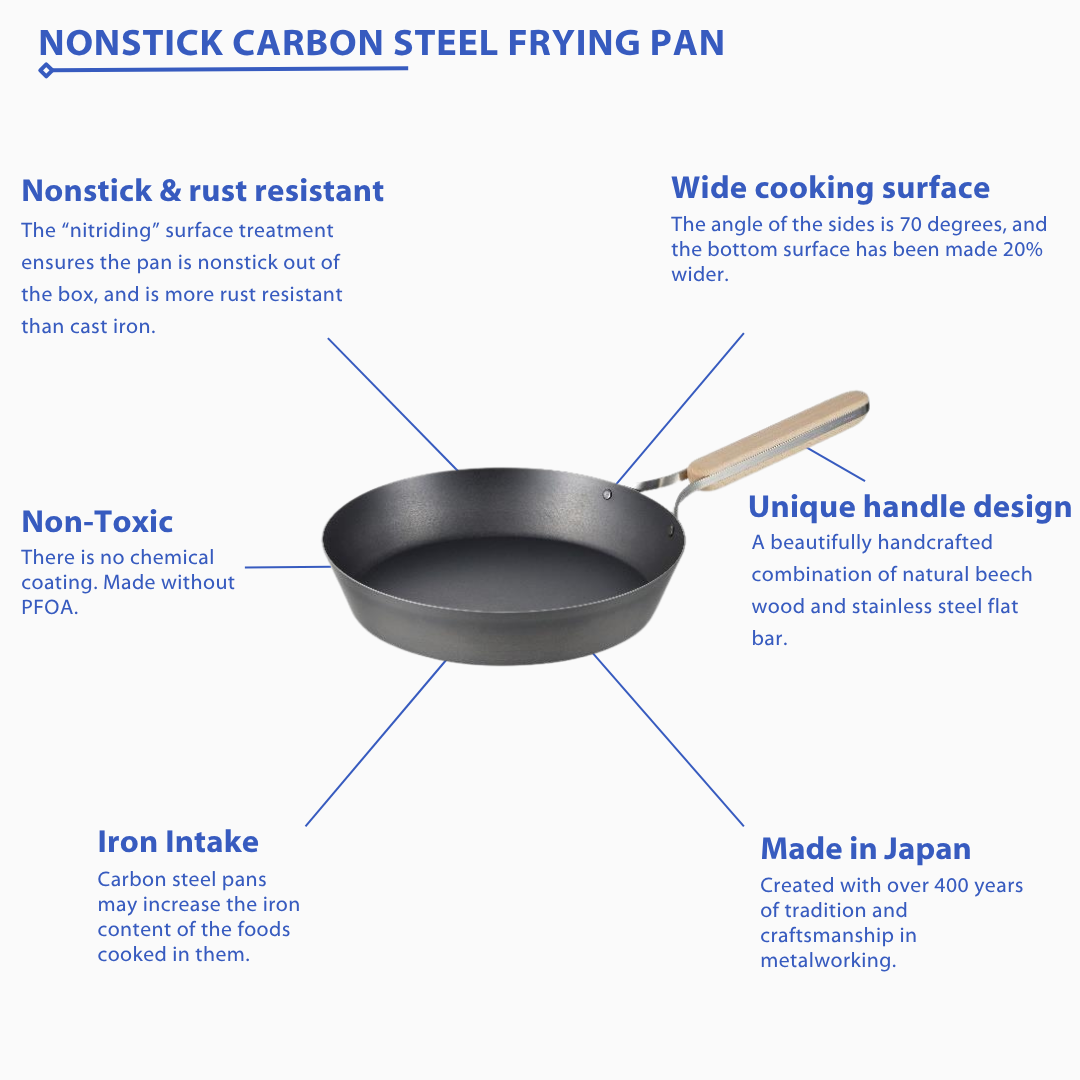
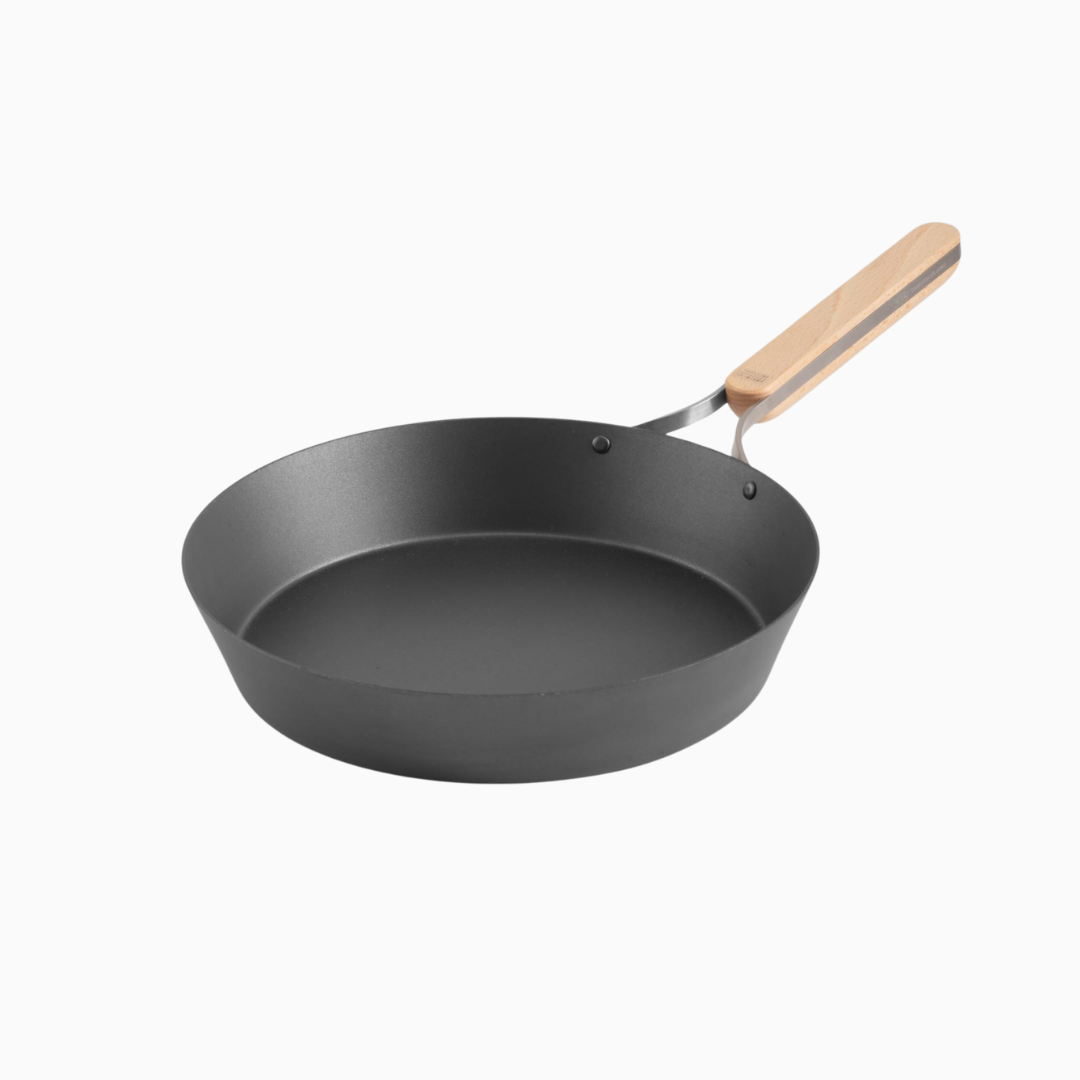
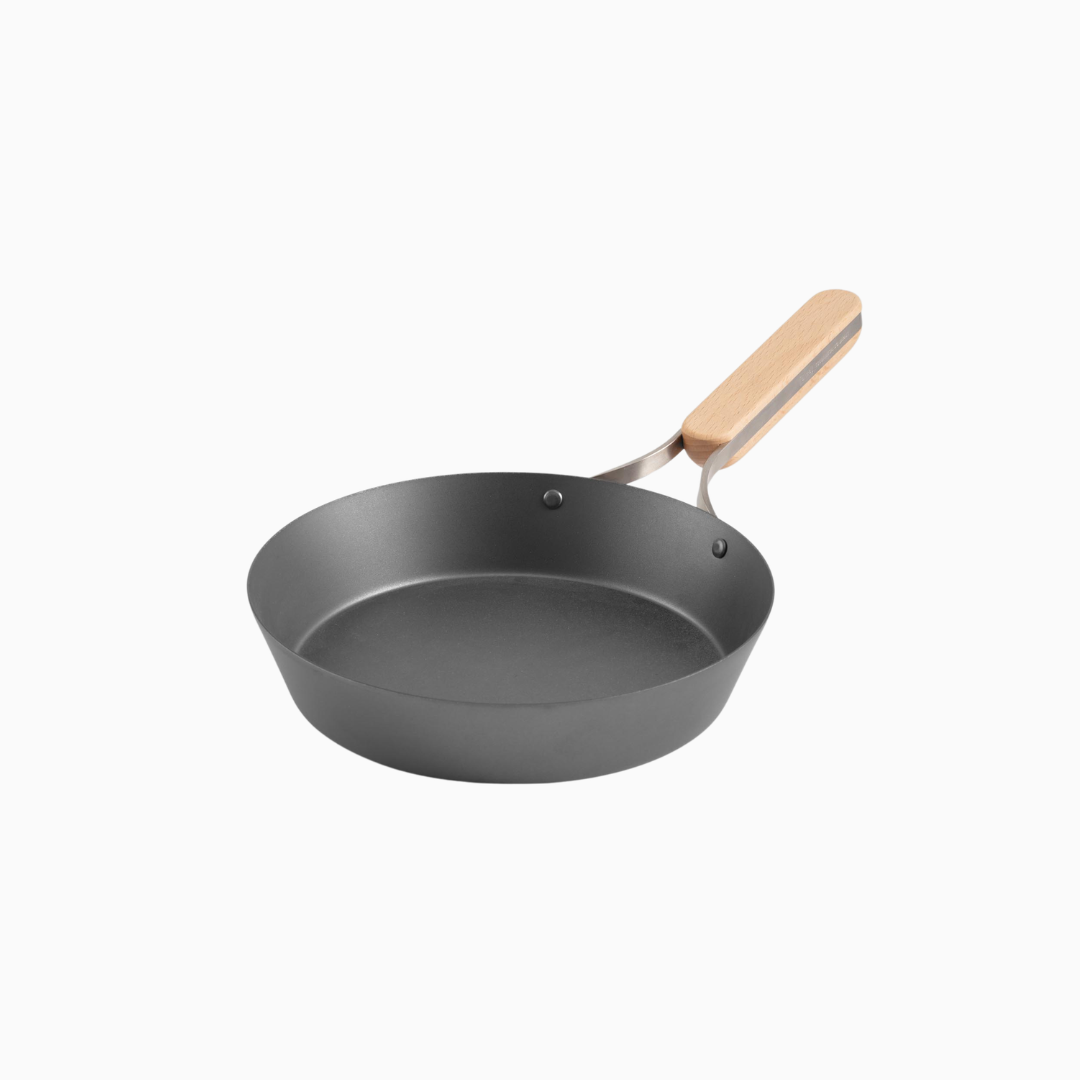
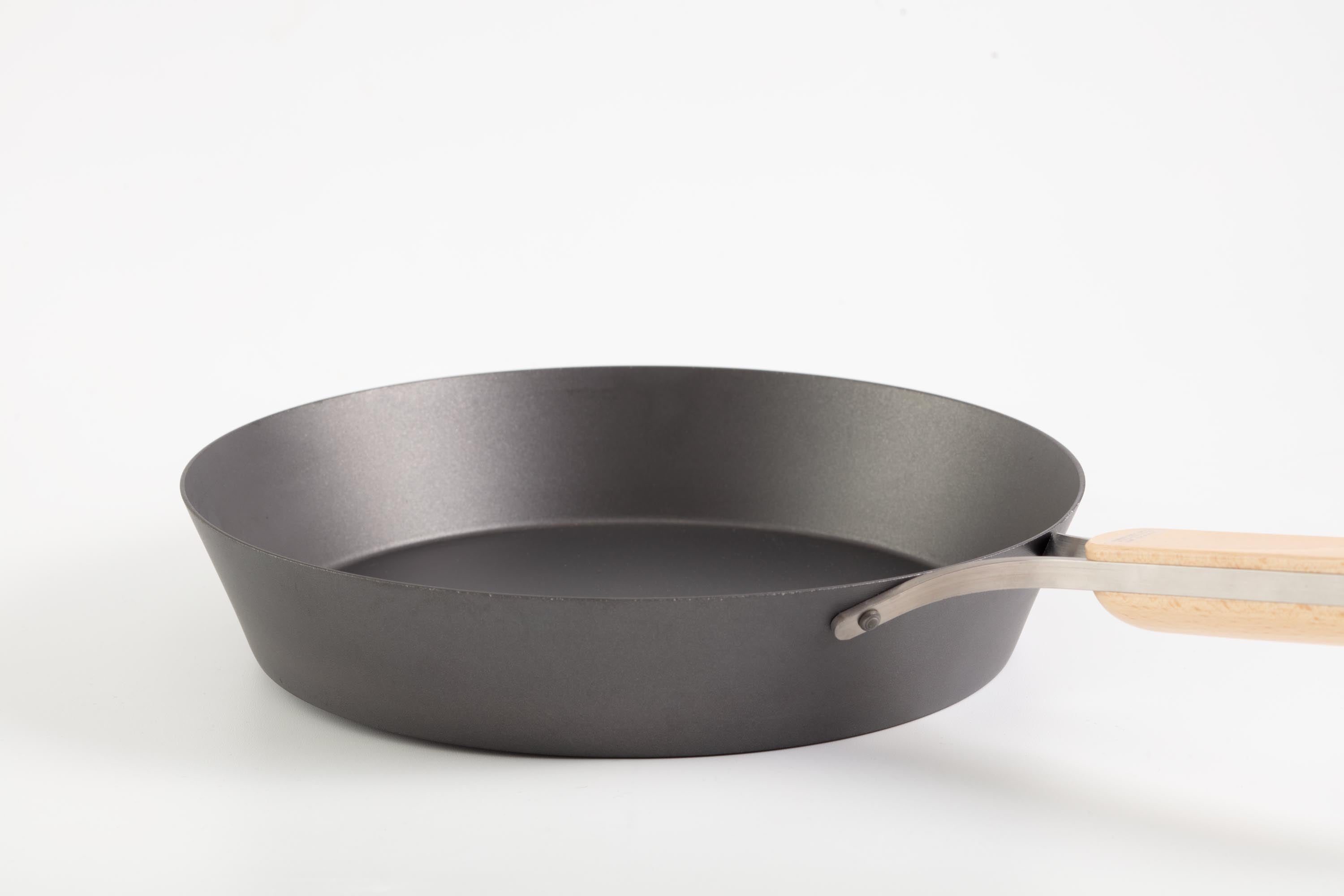
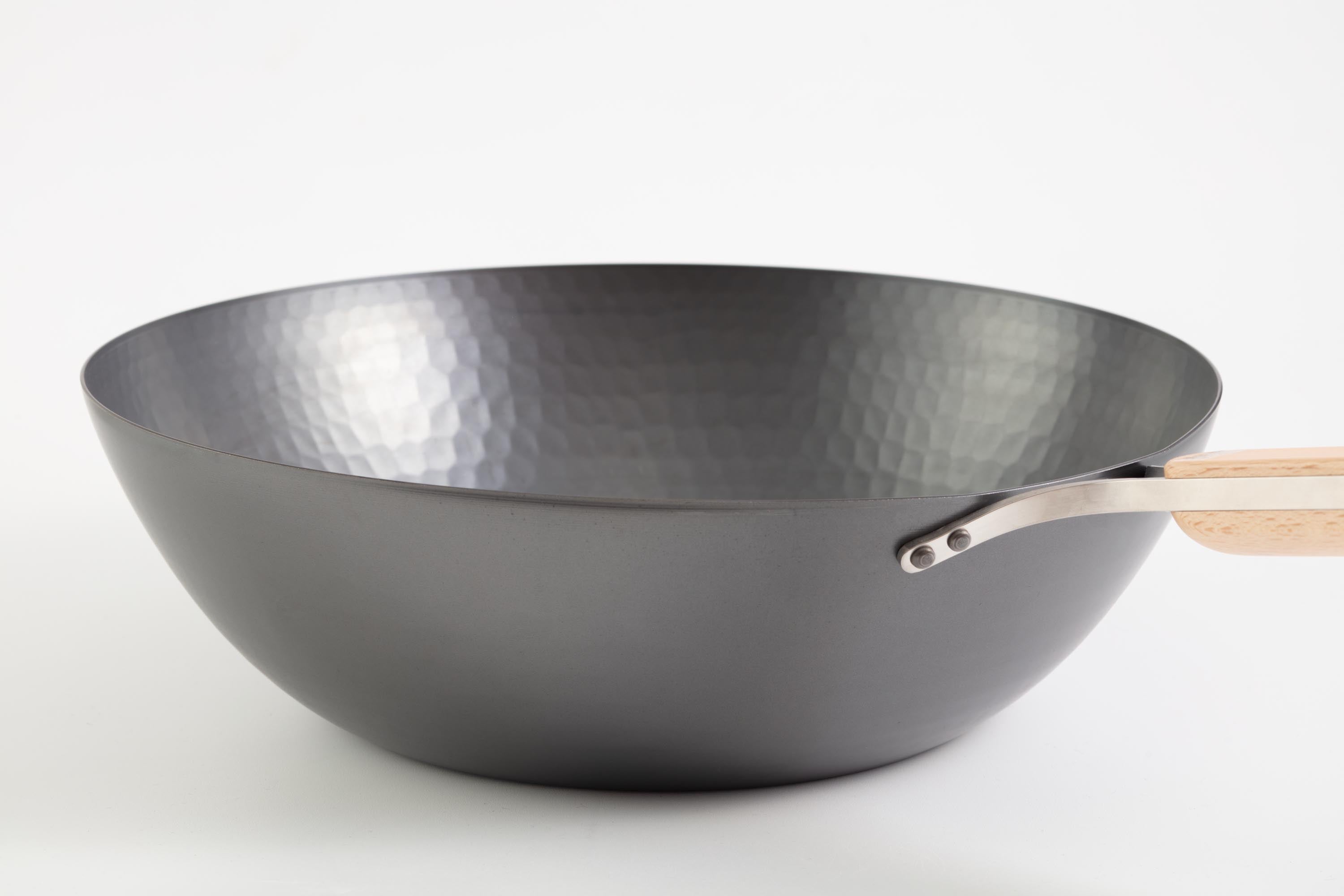
One note specific to our pans: the Enzo carbon steel pans are nitrided, an eight-hour heat treatment that diffuses nitrogen into the surface of the steel for added hardness and corrosion resistance. It is a treatment of the metal, not a coating, and you still season on top of it the same way you would with any carbon steel.
Which one is more durable?
Both are close to indestructible, and both routinely outlive the cook who bought them. You cannot scratch off a seasoning layer the way you can wreck a non-stick coating, because there is no coating to wreck. A metal spatula is fine on either.
Cast iron can still crack from a hard fall or a shock of cold water on a screaming-hot pan, and carbon steel can warp if you heat it aggressively while empty. Treat either one with a little sense and it will keep going for decades. This is buy-it-once cookware.
What should you cook in each?
Carbon steel is the better all-day pan. Eggs, fish, vegetables, quick sautes, stir-fries, weeknight proteins. Its light weight and fast response make it easy to cook actively, and the sloped versions flip and toss beautifully.
Cast iron shines when heat retention is the whole point. Deep sears, blackened fish, cornbread, a skillet that goes from stovetop into a hot oven and holds its temperature the entire time. It is also the natural choice for anything you want to bake in the pan.
There is real overlap. Both can sear and both can go in the oven. But cook something very acidic, like a long tomato simmer, and either pan can lose a bit of seasoning and pass a faint metallic note to the food. For those dishes, reach for stainless instead.
How do you care for them?
The routine is identical, and it is shorter than people fear. Wash with hot water and a brush or sponge, a little mild soap is fine, then dry it fully and wipe on a thin film of oil before it goes away. That last step is the one that matters, because bare iron left damp will rust.
Rust, if it appears, is not the end. Scrub it off, re-oil, and cook. The care is a habit, not a chore.
So which pan should you buy?
If you want one pan for daily cooking, something light and responsive that you will actually reach for, buy carbon steel. If your cooking leans toward big sears, baking, and steady heat, and the weight does not bother you, buy cast iron.
Most kitchens are happy with carbon steel as the everyday workhorse. It is not dramatic. It is useful. And because both are coating-free, non-toxic, and built to last, there is no wrong answer here, only the one that fits how you cook.
Frequently asked questions
Is carbon steel or cast iron better for beginners?
Carbon steel is easier to handle day to day because it is lighter and responds quickly to heat changes. Cast iron is more forgiving once hot, but takes patience to preheat. Both are simple to season and care for.
Can you use carbon steel and cast iron on induction?
Yes. Both are magnetic, so both work on induction cooktops as well as gas, electric, and in the oven.
Do carbon steel and cast iron have non-stick coatings?
No. Neither has any synthetic coating. The non-stick surface on both comes from seasoning, which is polymerized oil bonded to the bare metal, so there is no PTFE or PFAS involved.
Can I cook acidic foods in either pan?
In moderation. Very acidic foods like a long tomato sauce can strip some seasoning and leave a faint metallic taste. For those dishes, a quick cook is fine, but stainless steel is the safer choice.