The short answer
- "Non-toxic cookware" mostly means cookware without a synthetic non-stick coating that can shed PFAS chemicals. The pan is the point of concern, not the food.
- The cleanest options are simple materials: cast iron, stainless steel, carbon steel, and true ceramic. Each has trade-offs, and none is perfect for every job.
- Carbon steel is one of the quietest safe choices: it is coating-free, it gets non-stick from seasoning, and a nitrided surface adds durability without adding chemistry.
- The healthiest cookware is the honest kind you understand and will maintain.
"Non-toxic cookware" has become a crowded phrase, printed on packaging that promises everything and explains nothing. So it helps to start with what the worry is actually about. It is not the metal your pan is made from. It is the coating that sometimes sits on top of it.
What does "non-toxic cookware" actually mean?
In plain terms, it means cookware unlikely to release unwanted substances into your food or your kitchen air. For most people the specific concern is a family of synthetic non-stick coatings and the chemicals used to make them. A truly non-toxic pan is usually one built from a stable material that does not depend on that kind of coating to work. That is a clearer bar than the marketing suggests: a surface you can trust when it is empty, hot, and scratched three years from now.
The PFAS, PFOA, and PTFE problem, explained plainly
These three acronyms get used interchangeably, but they are not the same thing.
PTFE (polytetrafluoroethylene, branded originally as Teflon) is the slick coating itself, what makes a conventional non-stick pan slippery. At normal cooking temperatures it is fairly inert. The concern is heat: pushed to high temperatures, an empty coated pan can begin to break down and give off fumes. It also wears. Scratches, flaking, and age mean a degraded coating is one you are slowly eating.
PFOA (perfluorooctanoic acid) was historically used to manufacture PTFE coatings. It is the one with the worst reputation, linked in research to a range of health concerns, and it has been phased out of cookware. Reputable pans today are made without PFOA. That is genuine progress, but it addresses one chemical, not the whole category.
PFAS is the umbrella. It stands for per- and polyfluoroalkyl substances, thousands of related "forever chemicals" that resist breaking down in the environment and in the body. PTFE is a PFAS. "PFOA-free" does not automatically mean "PFAS-free," because other fluorinated compounds can take PFOA's place. This is why "PFAS-free" has become the phrase worth looking for: it points at the whole family rather than one retired member.
None of this means a modern coated pan is dangerous in ordinary use. It means the risk is real enough, and the coating short-lived enough, that a lot of cooks would simply rather not manage it.
A material-by-material look at the safest cookware
Here is where each common material honestly sits. The goal is not to crown a winner but to help you match a pan to how you cook.
Coated non-stick
The convenience is real: eggs slide, cleanup is fast, and it is forgiving for beginners. The trade-off is everything above. The coating degrades, it does not love high heat, and even the best version has a lifespan measured in a few years. Useful, replaceable, not permanent.
Cast iron
Old, simple, and effectively coating-free once seasoned. It holds heat beautifully and lasts for generations. The downsides are weight, slow responsiveness, and maintenance: it needs drying and oiling, and it reacts with very acidic foods. It also adds a small amount of dietary iron to your cooking, a plus for many. One caveat worth stating: anyone with hemochromatosis or another iron-overload condition should be mindful of that iron transfer and talk to a doctor.
Stainless steel
A workhorse and one of the most genuinely inert surfaces you can own. No coating, no seasoning, dishwasher-tolerant, and excellent for searing and sauces. It is not naturally non-stick, so it asks for a little technique and heat control. For durability and low fuss, it is hard to beat.
Ceramic
True ceramic and ceramic-coated pans are marketed heavily as the clean alternative, and the better ones are free of PTFE and PFAS. The honest caveat is longevity: many ceramic non-stick surfaces lose their slickness relatively quickly, so you replace them more often than you might expect. A clean surface that wears out fast is still a surface that wears out.
Carbon steel
Carbon steel is iron with a little carbon: a lighter, more responsive cousin of cast iron that heats faster and is easier to lift. It has no synthetic coating, and its non-stick comes from seasoning. Being steel, it is magnetic and works on induction. Like cast iron it reacts with very acidic foods and needs drying and a light oiling or it can rust. In exchange, a pan that can outlive you. More below.
Where carbon steel lands, and why nitriding matters
If your definition of non-toxic is "no coating to shed," carbon steel meets it directly. There is nothing sprayed or bonded onto the surface to break down. You are cooking on metal and seasoned oil, both of which you can see and understand.
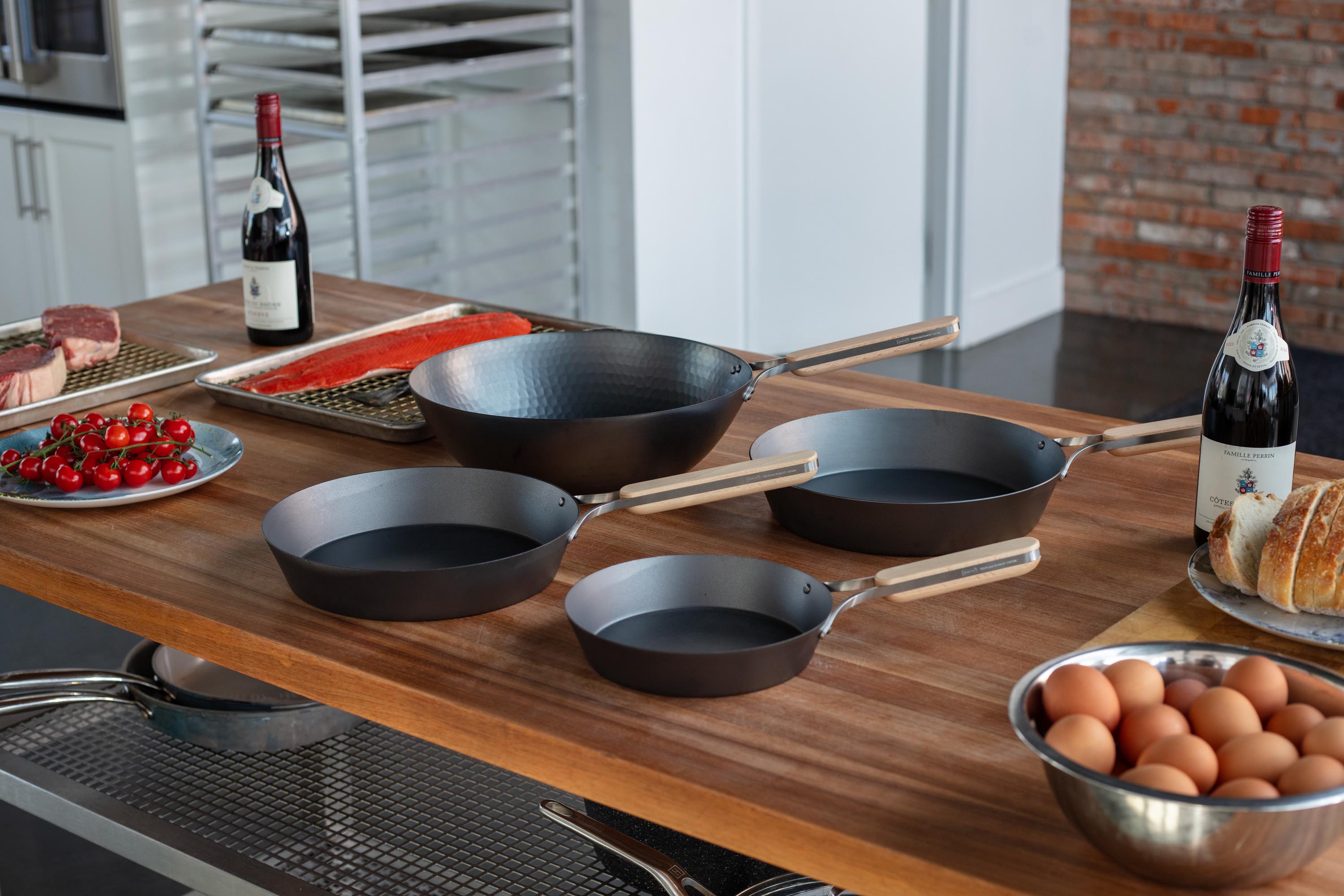
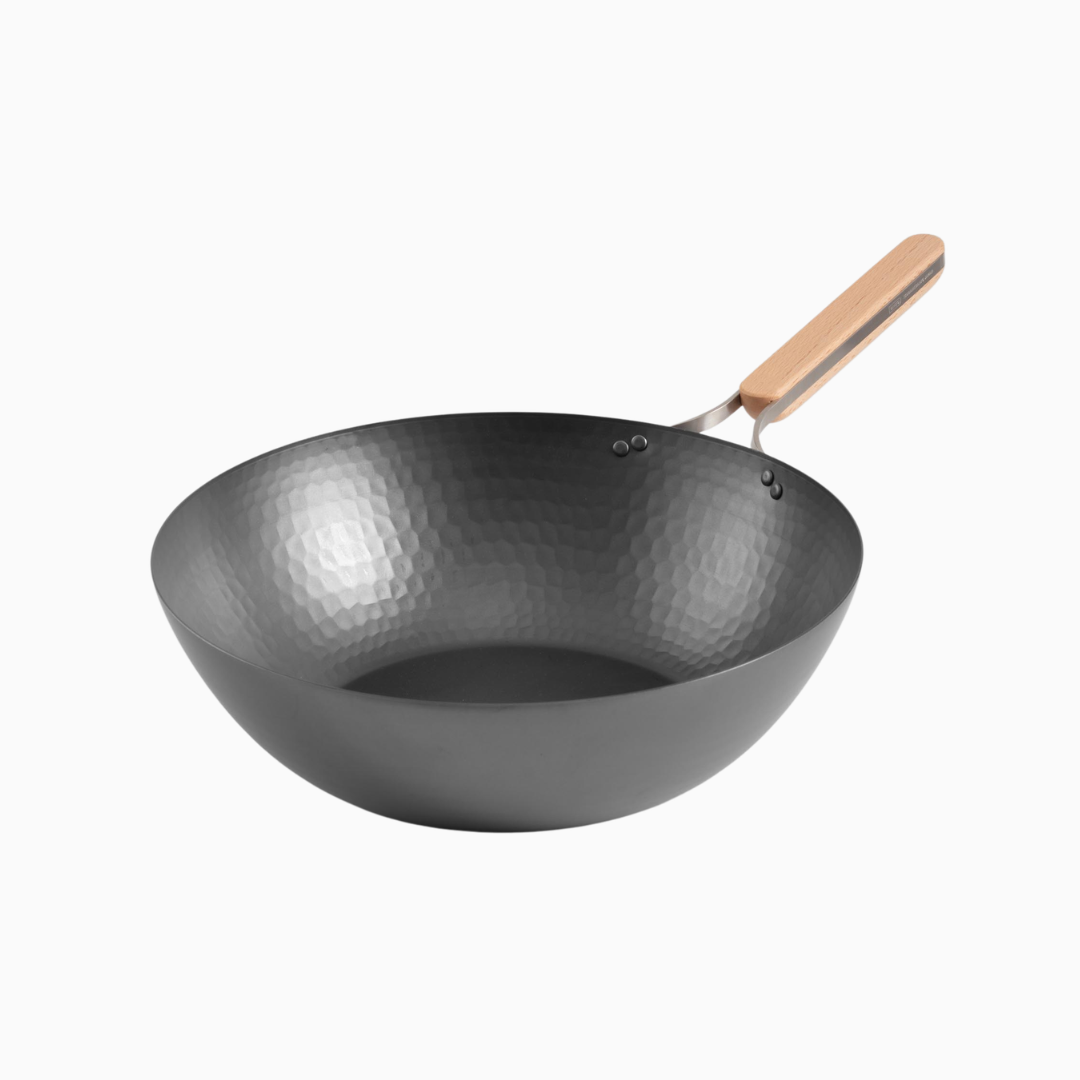
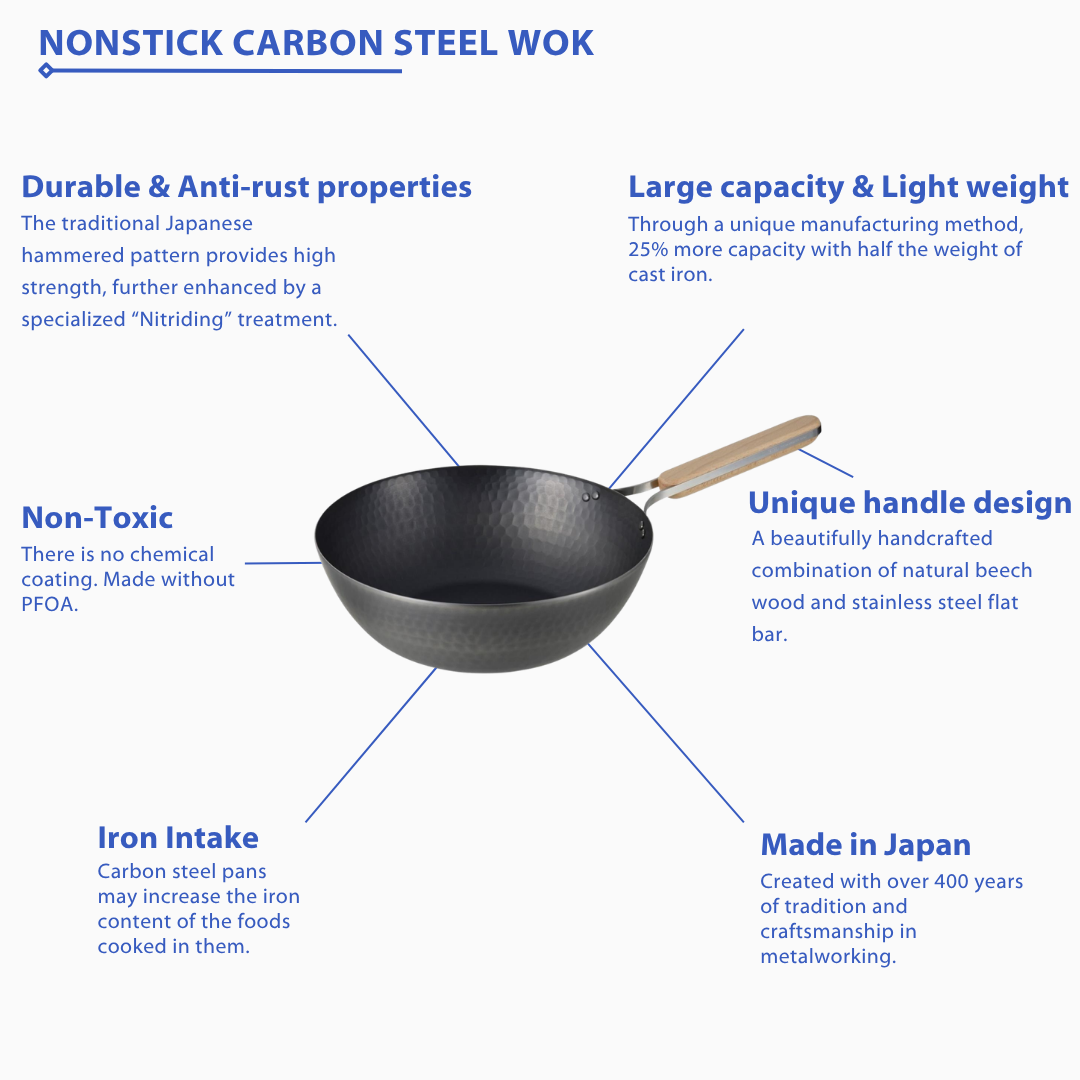
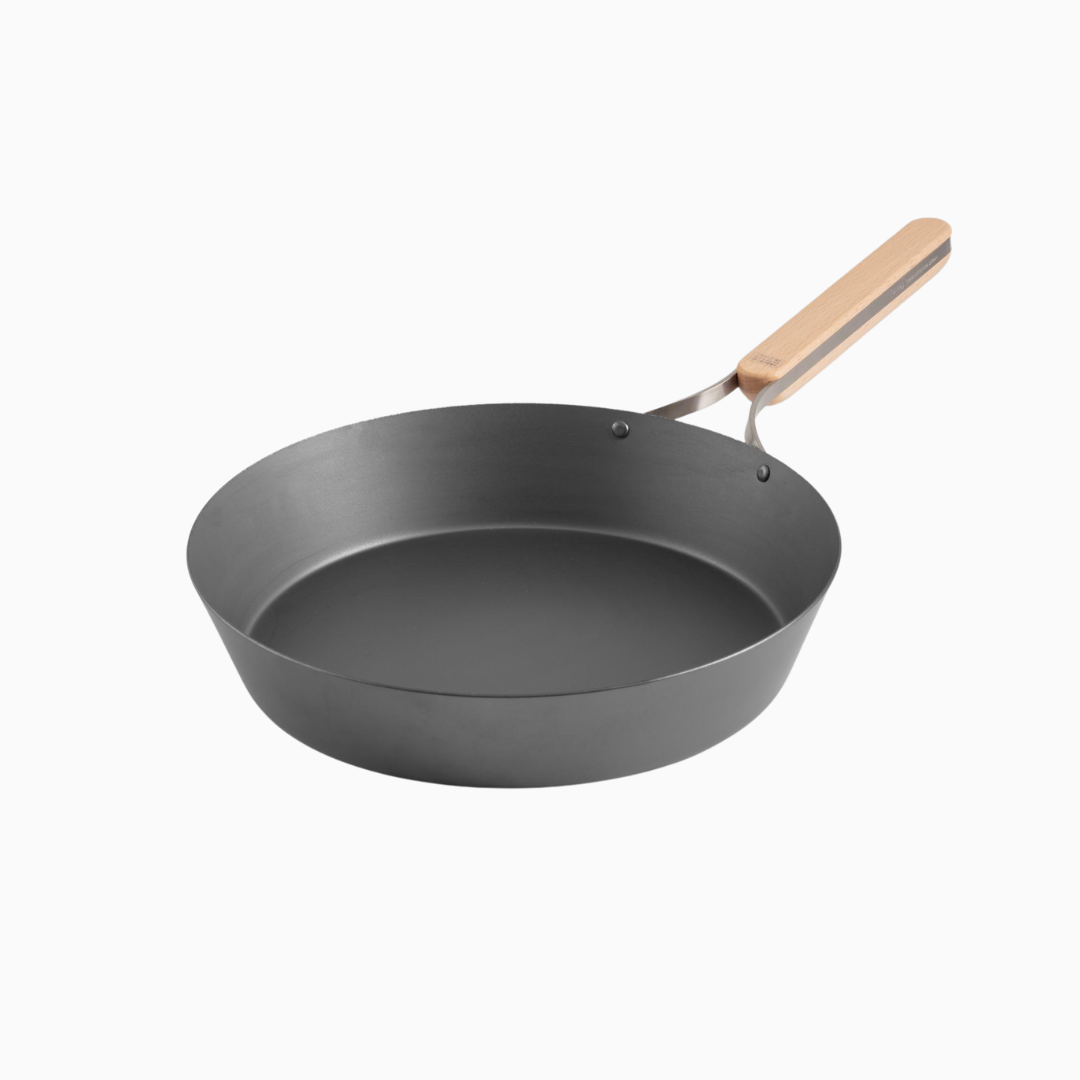
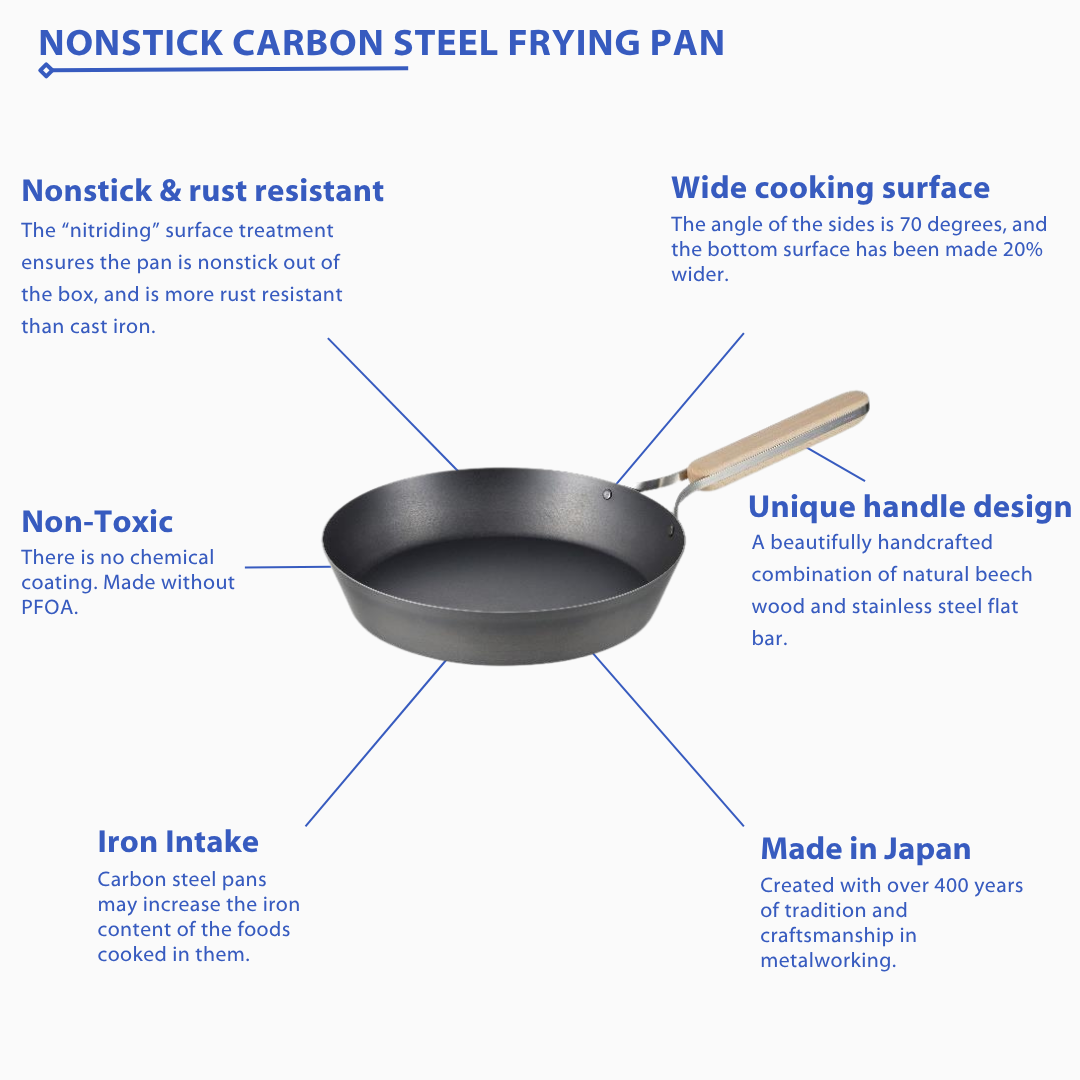
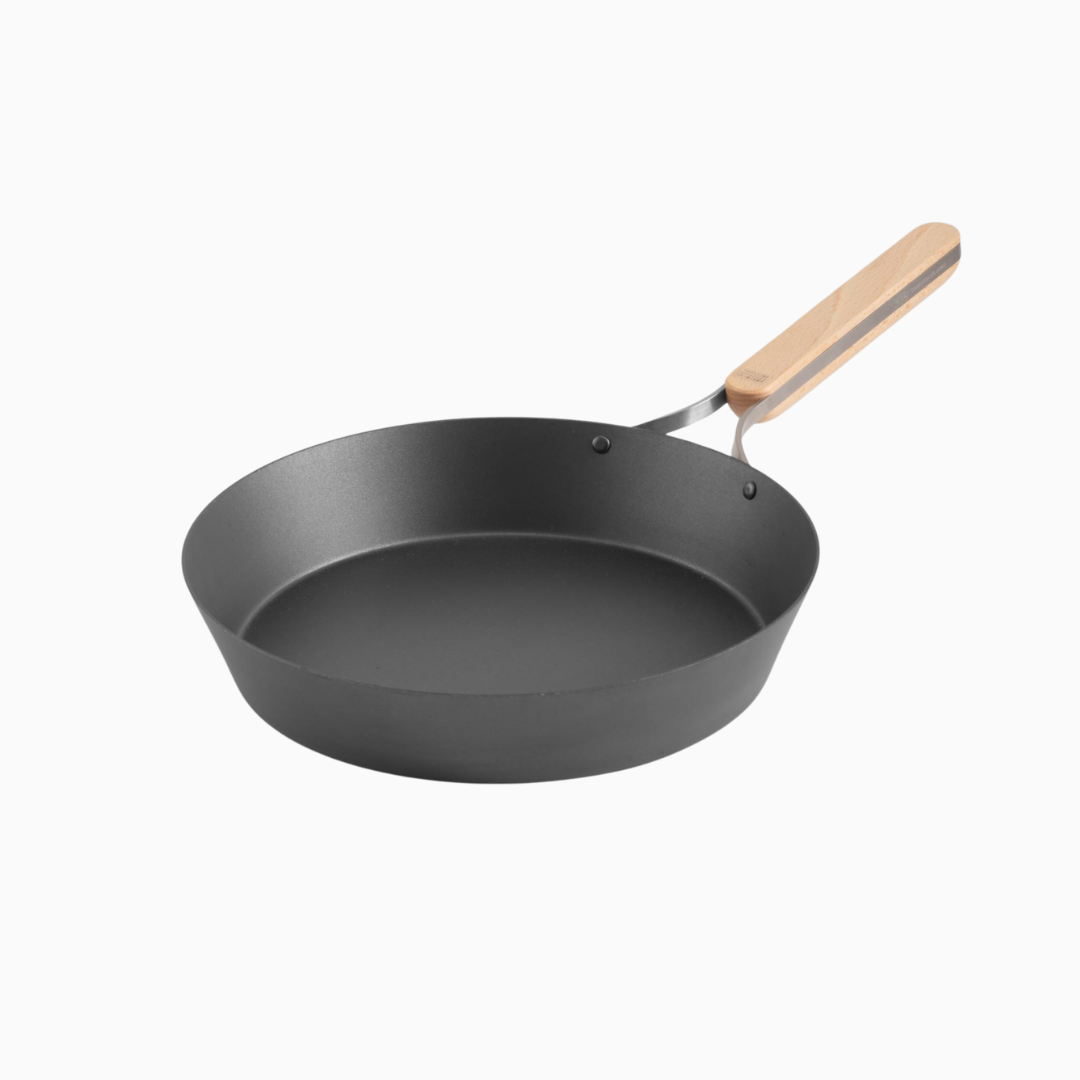
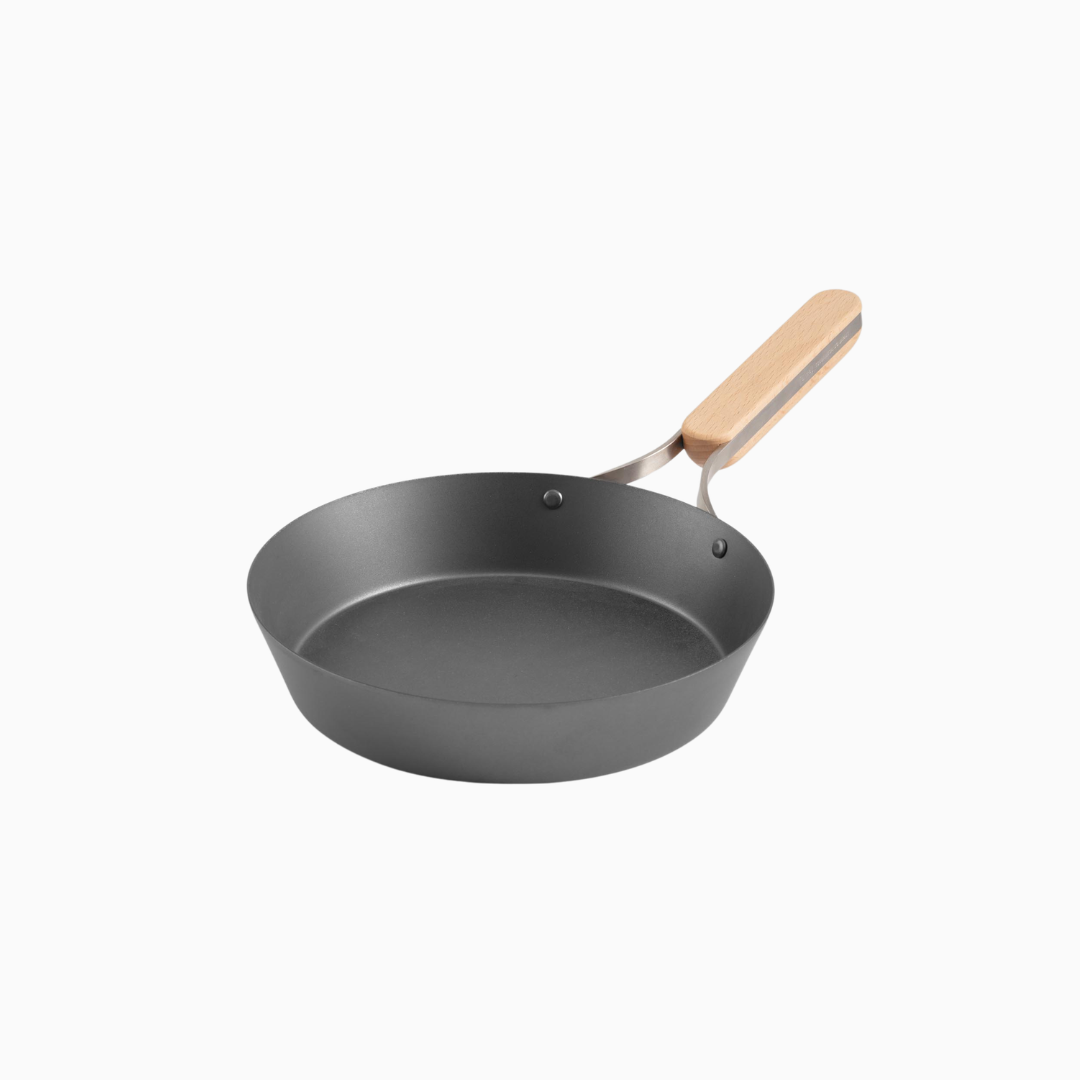
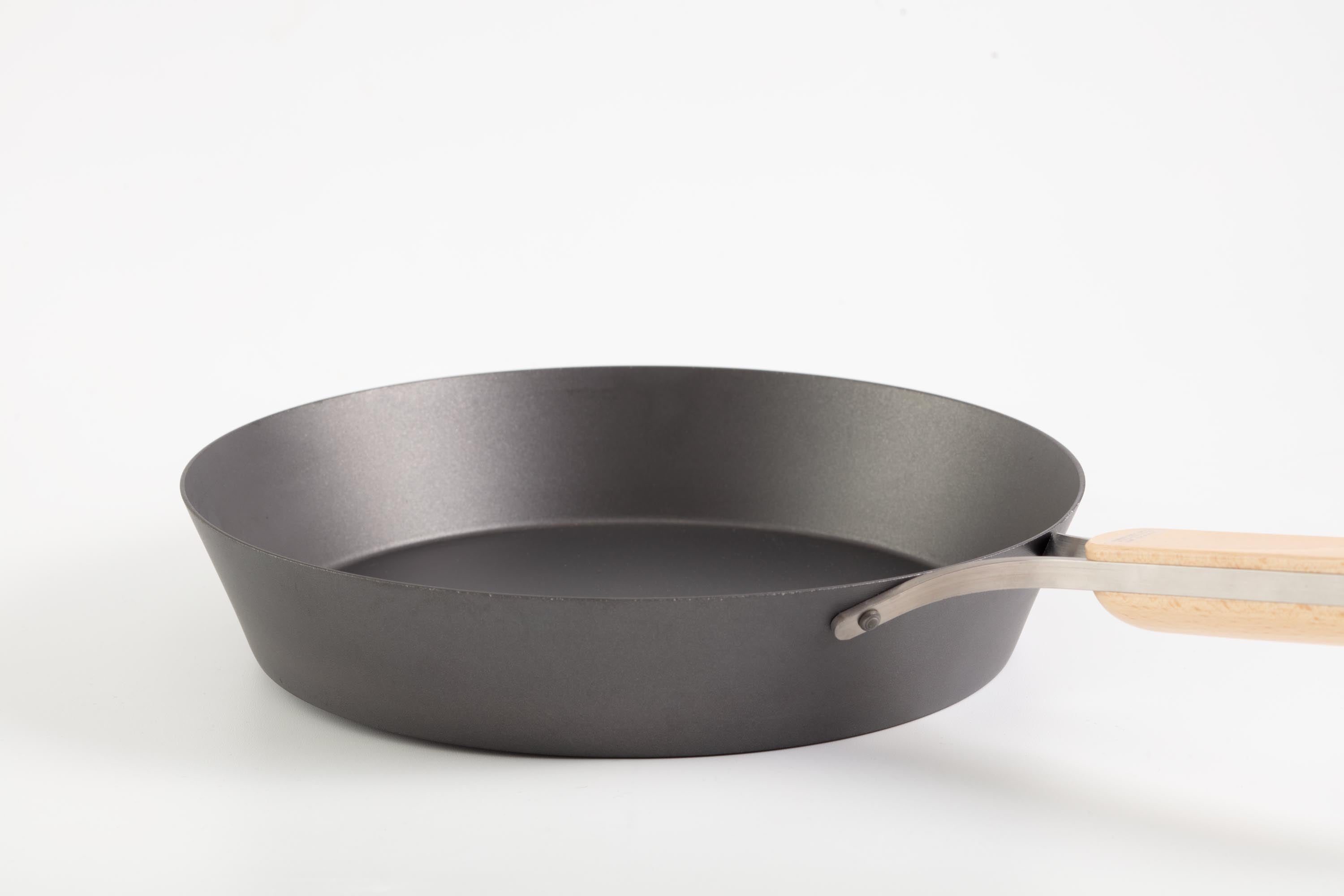
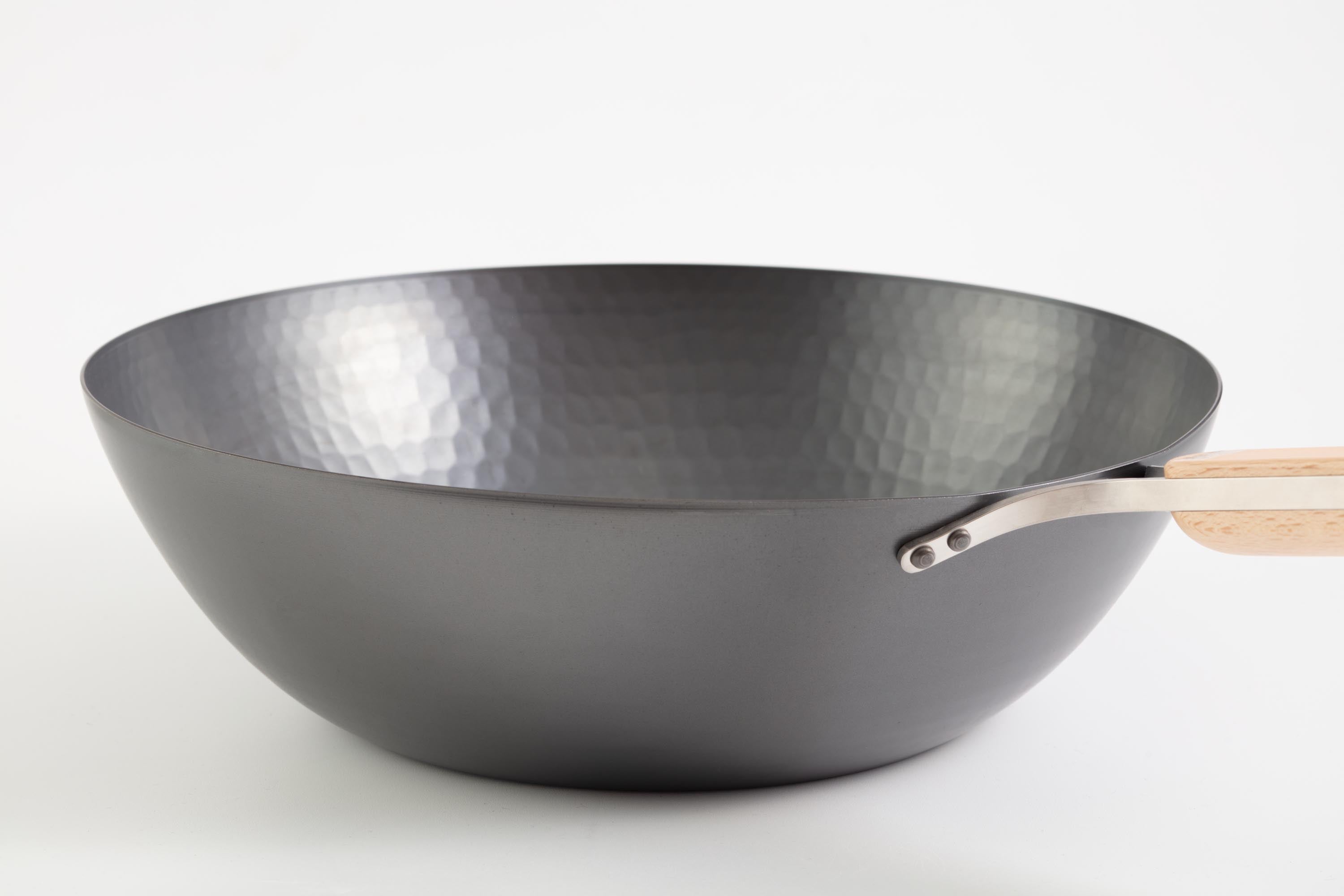
Our Enzo pans and wok take one extra step. The steel is nitrided, an eight-hour heat treatment that diffuses nitrogen into the surface to raise hardness and improve wear and corrosion resistance. The distinction that matters: nitriding is a treatment of the steel itself, not a layer added on top. There is no PTFE, no PFAS, and it is made without PFOA. The seasoning still does the non-stick work; the nitrided surface just makes the pan tougher and more forgiving about rust while it gets there. They are made in Tsubame-Sanjō, in Japan's Niigata region, which has worked metal for roughly four hundred years.
We go deeper on the chemistry and caveats in is carbon steel cookware safe. It is not a miracle material, and it asks for a little care. But it is one of the cleanest surfaces you can cook on, and honest about what it is.
So what is the best non-toxic cookware for you?
There is no single healthiest cookware, only the right pan for the job and the cook. Want inert and low-maintenance? Stainless steel. Heat retention and heritage? Cast iron. Responsiveness, real non-stick performance, and no coating to worry about? Carbon steel earns its place. Most well-stocked kitchens end up with two or three of these. If you would rather start with a matched set, our sets and bundles are built around that idea.
The quiet truth under all the marketing: the safest cookware is the kind you understand, trust, and will keep long enough to know well.
Frequently asked questions
Is non-stick cookware safe to use?
In ordinary, moderate-heat cooking, modern PFOA-free non-stick is generally considered safe. The concerns are high heat, which degrades the coating, and wear, since a scratched or flaking coating is one you slowly ingest. Many cooks prefer coating-free materials to avoid managing that.
What is the difference between PFOA-free and PFAS-free?
PFOA is one specific chemical, now phased out of cookware. PFAS is the whole family of "forever chemicals" it belongs to. A pan can be PFOA-free while still using another PFAS, so to avoid the entire category, look for PFAS-free or a coating-free material.
Is carbon steel cookware non-toxic?
Yes. Carbon steel has no synthetic non-stick coating; its non-stick comes from seasoning, a layer of polymerized oil. Nitrided carbon steel like our Enzo pans is treated in the metal itself rather than coated, contains no PTFE or PFAS, and is made without PFOA.
What is the healthiest cookware overall?
There is no single answer. Stainless steel, cast iron, carbon steel, and true ceramic are all sound, coating-light choices. The healthiest one is the safe material that fits how you cook and that you will actually maintain.