The short answer
- The safest cookware material is a plain, coating-free metal you can use hot without worry. Carbon steel and cast iron lead because there is no synthetic layer to scratch, flake, or break down.
- Stainless steel is a strong, low-maintenance choice, especially for acidic cooking. Bare aluminum is best anodized or clad rather than used raw.
- Coated nonstick (PTFE/Teflon) is convenient but wears out, and old or overheated pans are the real concern.
- Ceramic nonstick is coating-free of PTFE, but the slick surface is thin and tends to fade within a year or two.
"Safe" is a slippery word for cookware. Most modern pans are fine for occasional use. The honest question is which materials stay safe over years of daily heat, scraping, and dishwashing, without asking you to baby them. That is where the differences show up. Below, common materials ranked from most to least reassuring, with the reasoning for each.
What makes a cookware material "safe"?
Two things matter most. First, whether the surface can shed anything into your food. A bare metal has nothing to shed but the metal itself. A coating can scratch, flake, or degrade with heat, and then you are eating and breathing whatever it was made of. Second, how the material behaves under the conditions you actually cook in: high heat, empty preheating, acidic tomato sauce, a metal spatula, a dishwasher cycle.
By that measure the coating-free metals have a structural advantage. There is simply less to go wrong. That is the throughline for the ranking that follows.
1. Carbon steel — safe, durable, and coating-free
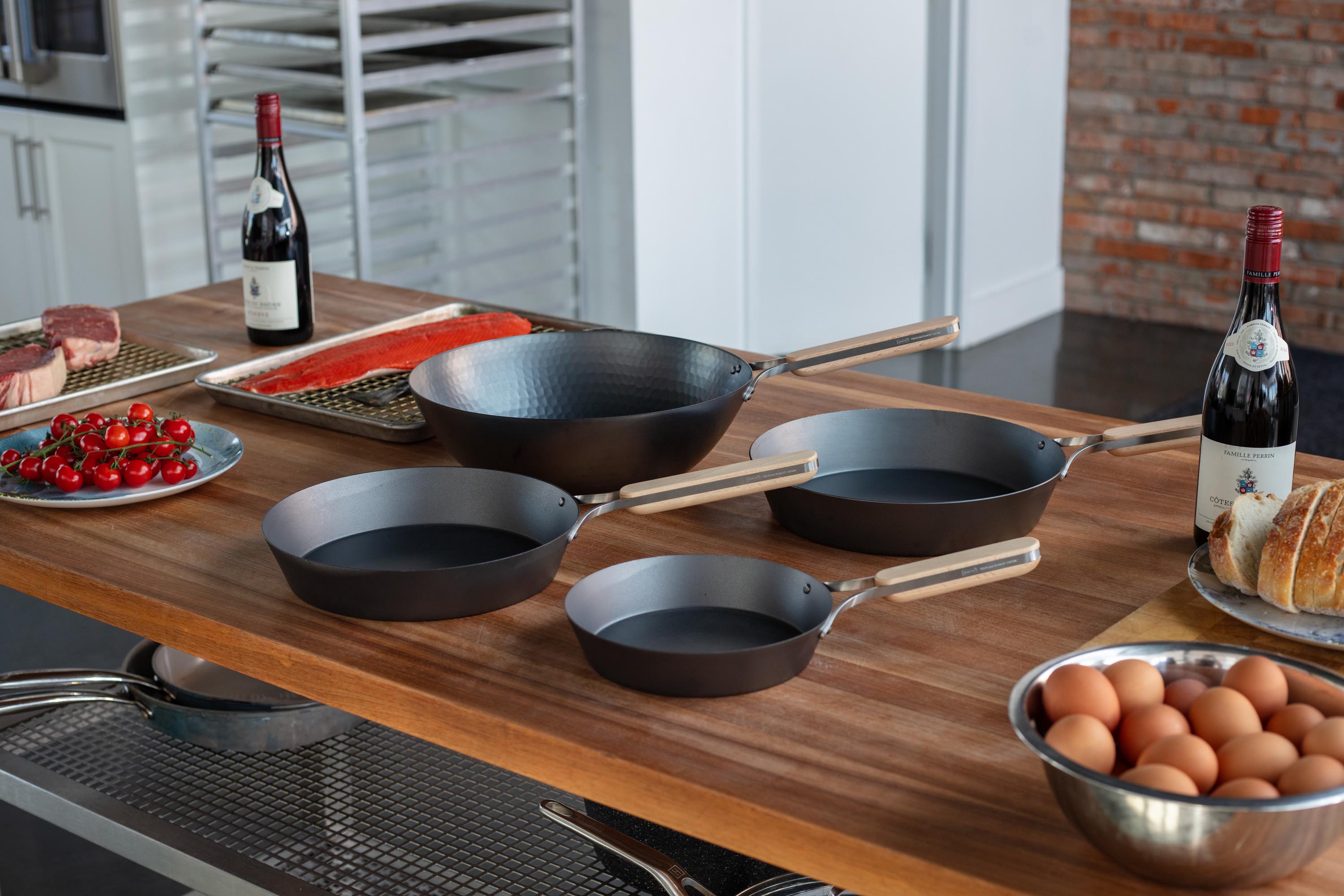
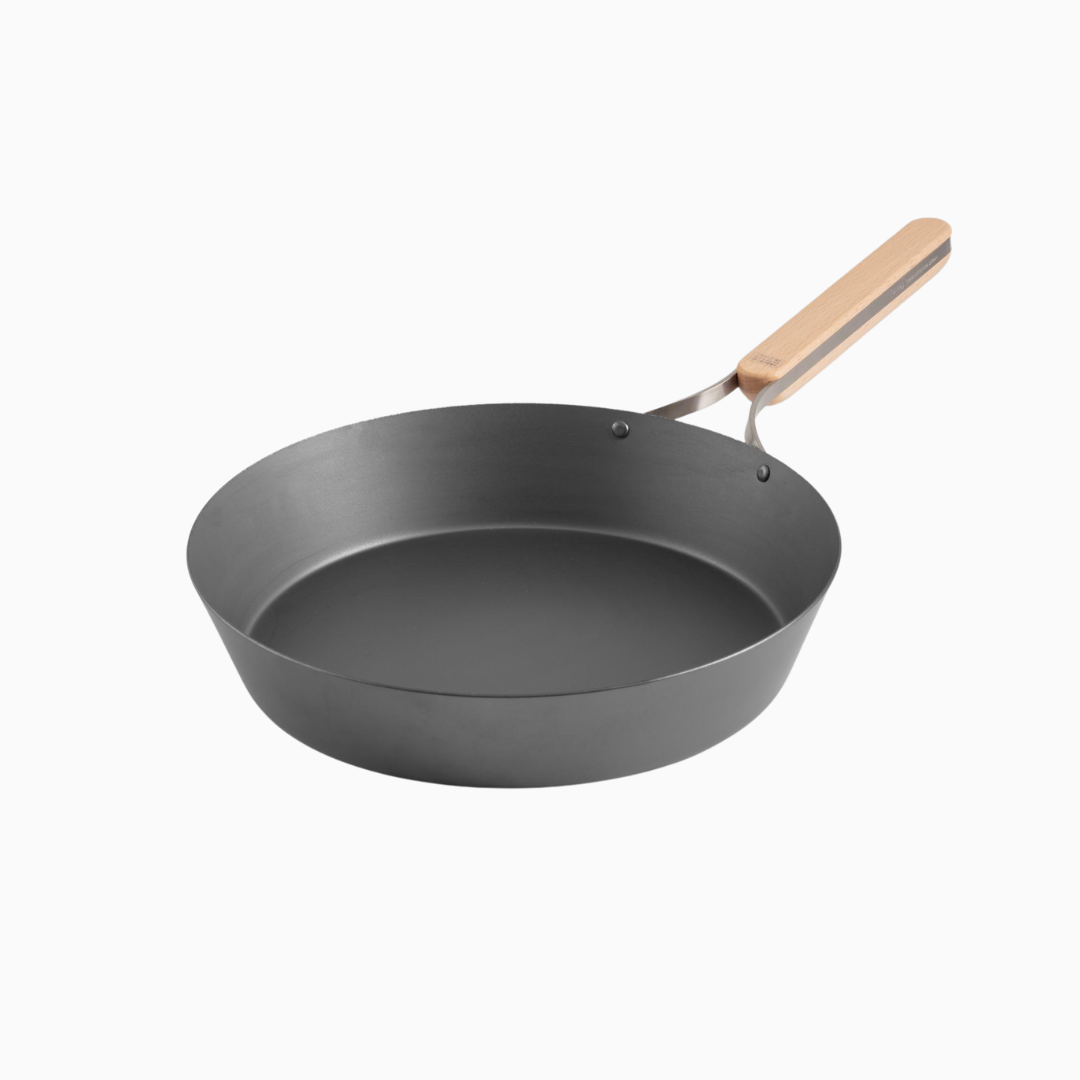
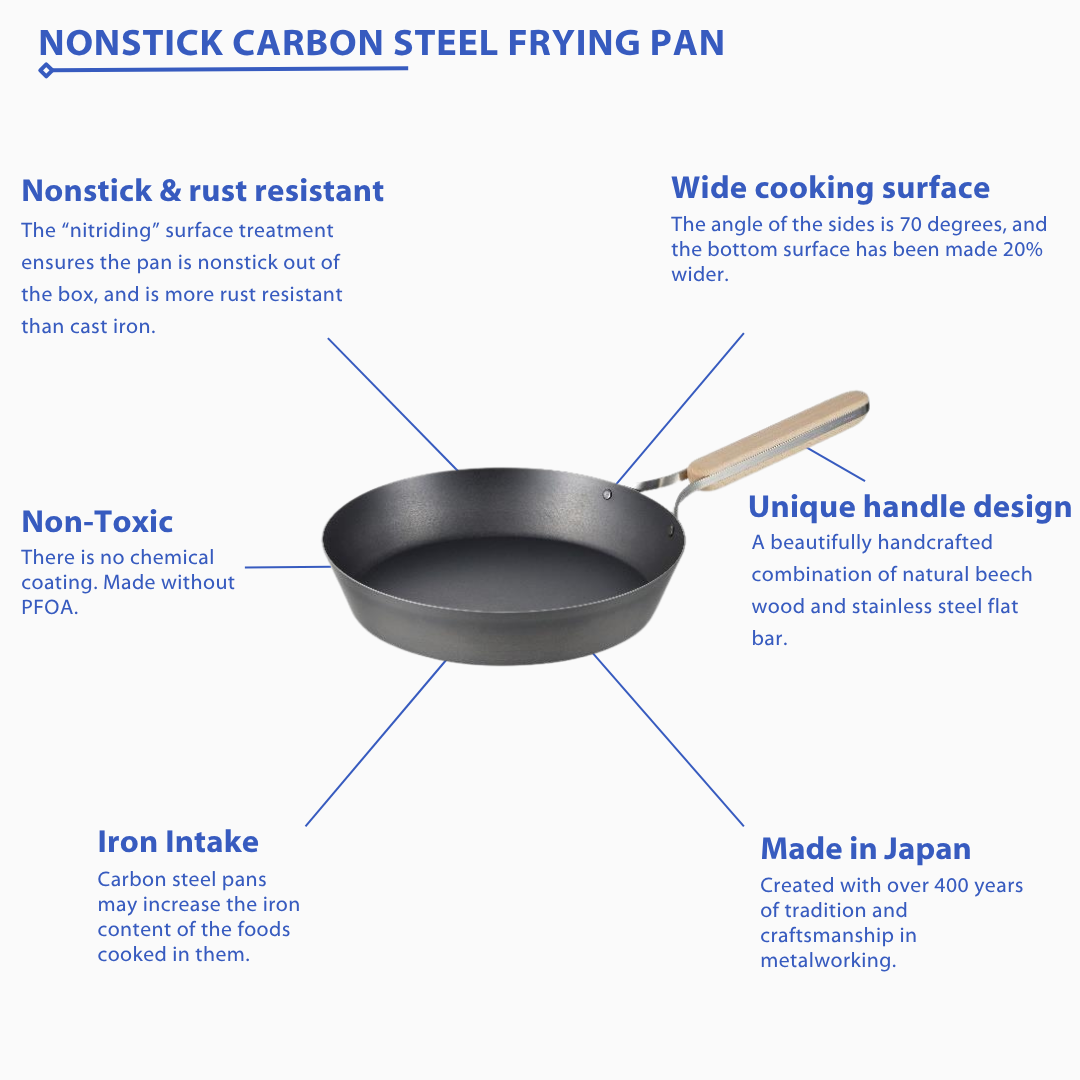
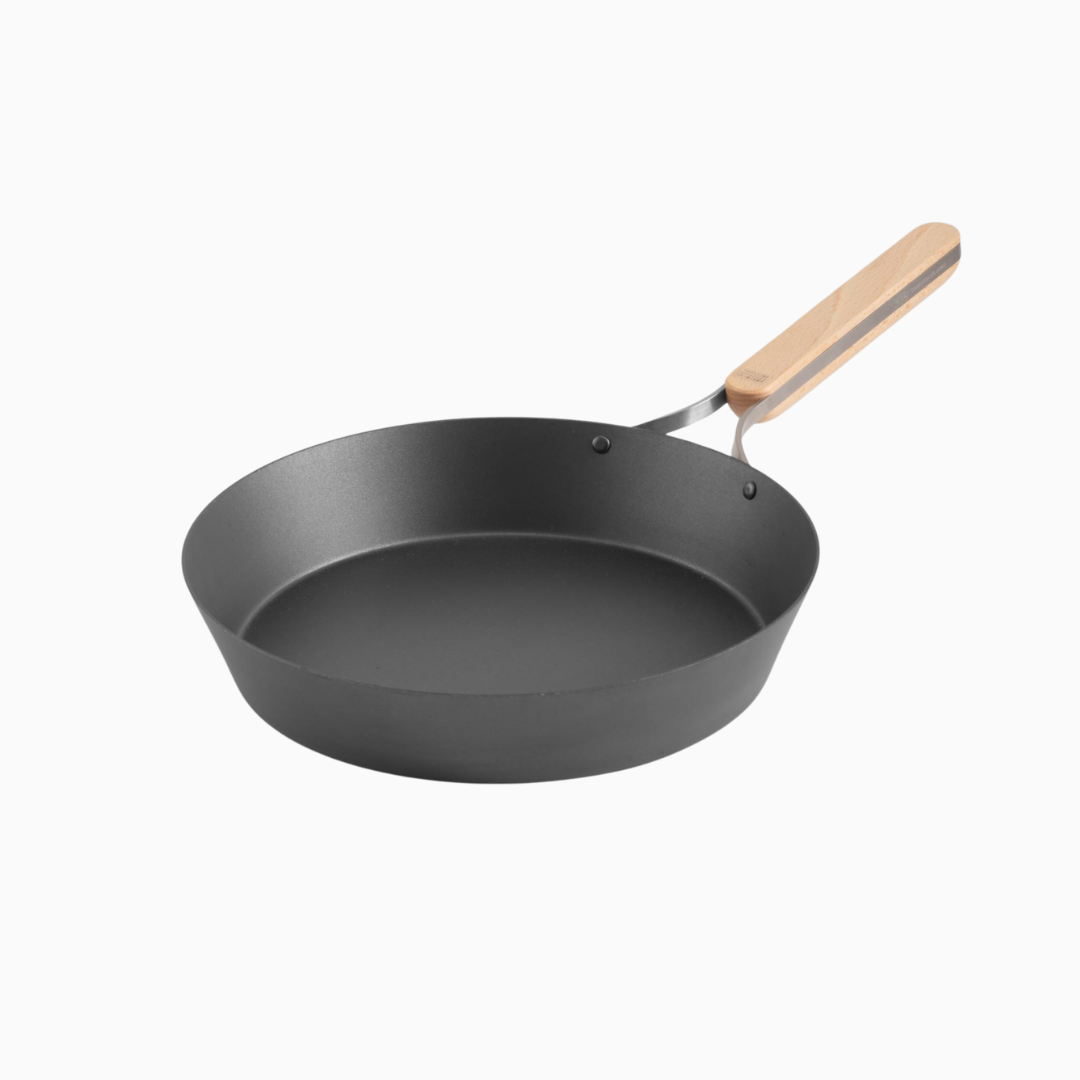
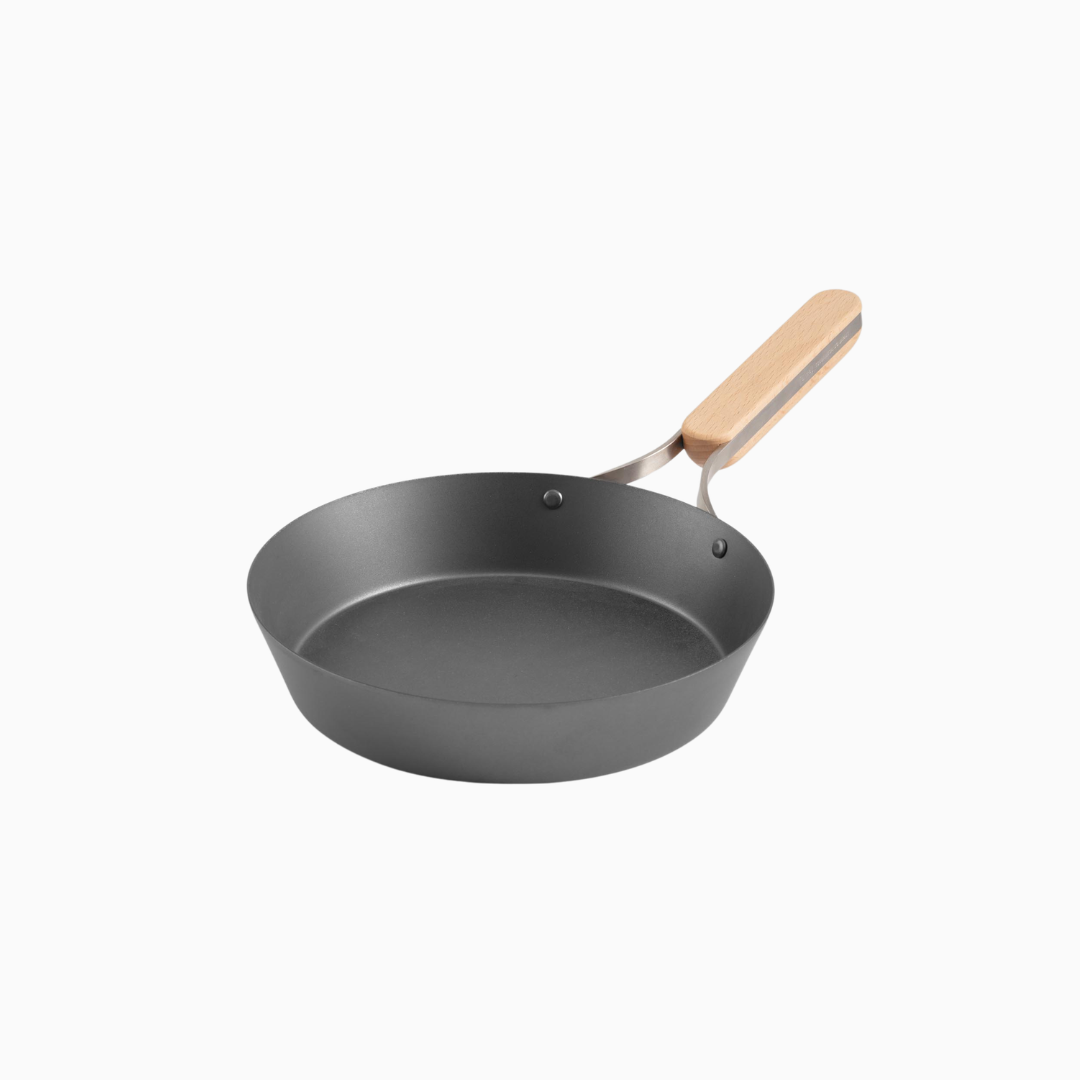
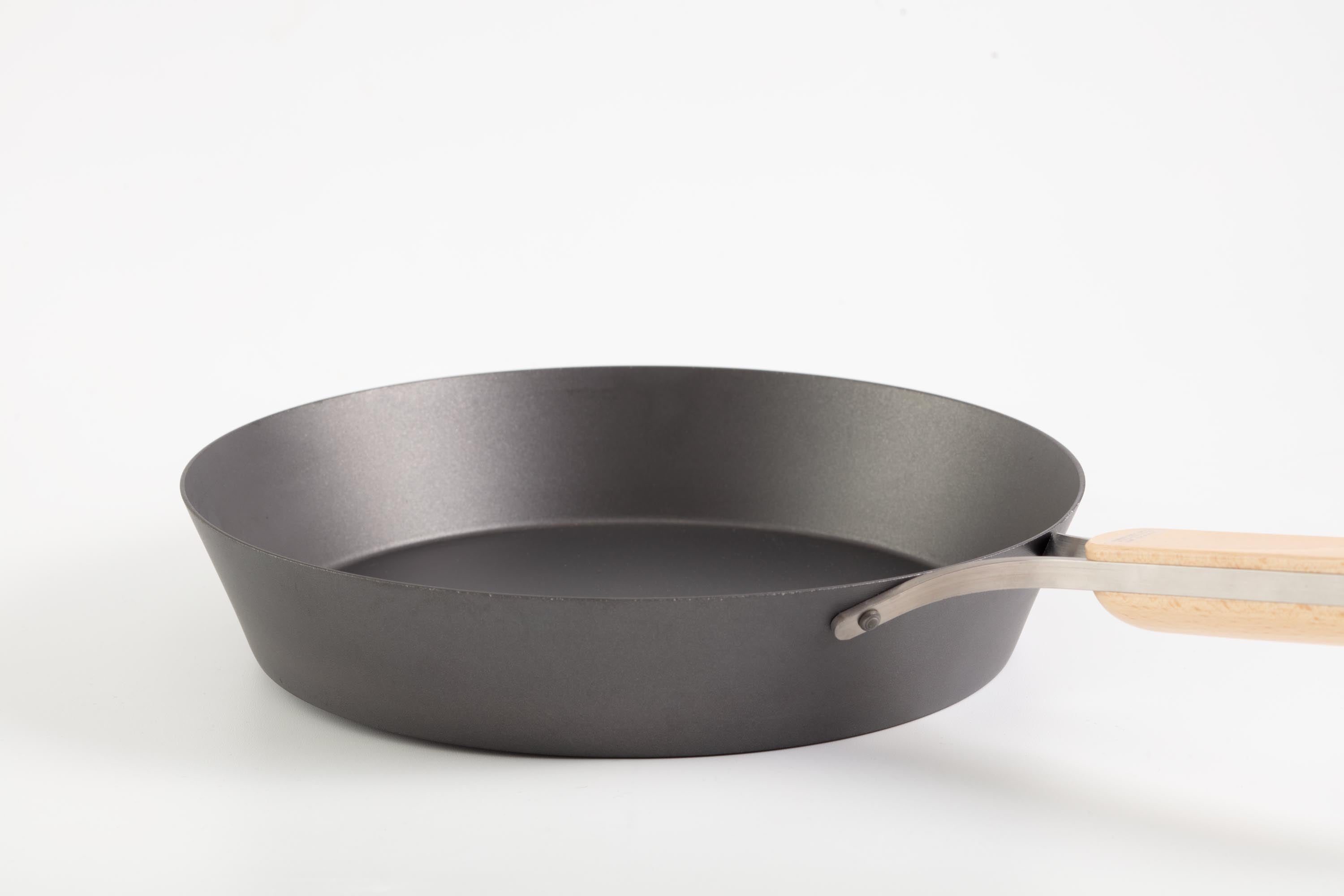
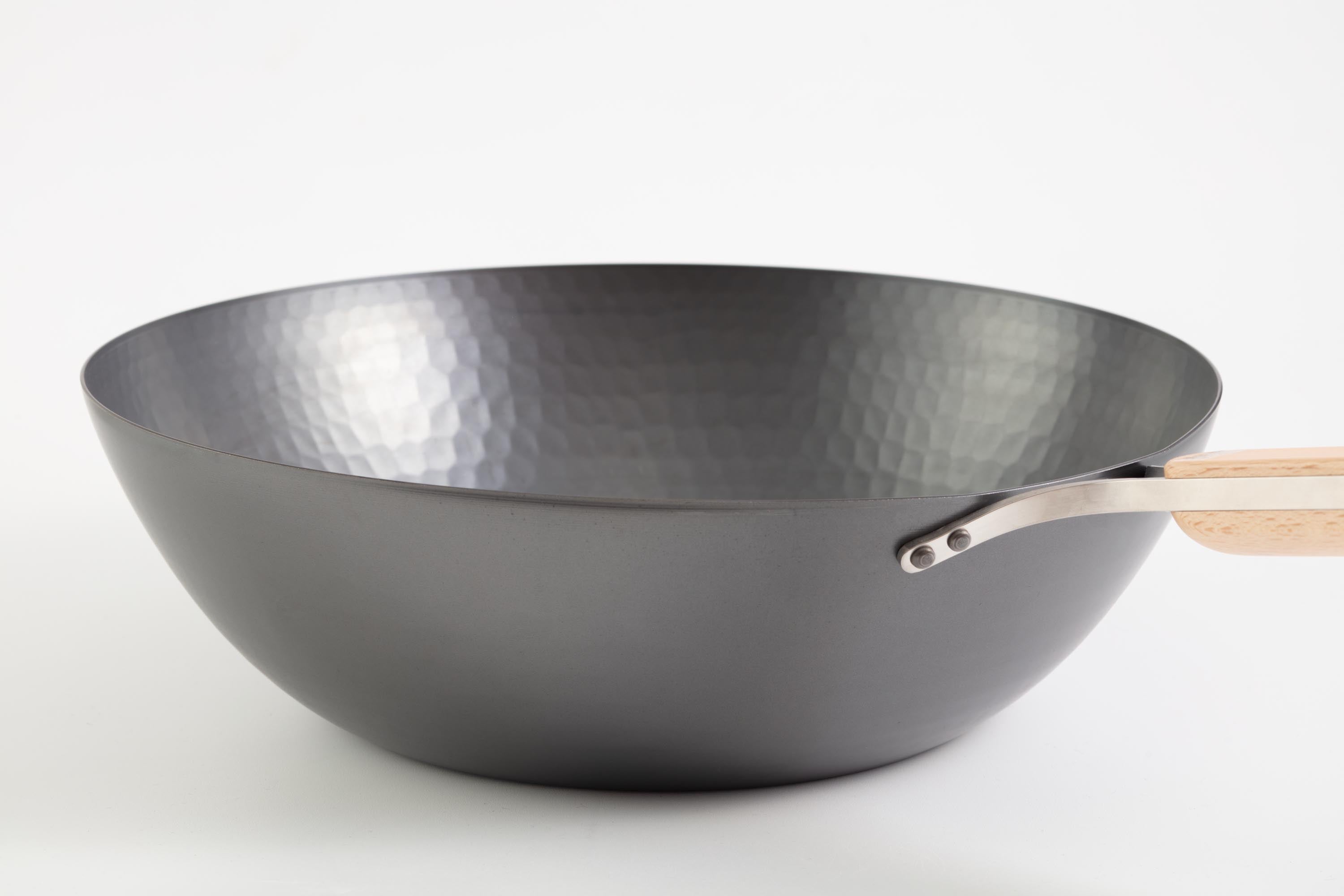
Carbon steel is iron with a little carbon. That is the whole recipe. There is no synthetic nonstick layer, so there is nothing to scratch off into a pan of eggs and nothing that breaks down when you forget the pan on a hot burner. Its nonstick quality comes from seasoning, which is just cooking oil polymerized into a thin, hard, food-safe layer you build up over time.
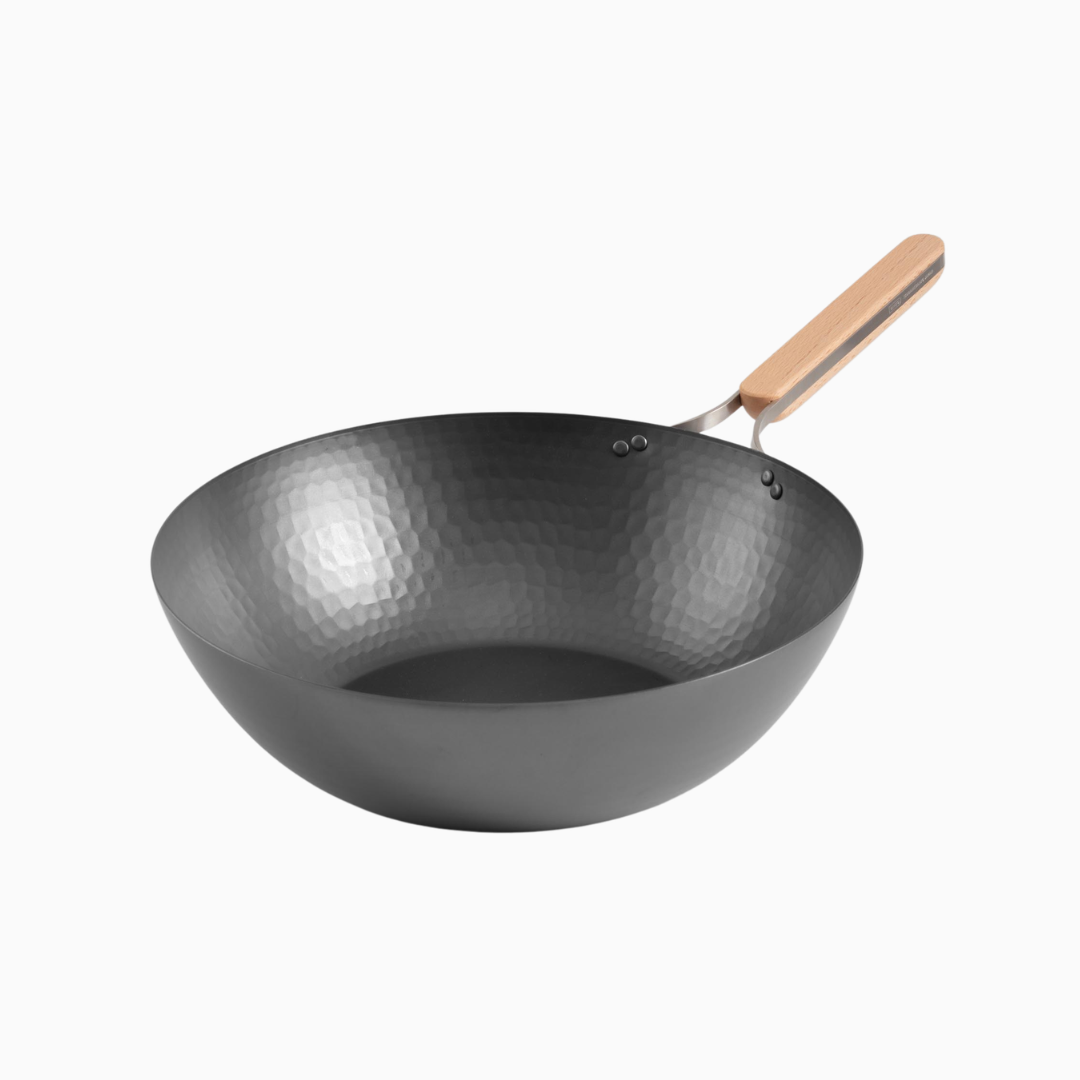
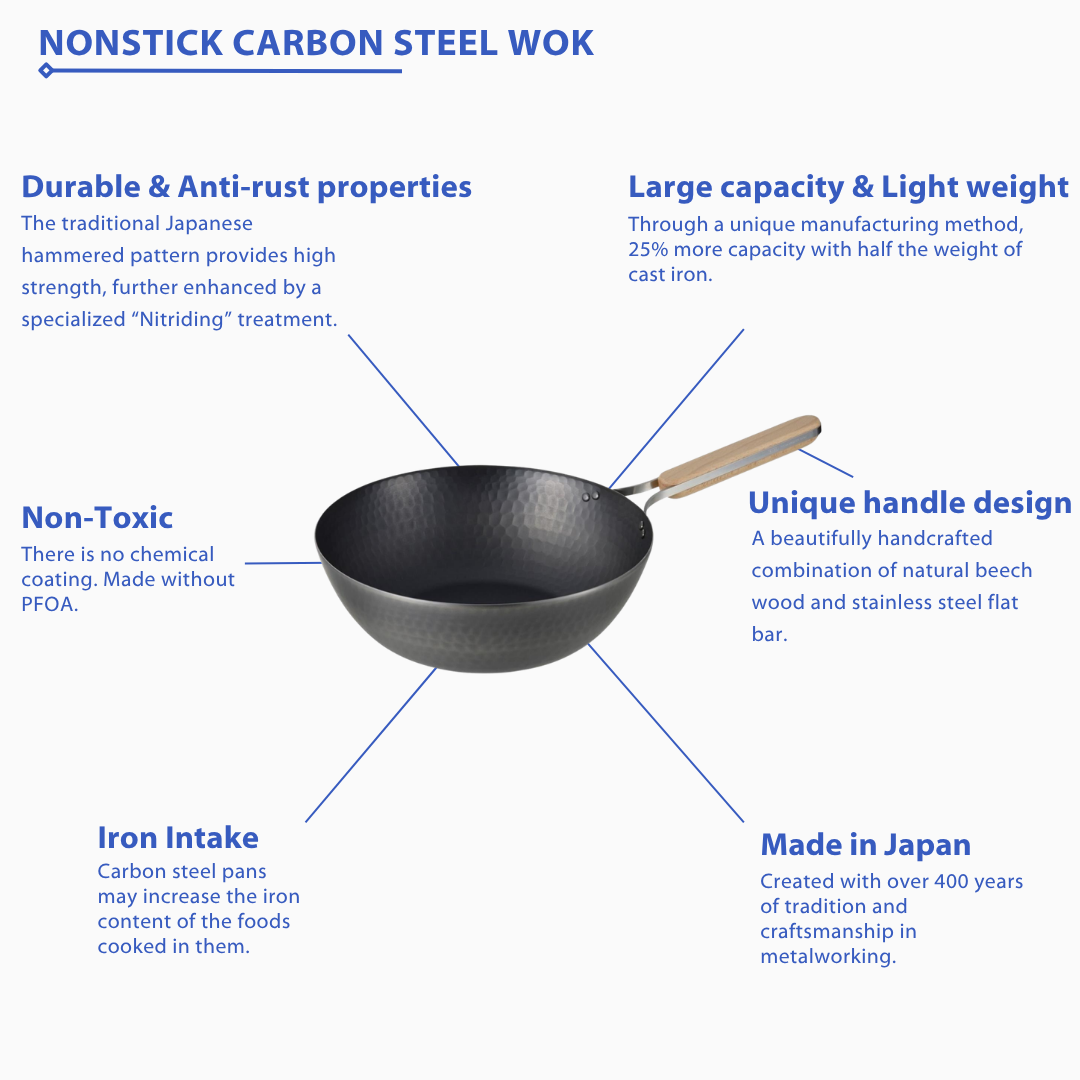
It is lighter and more responsive than cast iron, and it is magnetic, so it works on induction. The trade-offs are real but manageable: it reacts with very acidic foods, which can strip seasoning and leave a faint metallic note, and it needs drying and a light film of oil after washing or it can rust. Some carbon steel is nitrided, an 8-hour heat treatment that diffuses nitrogen into the surface for extra hardness and corrosion resistance. That is a treatment of the metal itself, not a coating, so it does not change the basic safety picture. It just makes the pan tougher.
If you want a pan you can run hot, scrape with metal, and hand down in a decade, this is the material to reach for. Our carbon-steel pans are built around exactly that logic.
2. Cast iron — the same coating-free case, heavier
Cast iron shares carbon steel's core virtue: it is plain iron, seasoned rather than coated. Nothing to flake, nothing to fear at high heat. It holds heat beautifully, which makes it excellent for searing and for anything that goes stove-to-oven.
The caveats mirror carbon steel's. It reacts with acidic foods, so a long tomato braise can taste tinny and thin the seasoning. It needs to be dried and lightly oiled to avoid rust. And it is heavy, which some cooks love and others find tiring. There is one dietary note worth stating plainly: iron cookware can add a small amount of dietary iron to food, which is neutral or mildly helpful for most people, but people with hemochromatosis or another iron-overload condition should be aware of it. For everyone else it is a non-issue.
3. Stainless steel — inert, low-maintenance, acid-friendly
Stainless steel is an alloy chosen precisely because it is stable and corrosion-resistant. It has no coating, does not react meaningfully with acidic foods, and shrugs off the dishwasher. For simmering tomato sauce, deglazing with wine, or cooking anything bright and acidic, it is arguably the most fuss-free safe option.
It sits below the iron pans here only because it is not naturally nonstick, so it asks for a bit more fat and heat control, and cheaper thin-bottomed versions heat unevenly. Quality varies, but the material itself is about as reassuring as cookware gets. If someone in your kitchen finds seasoning maintenance annoying, stainless is the sensible answer.
4. Ceramic (sol-gel) nonstick — no PTFE, but short-lived
Ceramic nonstick coatings are a mineral-based, PTFE-free layer sprayed onto metal. They are marketed as the healthy nonstick, and on the PTFE question that is fair: they do not contain it. The catch is durability. The slick layer is thin and tends to lose its release within a year or two of regular use, faster if you run it hot or scrub it hard.
Once the coating fades, you are back to a mediocre pan, and the temptation is to crank the heat, which shortens its life further. It is still a coating, and a coating that wears out is a coating you will eventually replace. Safe enough in use, but not built for the long haul.
5. Coated nonstick (PTFE / Teflon) — convenient, with real caveats
PTFE nonstick, still widely called Teflon, is genuinely convenient for eggs and delicate fish. The concerns are worth stating honestly rather than dramatically. The coating can scratch and flake with metal utensils, and it degrades at high heat, which is why manufacturers warn against empty preheating and high-temperature searing. Overheated PTFE can release fumes. Older pans are also more likely to have been made with legacy processing chemicals that newer PFOA-free production has moved away from.
Used gently on low-to-medium heat, with wooden or silicone tools, and retired once scratched, a nonstick pan is fine. But "used gently and retired promptly" is a lot of conditions, and most kitchens do not honor them. That is why it lands near the bottom.
6. Bare aluminum — reactive unless treated
Aluminum conducts heat wonderfully, which is why it lives inside so much good cookware as a core. On its own, though, raw aluminum is soft and reactive: it can leach into acidic or salty foods and pit over time. Anodized aluminum, which hardens and seals the surface, and clad pans that bond aluminum between layers of stainless are both much better. As a bare cooking surface, it is the weakest of the common options, which is why you rarely see it sold that way anymore.
So what should you actually buy?
If you want the shortest path to a safe kitchen, build around coating-free metal. A carbon-steel or cast-iron pan for searing and everyday cooking, and a stainless pan or pot for anything acidic, covers almost everything without a single coating to worry about. Add a nonstick pan later if you want one purely for eggs, and treat it as a consumable. It is not dramatic. It is useful.
Frequently asked questions
What is the safest cookware material overall?
Coating-free metals are the safest bet, because there is no synthetic layer to scratch, flake, or break down under heat. Carbon steel and cast iron lead, with stainless steel close behind for acidic cooking.
Is nonstick (Teflon) cookware dangerous?
Used gently on low-to-medium heat with soft utensils, PTFE nonstick is fine. The concerns are overheating, which can release fumes, and scratched or aging pans, which should be retired. Avoid empty preheating and high-heat searing.
Is ceramic cookware safer than Teflon?
Ceramic nonstick contains no PTFE, so on that specific point it is a cleaner choice. But it is still a coating, and it tends to lose its nonstick quality within a year or two, so it is not more durable.
Does carbon steel or cast iron leach anything into food?
They can add a small amount of dietary iron, which is neutral or mildly beneficial for most people. Those with hemochromatosis or iron-overload conditions should be aware of it. They also react with very acidic foods, which can affect flavor and seasoning.