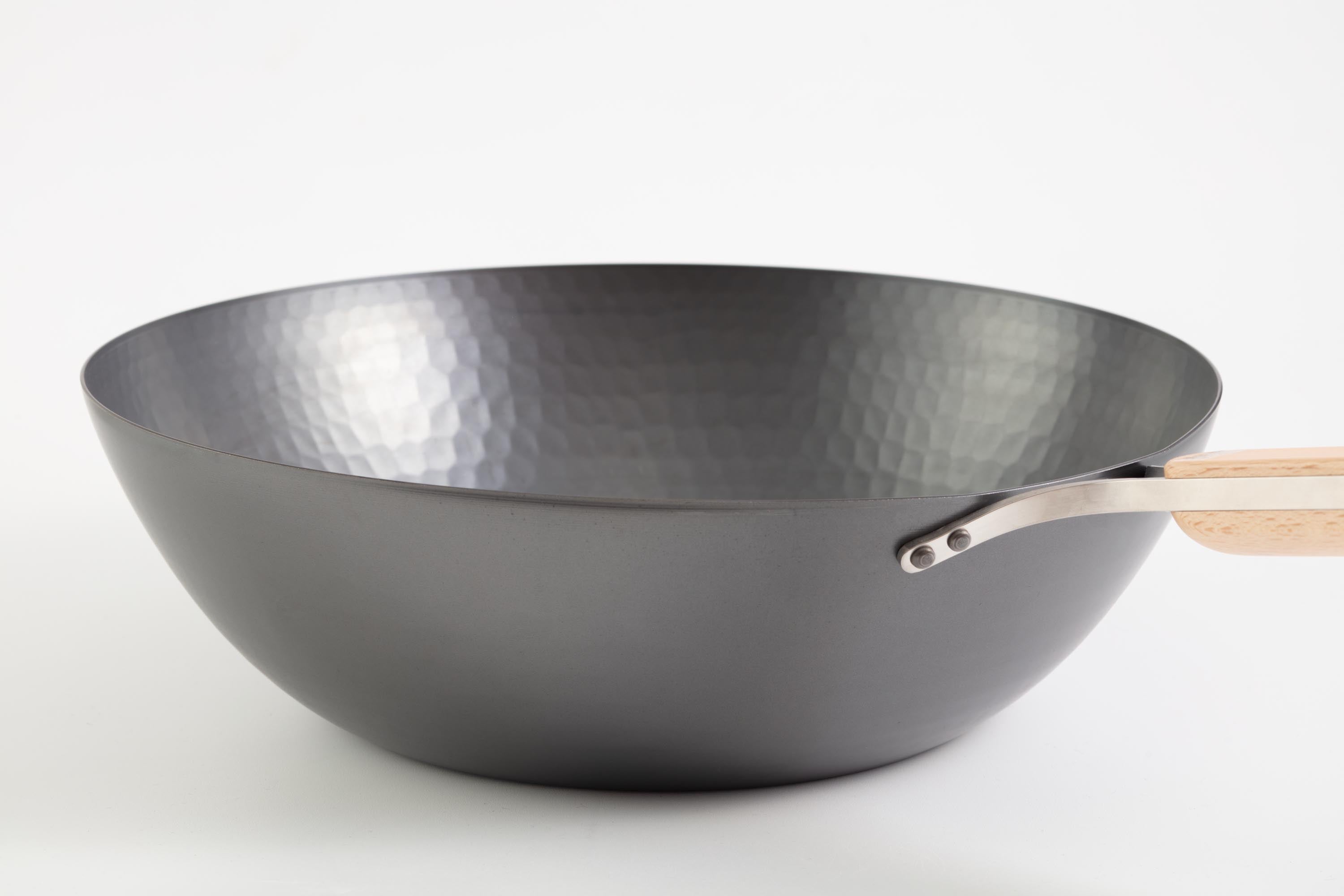
The short answer
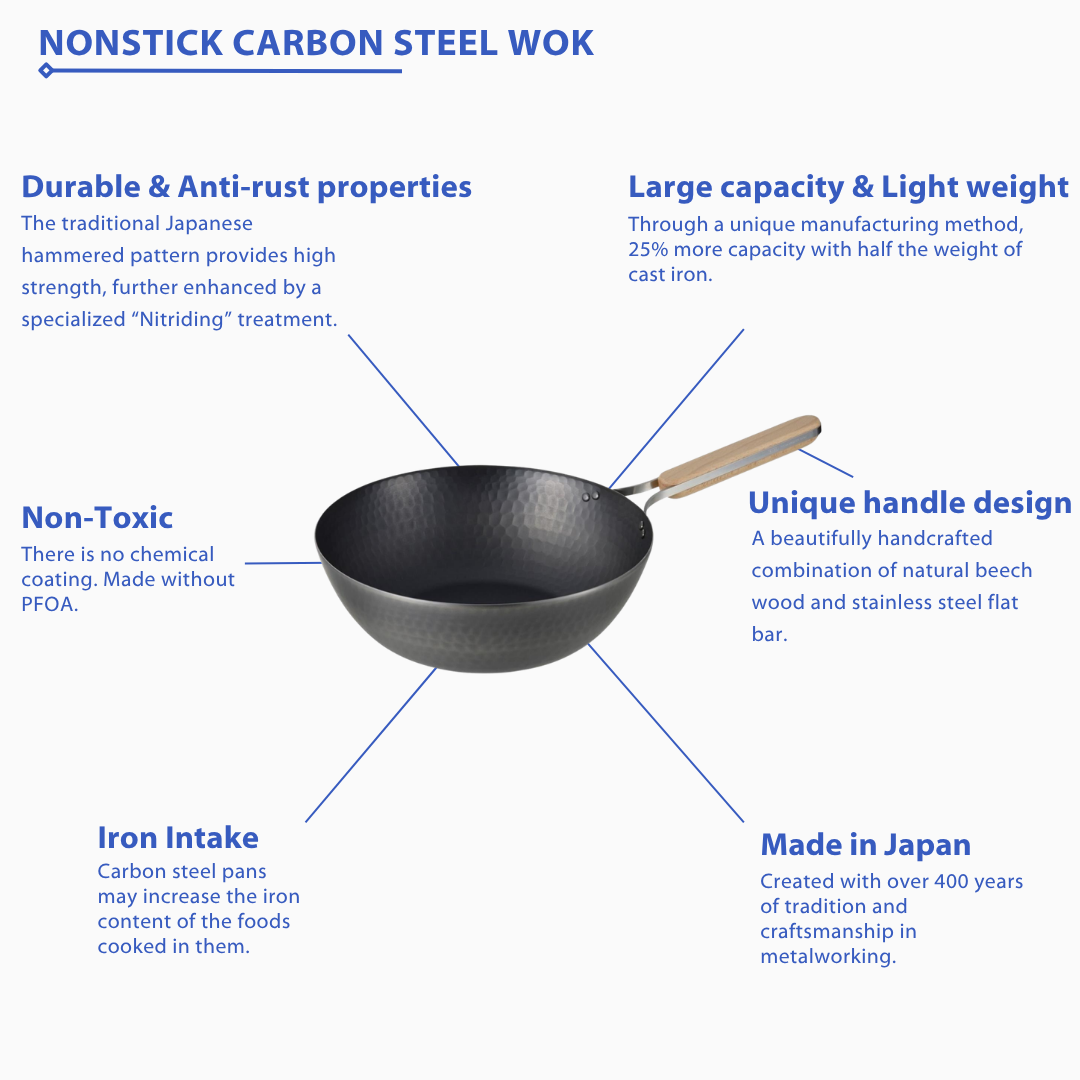
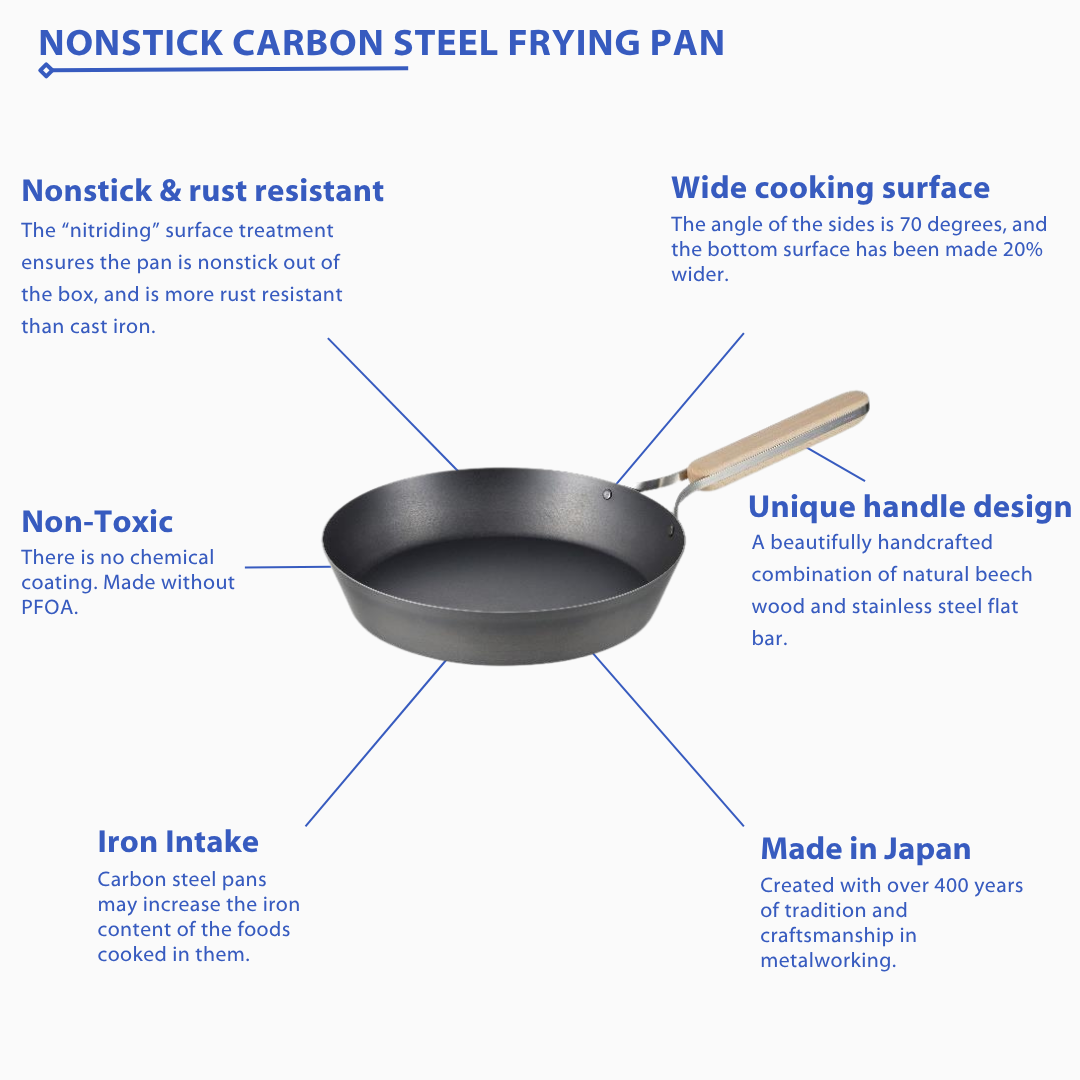
- Yes — carbon steel is one of the safest cookware surfaces you can cook on. It is simply iron and carbon, with no synthetic non-stick coating, which means no PTFE, no PFAS and no PFOA.
- Its non-stick quality comes from seasoning (baked-on oil) and, on Julien pans, a nitrided surface — a heat treatment, not a chemical layer. There is nothing to scratch off into your food.
- The only real caveats are practical, not toxic: carbon steel can react with very acidic foods, and it passes a little dietary iron into your cooking.
Find your everyday Enzo
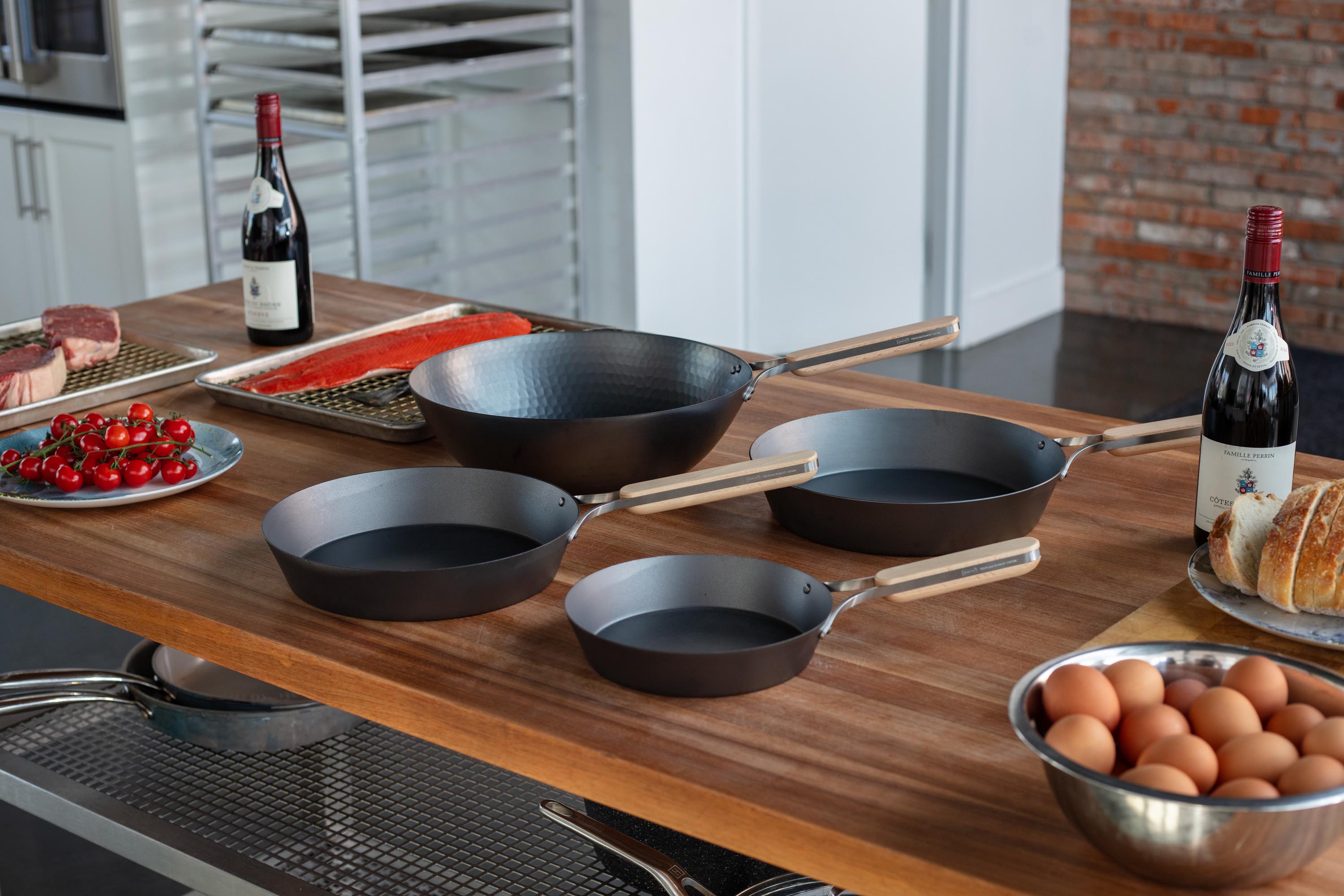
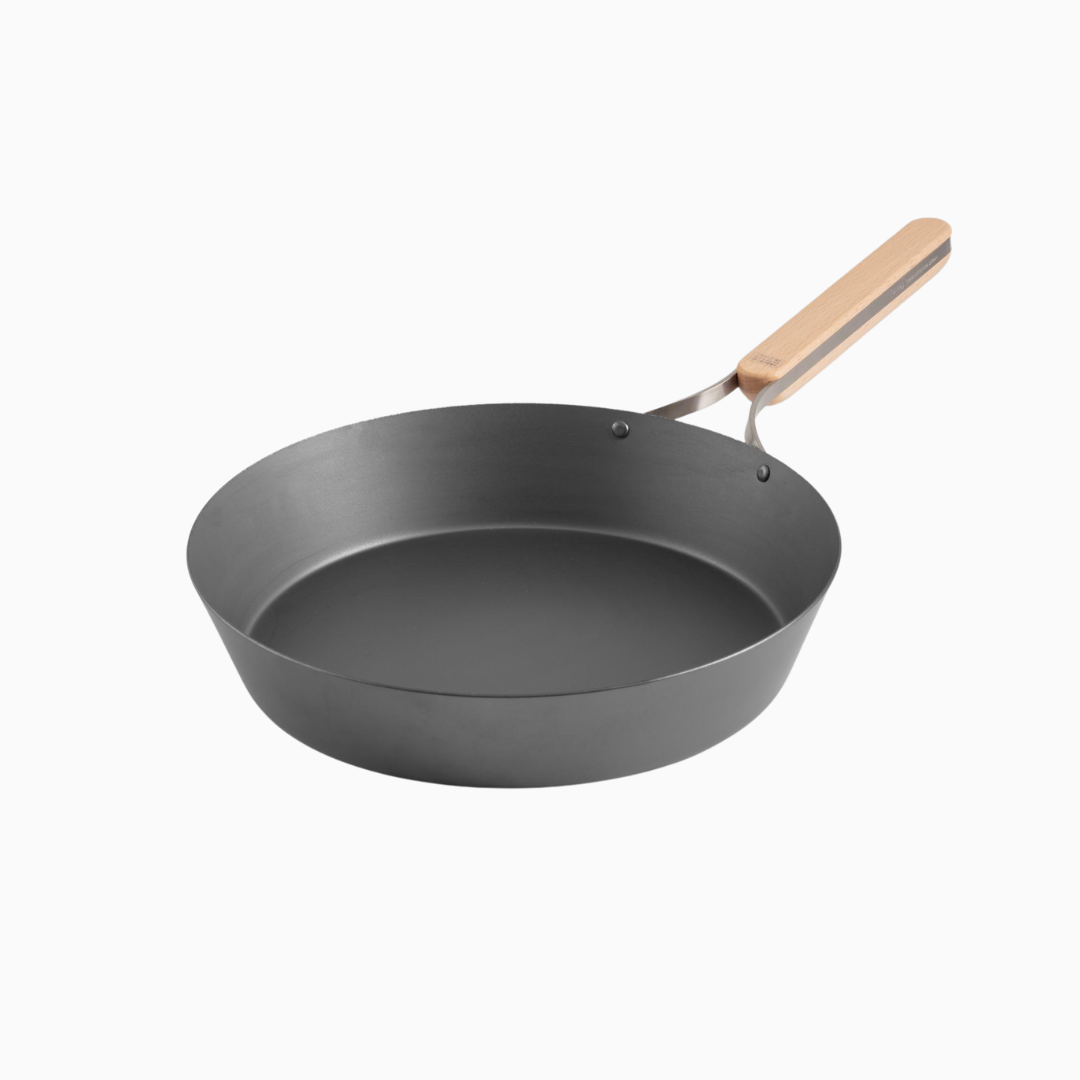
Japanese-made, pre-seasoned carbon steel. Choose a size for the way you cook.
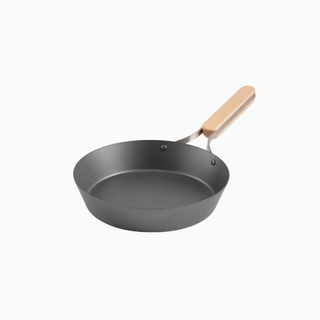 Enzo 8"Eggs, sides & single portions$134.00 CAD
View pan →
Enzo 8"Eggs, sides & single portions$134.00 CAD
View pan →
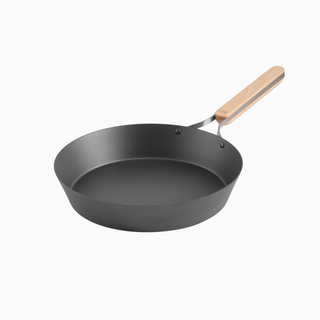 Enzo 10"Everyday breakfasts & dinners$164.00 CAD
View pan →
Enzo 10"Everyday breakfasts & dinners$164.00 CAD
View pan →
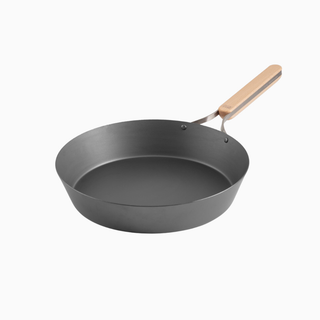 Enzo 11"More room for searing & batches$179.00 CAD
View pan →
Enzo 11"More room for searing & batches$179.00 CAD
View pan →
New to carbon steel? Start with our guide to cooking eggs.
“Non-toxic” is one of the most overused words in cookware marketing, so it is fair to be skeptical when any brand uses it. Carbon steel is one of the few surfaces where the claim holds up under scrutiny — not because of what is added to it, but because of what is not. Here is the straightforward version.
What is carbon steel actually made of?
Carbon steel is an alloy of iron and a small amount of carbon — roughly the same family as cast iron, just with less carbon, which makes it lighter and more responsive. That is the entire ingredient list. There is no non-stick coating bonded to the surface, which is exactly why it sidesteps the chemistry that worries people about conventional non-stick pans.
Is the non-stick surface safe?
This is where carbon steel differs from a Teflon-style pan. A coated non-stick pan relies on a fluoropolymer layer (PTFE) that can degrade at high heat and, historically, was made using PFOA. Carbon steel has none of that. Its slickness is built two ways:
- Seasoning — thin layers of oil are heated until they polymerize into a hard, food-safe, naturally slick patina. The more you cook, the better it gets.
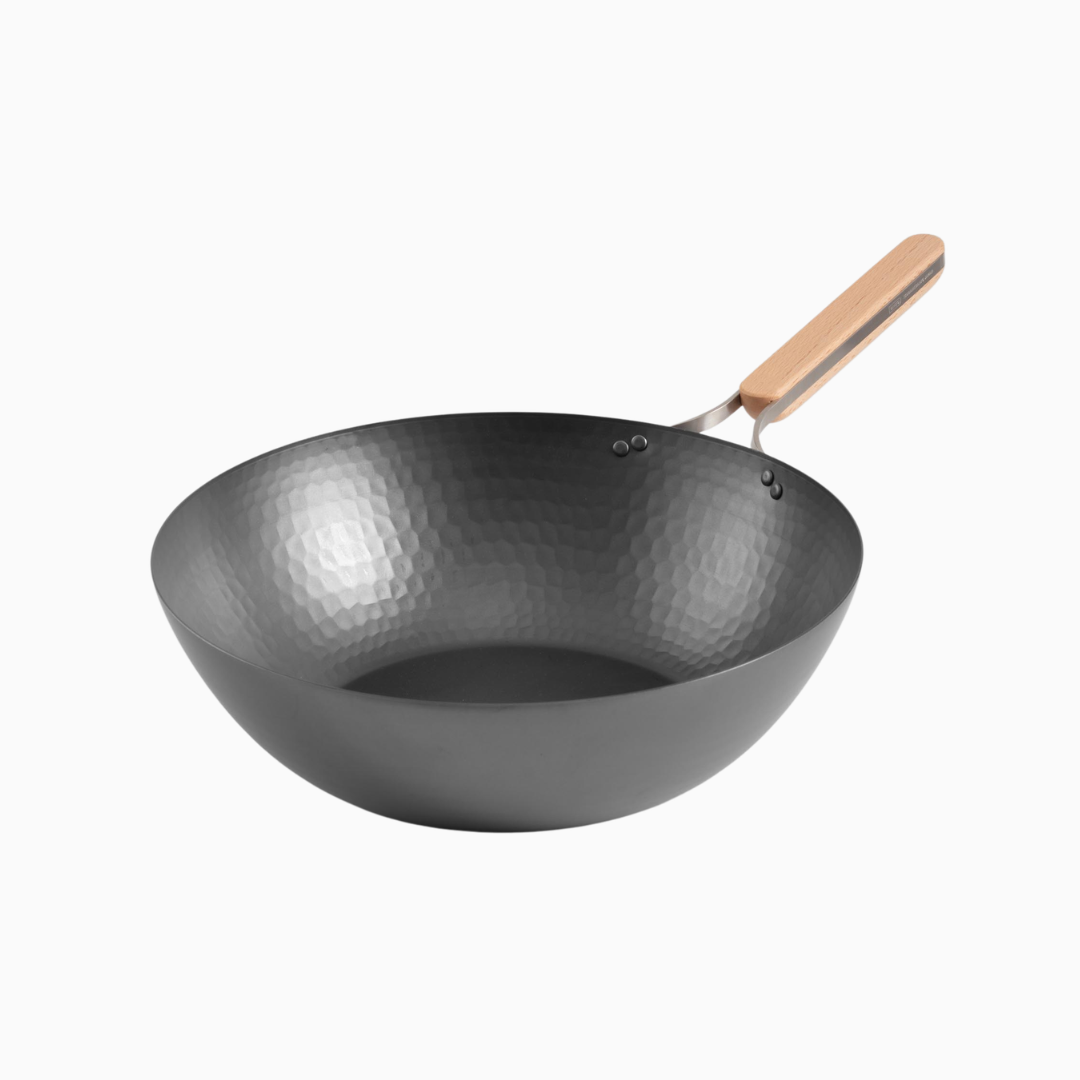
- Nitriding — Julien’s Enzo pans are nitrided, an eight-hour heat treatment that diffuses nitrogen into the surface of the steel itself. It hardens the pan and improves corrosion resistance. Crucially, it is a change to the metal, not a coating sitting on top of it — so there is nothing to flake, chip or wear through into your food.
What about PFAS, PFOA and PTFE?
Those three are the reason “non-toxic cookware” became a search term in the first place. All of them relate to synthetic non-stick coatings. Since carbon steel has no coating of any kind, it has no PFAS, no PFOA and no PTFE — not “free of” in the marketing sense, but genuinely absent because the category never uses them. Julien’s pans are made without PFOA and without chemical coatings, full stop.
Does carbon steel leach anything into food?
It can pass a small amount of iron into what you cook, especially with acidic dishes. For most people this is harmless and, if anything, a minor dietary plus. The exception worth naming honestly: people managing iron-overload conditions such as hemochromatosis may want to be mindful of iron intake from any iron or carbon-steel cookware. That is a conversation for a clinician, not a reason the pan is unsafe.
The real caveats (which are about cooking, not safety)
Carbon steel’s only genuine limitations are practical. Very acidic foods — a long tomato simmer, a lot of lemon or wine — can strip seasoning and pick up a faint metallic taste. It is not dangerous; it is just not what the pan is best at. And carbon steel needs to be dried and lightly oiled rather than left wet, or it will rust. Neither is a health issue; both are easily managed.
So, is it safe?
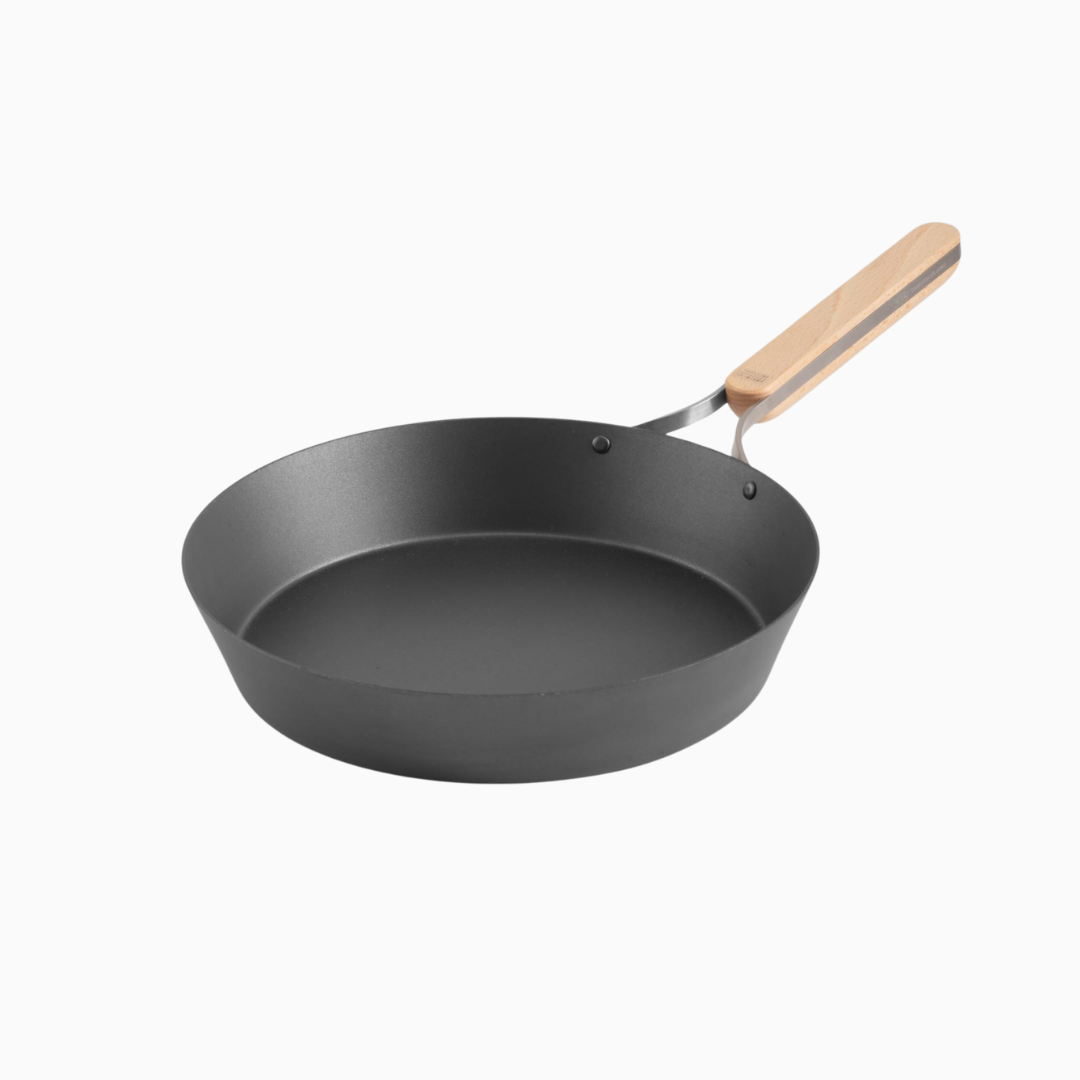
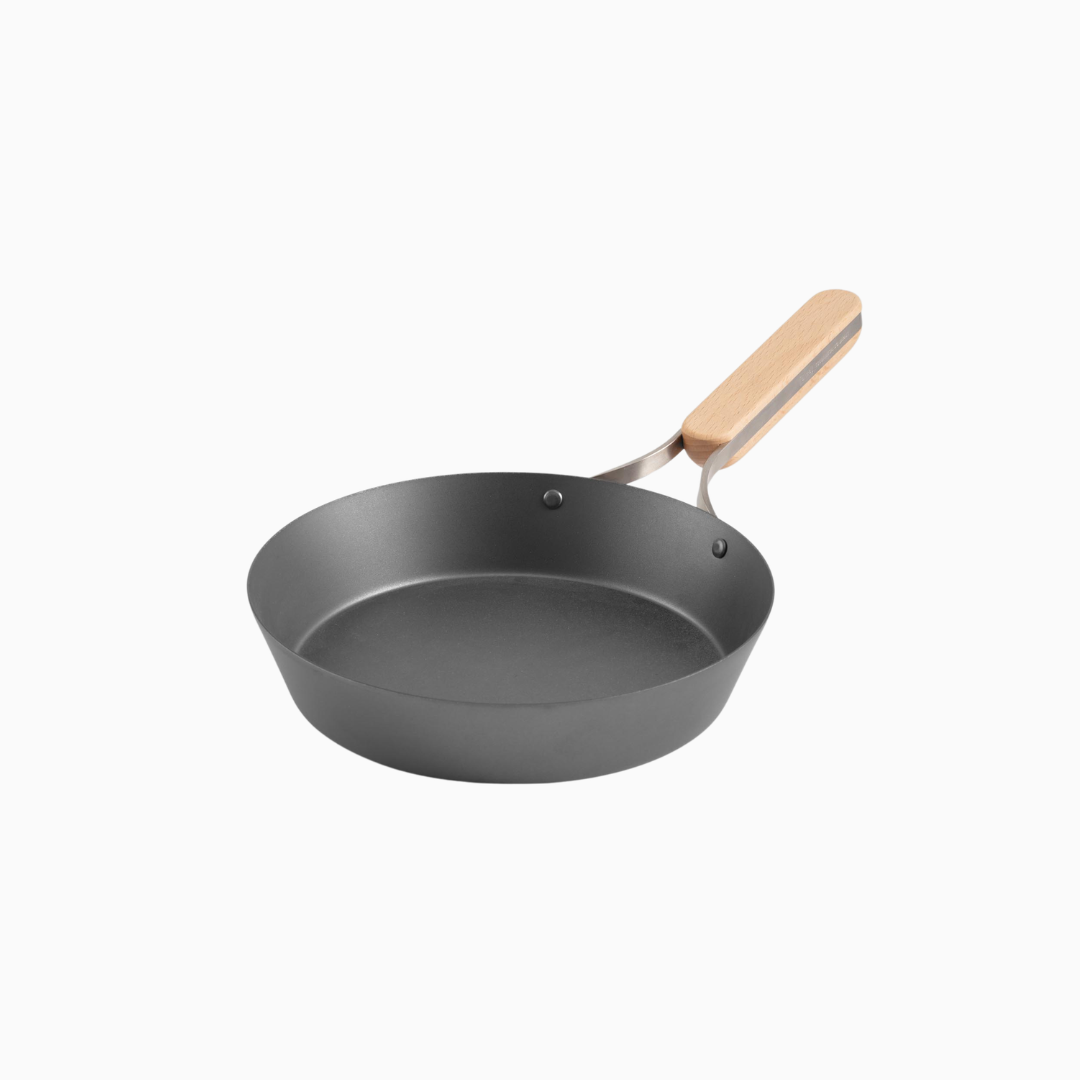
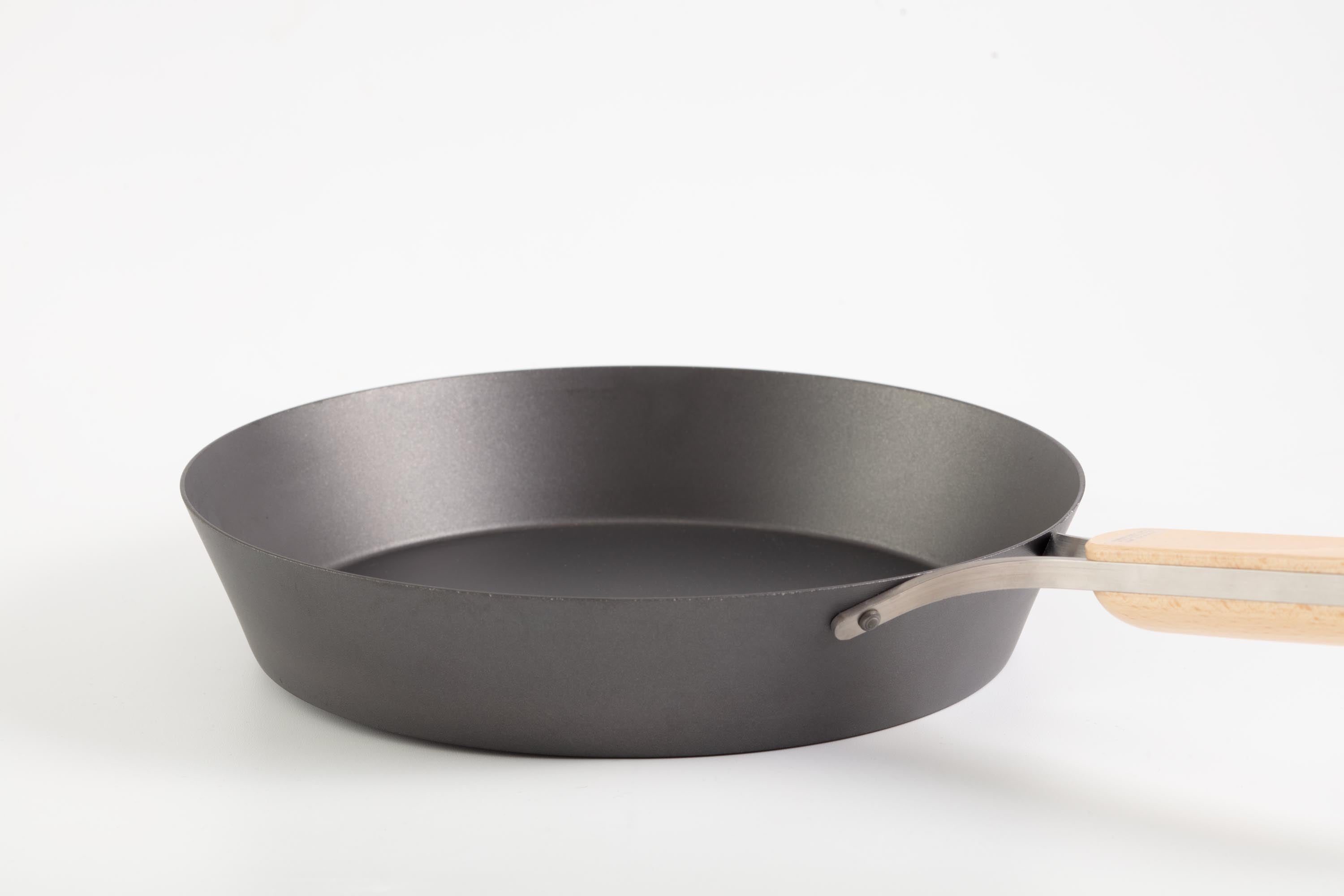
Yes. If your goal is to cook without synthetic coatings and the chemistry that comes with them, carbon steel is about as clean as cookware gets — a single, honest material that gets better with use. Julien’s take on it is nitrided carbon steel, hand-finished with a beech and stainless handle, made in Tsubame-Sanjō, Japan.
See the Enzo carbon steel pans →
Frequently asked questions
Is carbon steel non-stick without chemicals?
Yes. It becomes naturally non-stick through seasoning — polymerized oil — with no synthetic coating involved.
Is nitrided carbon steel safe?
Yes. Nitriding is a heat treatment that hardens the surface of the steel itself. It adds no coating and nothing that can leach or flake into food.
Does carbon steel have PFAS or Teflon?
No. Those are found in coated non-stick pans. Carbon steel has no coating, so it contains neither.
Can I cook acidic foods in carbon steel?
Occasionally, yes — but long simmers of very acidic foods can strip seasoning and add a metallic note, so they are best cooked elsewhere or in a well-seasoned pan.