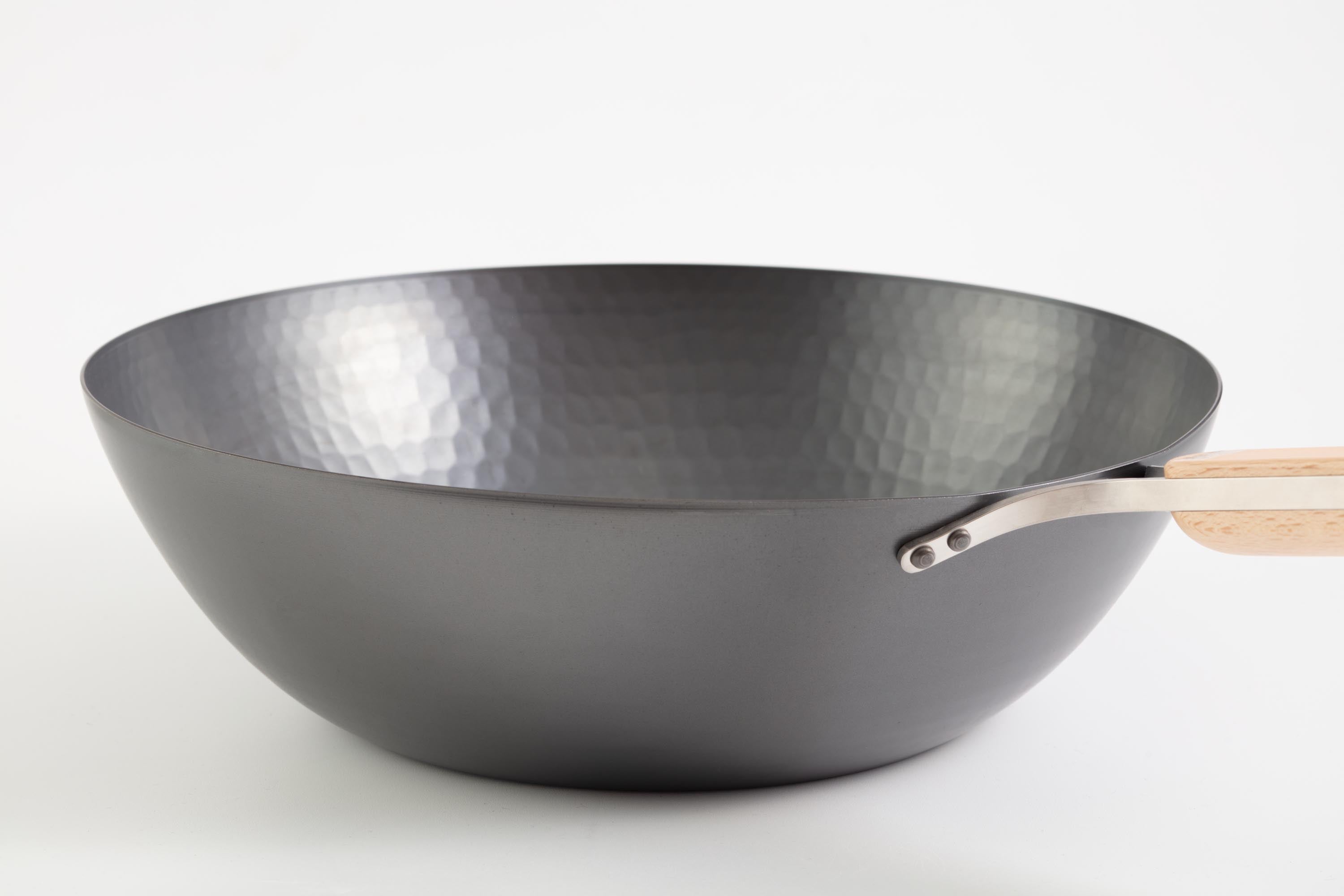
How to Cook Eggs in Carbon Steel
Cooking eggs in carbon steel is a rite of passage. It can also be breakfast, which is the more useful outcome. Eggs are delicate, quick and unforgiving of a cold pan. The good news is that the method is simple once you stop rushing the preheat.
Start with a seasoned surface
Eggs are easiest once the pan has some seasoning. A brand-new pan can cook eggs, but it may ask for more fat and better timing. If you are in week one, practice with onions, potatoes and mushrooms first, then return to eggs with confidence.
Fried eggs
- Preheat the pan over medium-low to medium heat.
- Add butter, ghee or oil and let it spread across the surface.
- Crack in the egg and lower the heat if the whites bubble aggressively.
- Let the edges set before trying to move it.
- Use a thin spatula and gentle confidence.
Omelettes
Use moderate heat and enough fat. Add beaten eggs, let the edges set, then move cooked curds gently toward the centre while tilting uncooked egg outward. Fill lightly. A carbon steel omelette does not appreciate a suitcase of vegetables.
Scrambled eggs
For soft scrambled eggs, carbon steel works best on low heat with butter and constant movement. If the pan is too hot, the eggs set before you can guide them. Remove the pan from heat before the eggs look fully done; carryover heat will finish them.
Common egg problems
- Julien note: Your first perfect carbon steel egg will feel absurdly satisfying. We support this reaction.
- Stuck whites: pan too cold, not enough fat or surface not seasoned enough.
- Burnt edges: pan too hot or butter browned too quickly.
- Rubbery scramble: heat too high or eggs cooked too long.
- Patchy omelette: filling too wet or pan not evenly preheated.