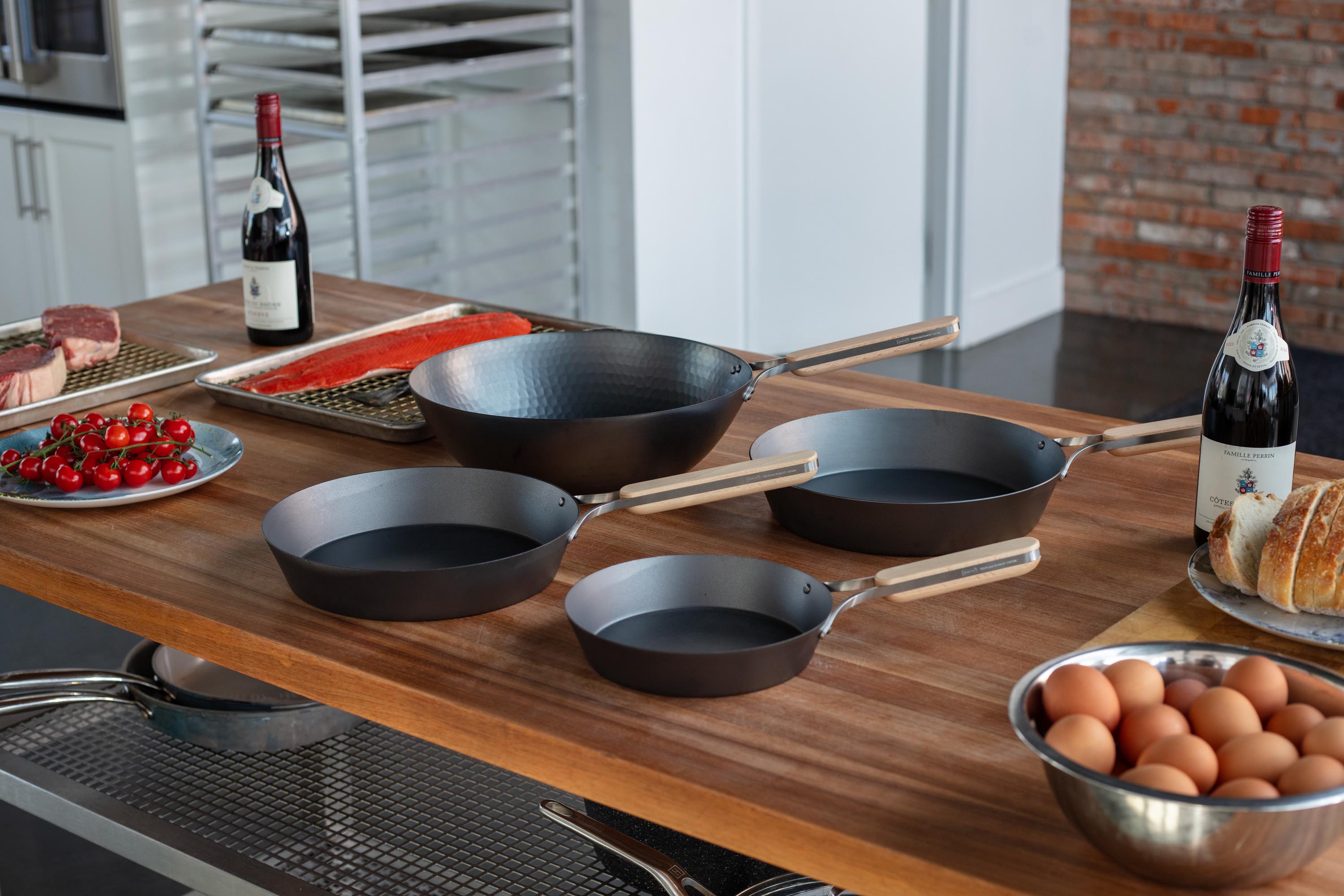
The short answer
- The best woks are carbon steel, not nonstick. Carbon steel takes the ripping-hot heat a good stir-fry needs; nonstick coatings can't, and break down when you push them.
- Flat-bottom woks suit Western stoves and induction. Round-bottom woks belong on a dedicated wok burner or a gas ring with a wok holder.
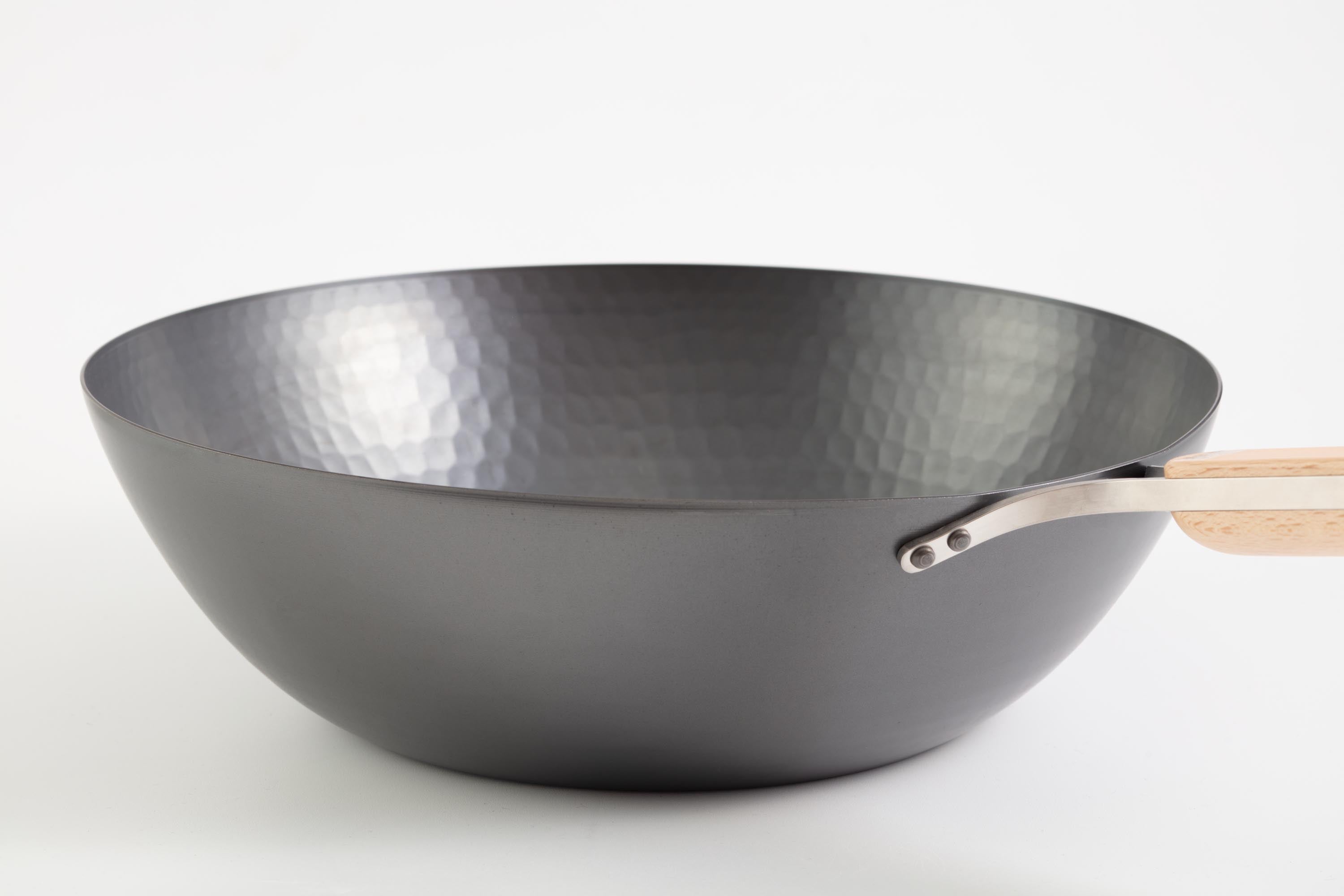
- Our low-maintenance pick is the Julien Enzo 12.5" wok: nitrided carbon steel, coating-free, induction-ready, and pre-seasoned so you skip the from-scratch ritual.
- For a popular pre-seasoned value pick, Yosukata is the crowd favorite. For premium, look at Made In or Mauviel; for classic budget, Joyce Chen.
A wok is a simple tool with a short list of jobs: get very hot, move food fast, and toss without spilling half of it on the burner. Almost everything that makes a wok good or bad comes down to material and shape. So before we get to specific picks, two things worth settling.
Why carbon steel beats nonstick for a wok
Stir-frying is a high-heat technique. You want the pan hot enough to sear and to build wok hei, that faint smoky char that separates takeout from a limp pile of vegetables. Carbon steel handles that. It's iron with a little carbon, so it takes and holds serious heat, and it's lighter and more responsive than cast iron, which matters when you're tossing food or lifting the pan off the flame to control the cook.
Nonstick woks can't really do this. PTFE-style coatings are not built for the temperatures a proper stir-fry reaches; push them and the coating degrades, which is bad for the pan and not something you want in your food. A nonstick wok is fine for gentle work, but it can't take true high heat, which is most of the reason to own a wok in the first place.
Carbon steel also earns its non-stick the honest way: through seasoning, a thin layer of polymerized oil that builds up with use. It's coating-free, it lasts indefinitely if you look after it, and when it fades you just re-season rather than replace the pan. The trade-off is care. Carbon steel reacts with very acidic foods, which can strip seasoning and leave a faint metallic note, and it needs drying plus a light film of oil after washing or it can rust. None of that is hard once it's habit. If you want the reasoning in more depth, see our guide on whether carbon steel cookware is safe.
Flat bottom vs round bottom: which do you need?
This is the question that trips up most first-time buyers, and the answer depends entirely on your stove.
Round-bottom woks are the traditional shape. They concentrate heat at a single point and give you that deep, sloped well for pushing food up the sides. But they need a dedicated wok burner or a gas ring with a wok ring to sit steady. On a flat Western cooktop they wobble, and on induction they simply don't work, because induction needs flat contact with the surface.
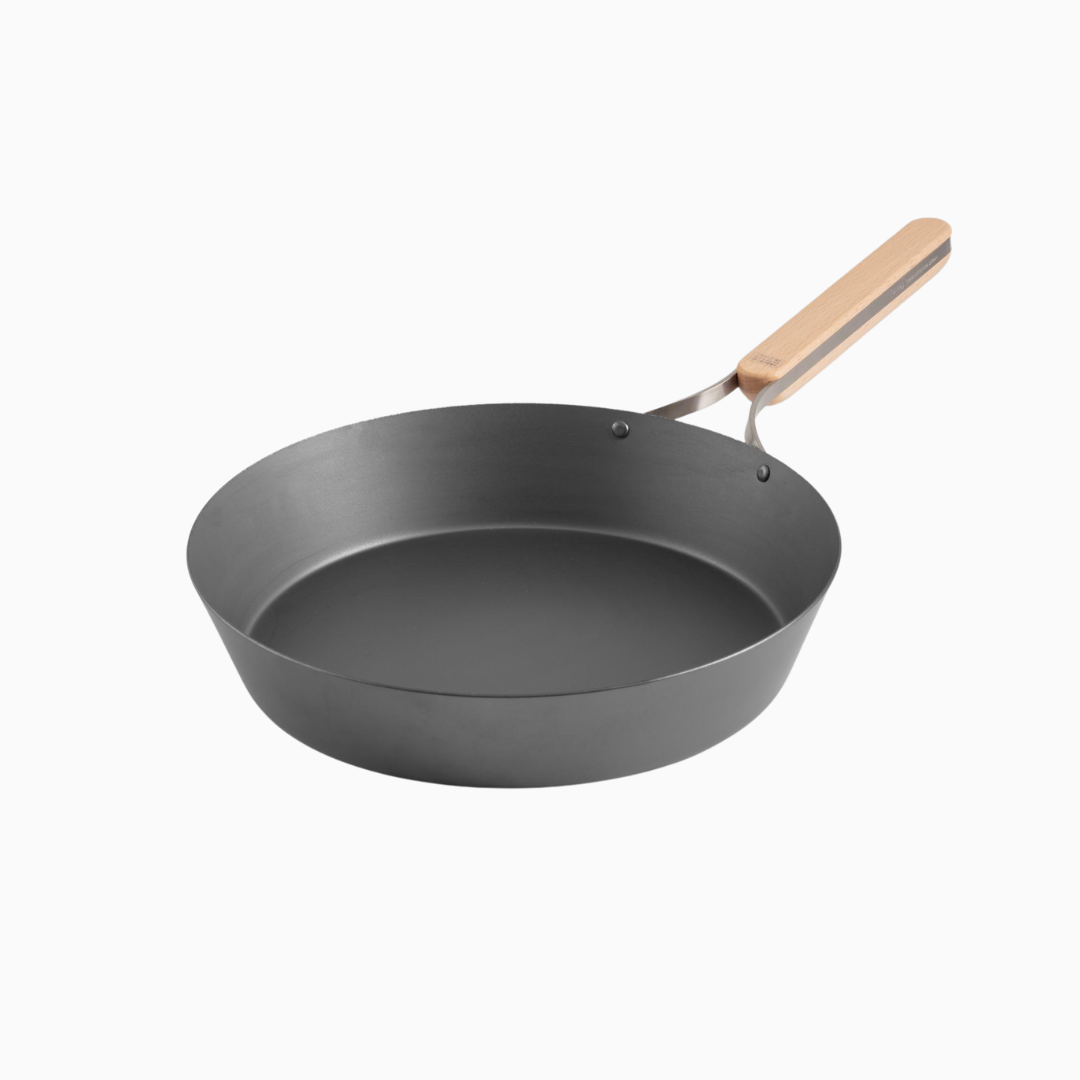
Flat-bottom woks have a small flat base that sits stable on any stove, including electric, glass, and induction. You lose a little of the pure round-bottom experience, but for most home kitchens it's the practical choice. If you cook on induction or a standard range, buy flat-bottom and don't overthink it.
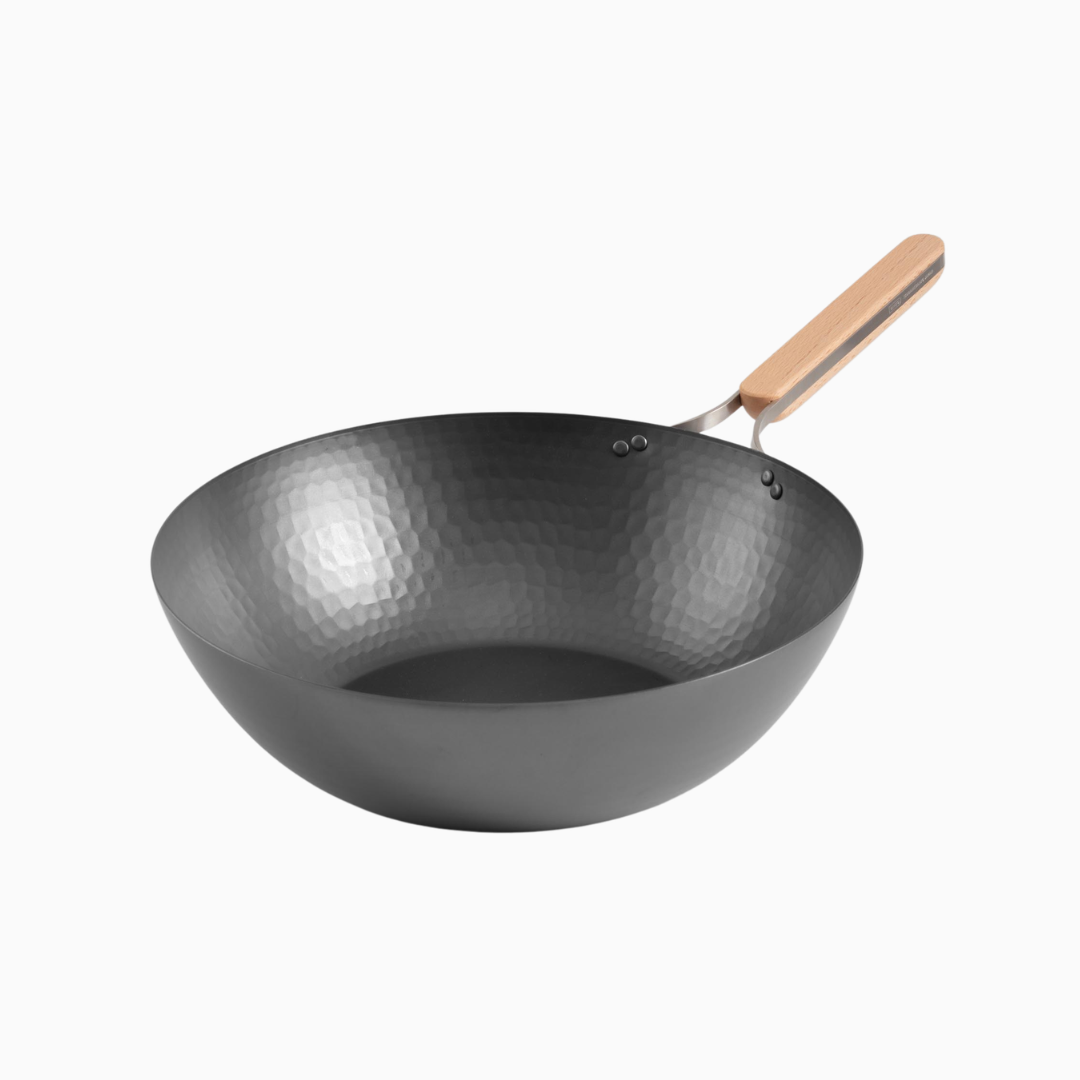
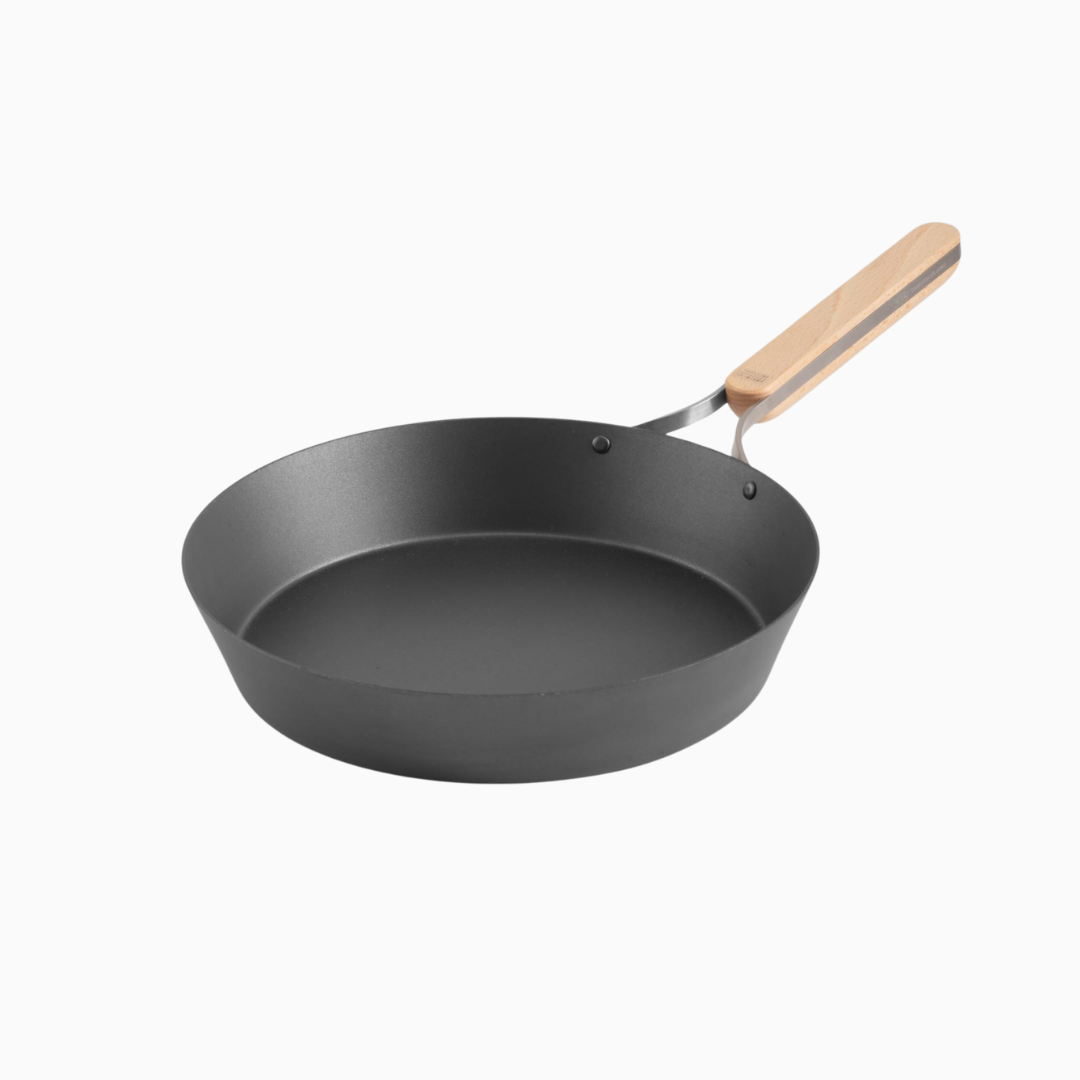
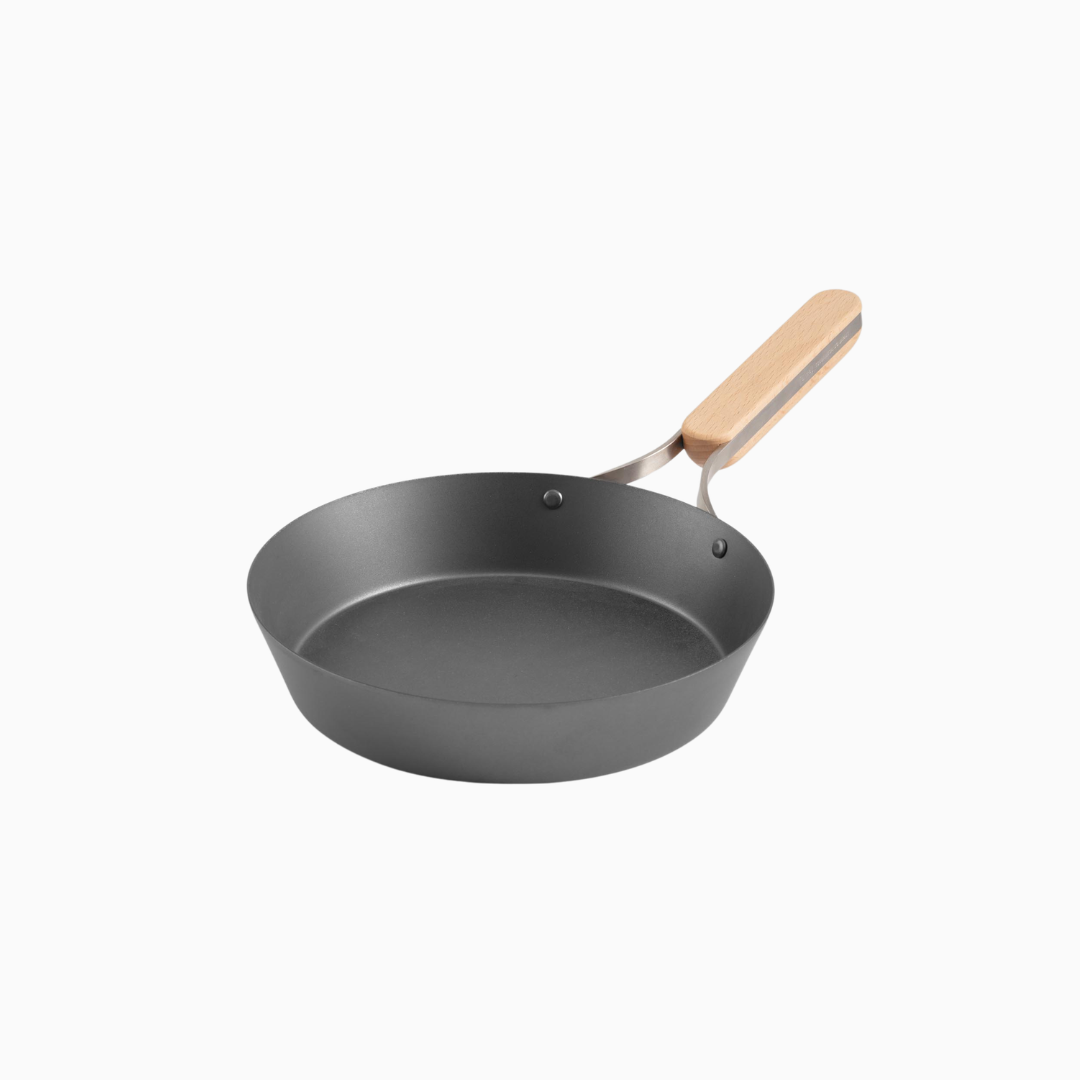
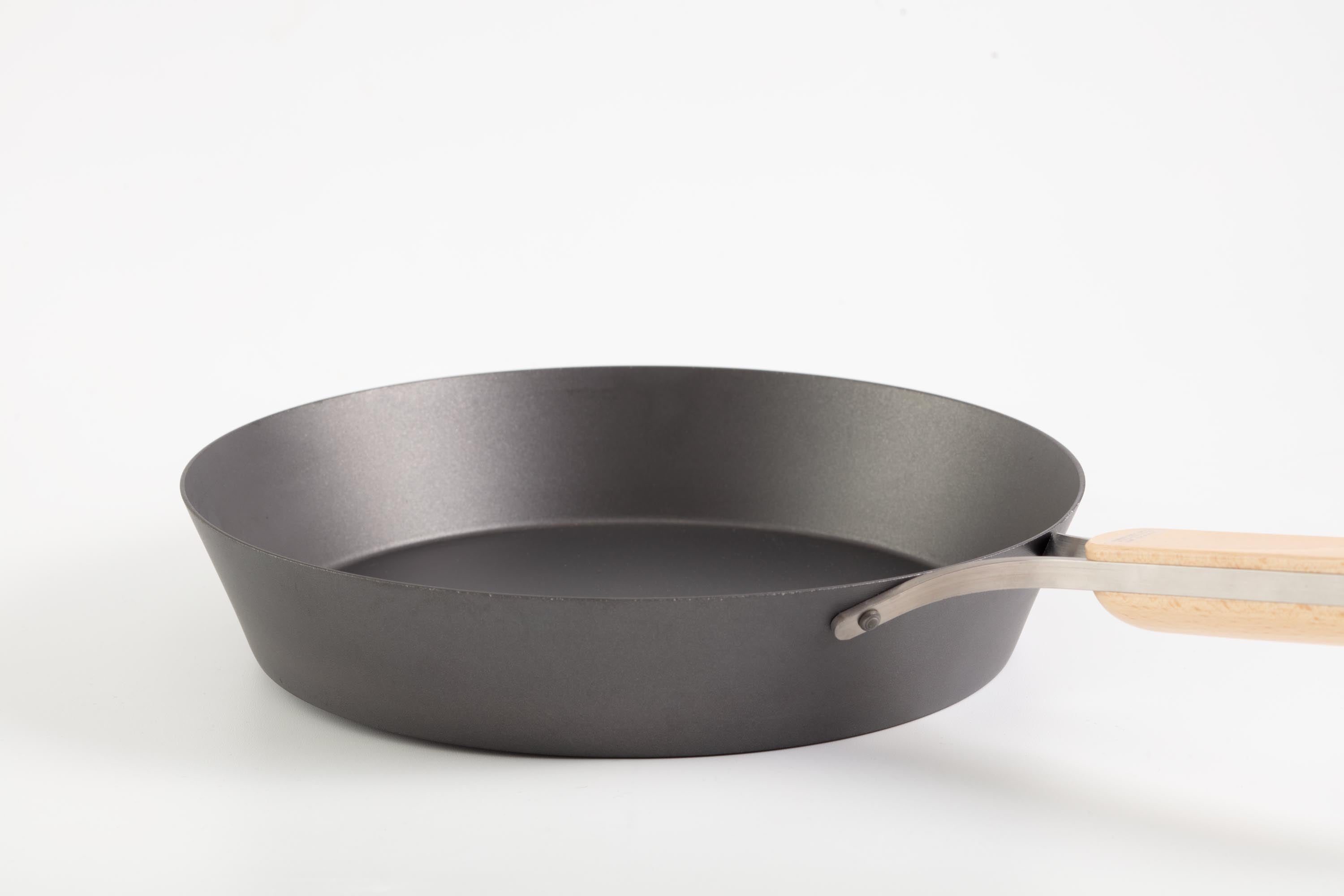
Best low-maintenance, non-toxic, induction wok: Julien Enzo 12.5"
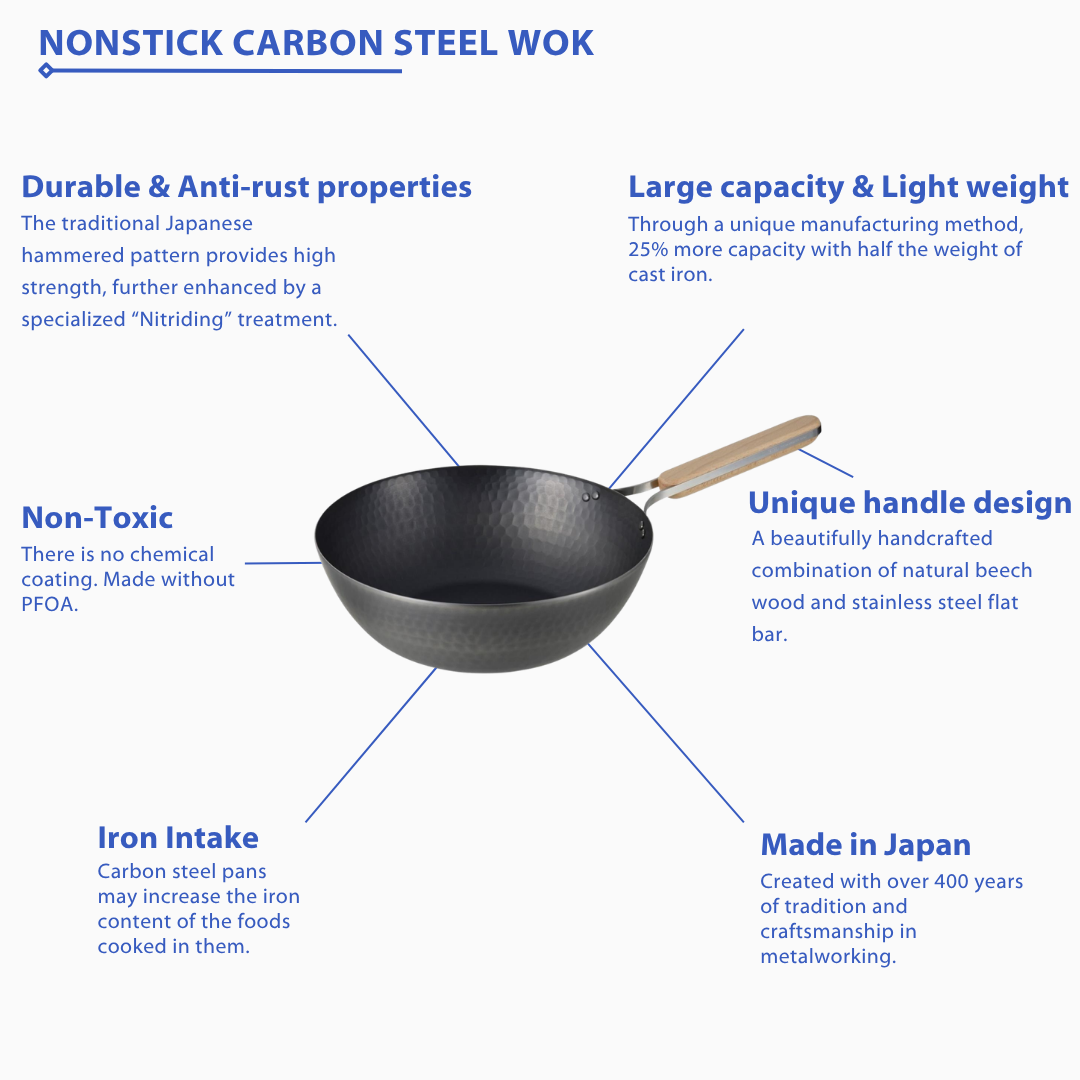
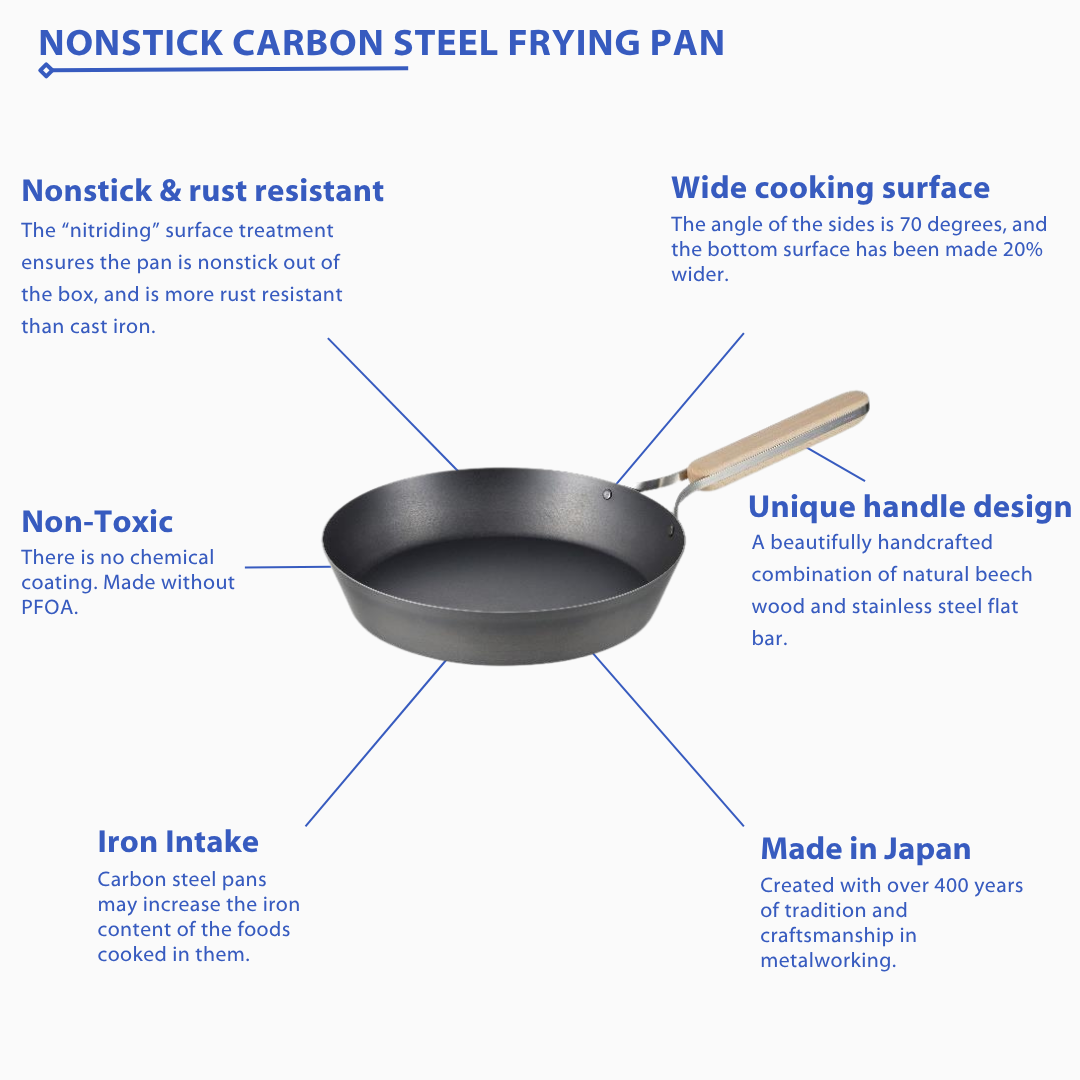
We make this one, so take the endorsement with that in mind, but the lane it sits in is a real one. The Enzo 12.5" wok is nitrided carbon steel. Nitriding is an 8-hour heat treatment that diffuses nitrogen into the steel's surface for hardness and corrosion resistance. It's a treatment of the metal itself, not a coating, so there's no PTFE and no PFAS, and it's made without PFOA. Non-stick comes from the nitrided surface plus seasoning.
The practical payoff is lower maintenance. It arrives pre-seasoned, so you skip the from-scratch seasoning ritual that bare carbon steel demands, and the nitrided surface is more forgiving about rust than untreated steel. It's magnetic carbon steel with a flat base, so it works on induction. The handle is beech wood with 304 stainless. The honest limits are the carbon-steel limits above: go easy on very acidic sauces, and dry and oil it after washing. If you want to build up seasoning further or restore it, our guide on carbon steel care and safety covers the basics.
Best for: cooks who want carbon-steel performance and coating-free, non-toxic materials without the highest-maintenance version of ownership, and anyone on induction.
Best pre-seasoned value pick: Yosukata
If you want the most-recommended home wok that doesn't cost much, Yosukata is the one that comes up again and again. It's carbon steel, comes pre-seasoned, and the flat-bottom version is a popular, sensible choice for home cooks on standard stoves. It's the wok a lot of people buy first, and for good reason: it delivers real high-heat carbon-steel cooking at an accessible price.
Best for: first-time wok buyers who want proven carbon-steel performance and pre-seasoned convenience without spending a lot.
Best premium forged wok: Made In
Made In is a well-marketed direct-to-consumer brand whose carbon-steel wok is forged and induction-compatible. It sits at the premium end and is widely praised by reviewers who want a polished, modern take on carbon steel with the fit and finish to match the price. If you like buying from a brand with a strong design point of view and don't mind paying for it, it's a solid choice.
Best for: buyers who want a premium, well-built forged wok and are happy to pay up for brand and finish.
Best classic budget wok: Joyce Chen
Joyce Chen is the long-running classic in this category, a carbon-steel wok that's been a budget standby for decades. It's plain, it works, and it's cheap. There's nothing fancy here, but a plain carbon-steel wok is most of what you need, and this one has earned its reputation the slow way.
Best for: cooks who want a no-frills, low-cost carbon-steel wok from a name that's been doing it a long time.
Best French premium: Mauviel M'Steel
Mauviel is a French maker with a long professional reputation, and its M'Steel line is bare carbon steel built to a high standard. Like most traditional bare carbon steel, it needs seasoning from scratch, so it asks more of you up front. In return you get a heavy-duty, professional-grade pan from a heritage brand that reviewers respect.
Best for: cooks who want a heritage French pan and don't mind seasoning it themselves.
How to choose a wok
Work through these in order and the decision mostly makes itself.
- Match the bottom to your stove. Induction, electric, or glass? Buy flat-bottom. Dedicated wok burner or gas with a wok ring? Round-bottom is on the table.
- Choose carbon steel over nonstick. If you actually want high heat and wok hei, this isn't close. Save nonstick for eggs, not stir-fries.
- Decide how much maintenance you'll accept. Bare carbon steel (Mauviel, and much of the category) wants seasoning from scratch and diligent drying. Pre-seasoned (Yosukata) skips step one. Nitrided (Enzo) is the most forgiving about rust while staying coating-free.
- Size it right. Around 12 to 14 inches suits most home stir-fries. Too big and the edges outrun a home burner's heat; too small and food steams instead of searing.
- Set your budget honestly. Classic budget (Joyce Chen) and value (Yosukata) get the job done. Premium (Made In, Mauviel) buys finish, heft, and brand, not necessarily better stir-fries.
Frequently asked questions
Is carbon steel better than nonstick for a wok?
Yes, for stir-frying. Carbon steel takes the high heat a real stir-fry needs, while nonstick coatings can't handle those temperatures and break down when pushed. Nonstick is fine for gentle cooking but not for the searing heat that makes a wok worth owning.
Do I need a flat-bottom or round-bottom wok?
It depends on your stove. Flat-bottom woks sit stable on any surface, including induction, electric, and glass. Round-bottom woks need a dedicated wok burner or a gas ring with a wok holder, and won't work on induction.
Does the Julien Enzo wok need seasoning?
It arrives pre-seasoned, so you can cook right away, and the nitrided surface is more forgiving than bare carbon steel. Non-stick still improves with use, and you should dry it and add a light film of oil after washing.
Is a nitrided carbon steel wok non-toxic?
Nitriding treats the steel's surface rather than adding a coating, so there's no PTFE or PFAS, and it's made without PFOA. Its non-stick comes from the nitrided surface plus seasoning, not a synthetic coating.