The short answer
- Season a wok by washing off the factory oil, heating it dry until it changes color, then baking on thin layers of high-smoke-point oil until they turn dark and slick.
- Use it over high heat — hot pan first, then oil, then food — and keep everything moving. That is how you build wok hei, the smoky flavor of good stir-fry.
- Clean it with hot water and a soft brush, dry it on the burner, and wipe on a little oil. Skip long soaks and the dishwasher.
- Re-season only when the surface looks dull or starts to stick. It is a quick fix, not a chore.
Before first use: the seasoning steps below are for a wok that needs seasoning. Julien lists the Enzo wok as pre-seasoned; follow its supplied first-use care instructions rather than stripping or heat-bluing it. Handle materials also determine whether oven seasoning is permitted.
A carbon steel wok is one of the most rewarding pans you can own, and one of the most misunderstood. Some arrive unseasoned and others are ready for first-use cleaning and cooking. Either way, a small care routine helps the surface develop through use. Here is the whole routine, with nothing mystical about it.
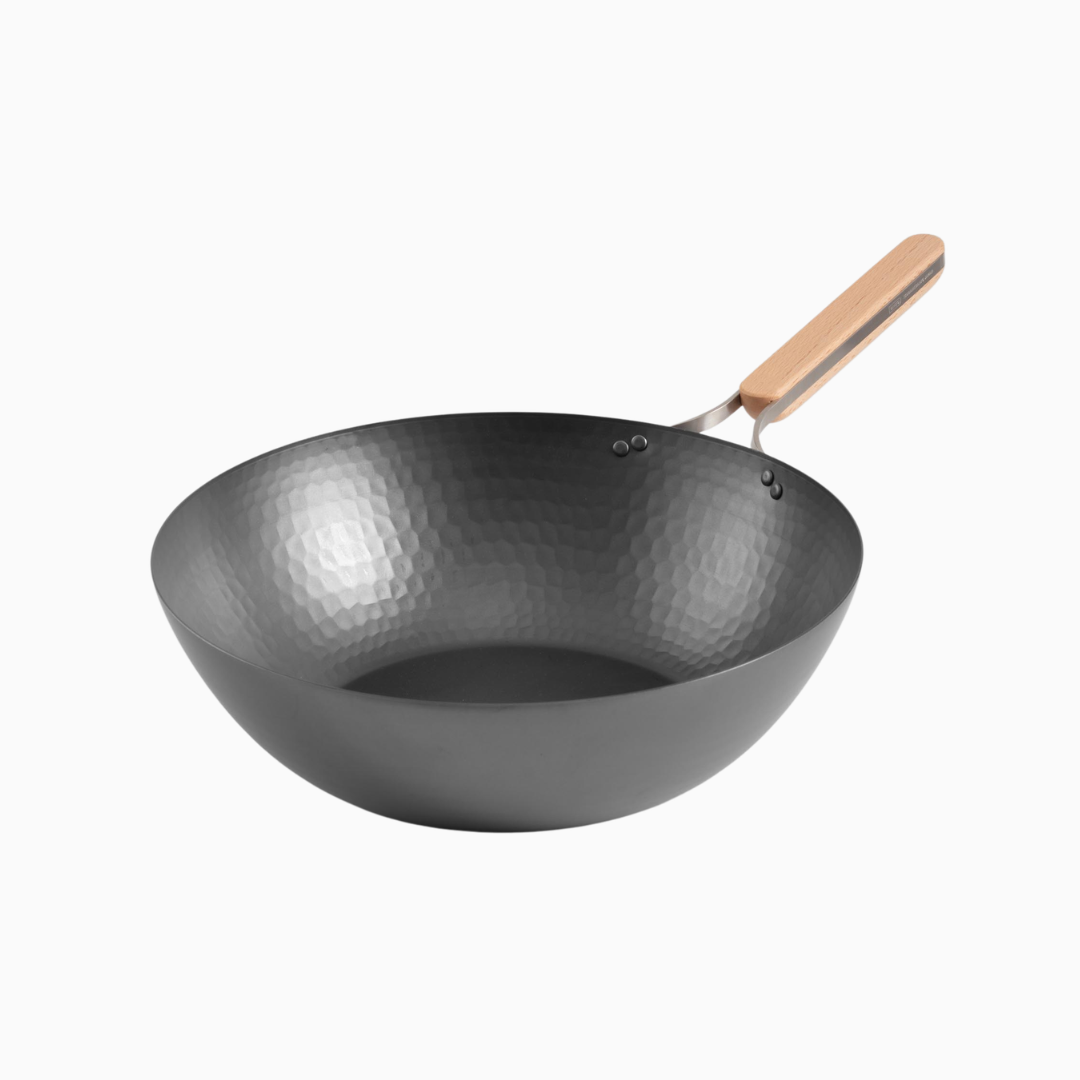
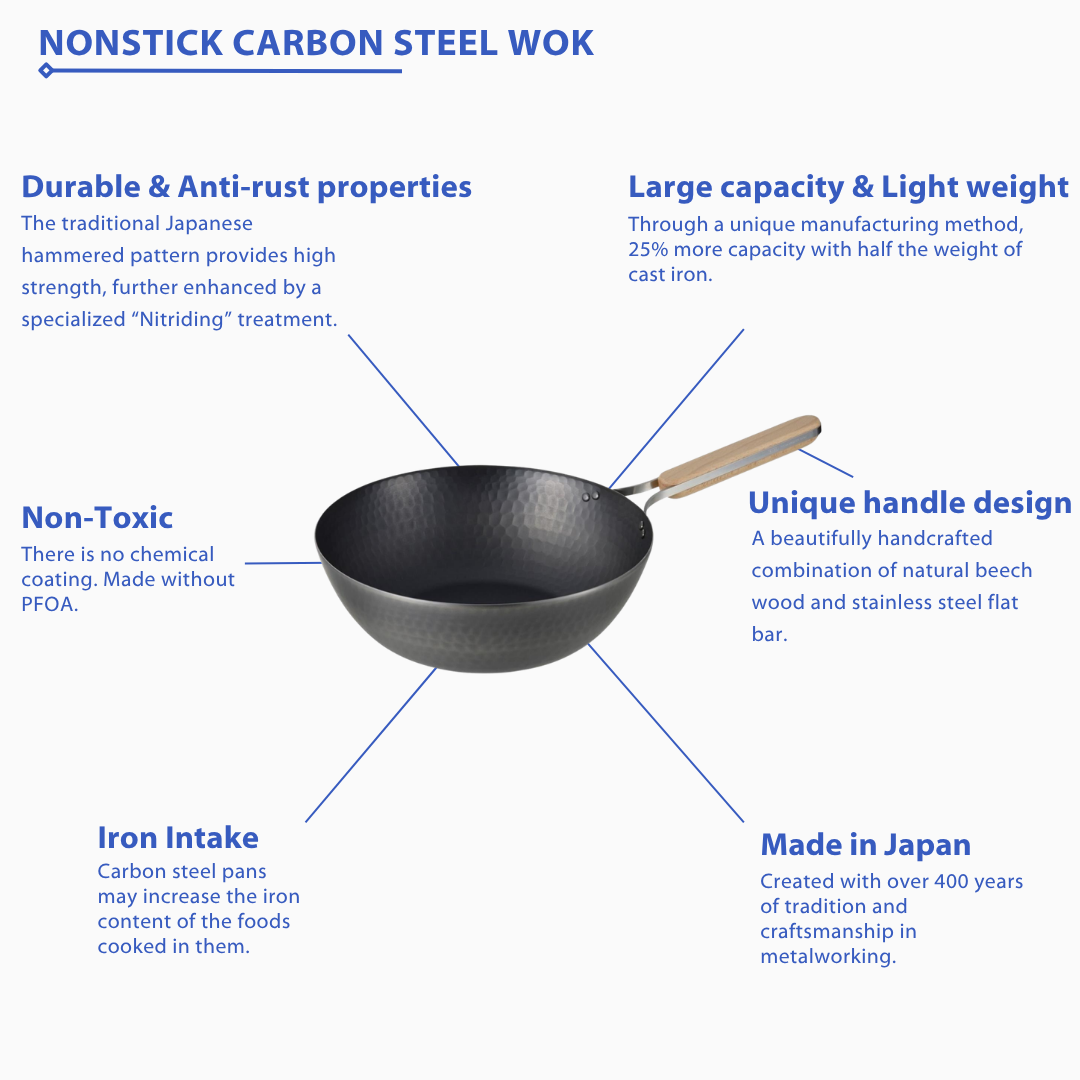
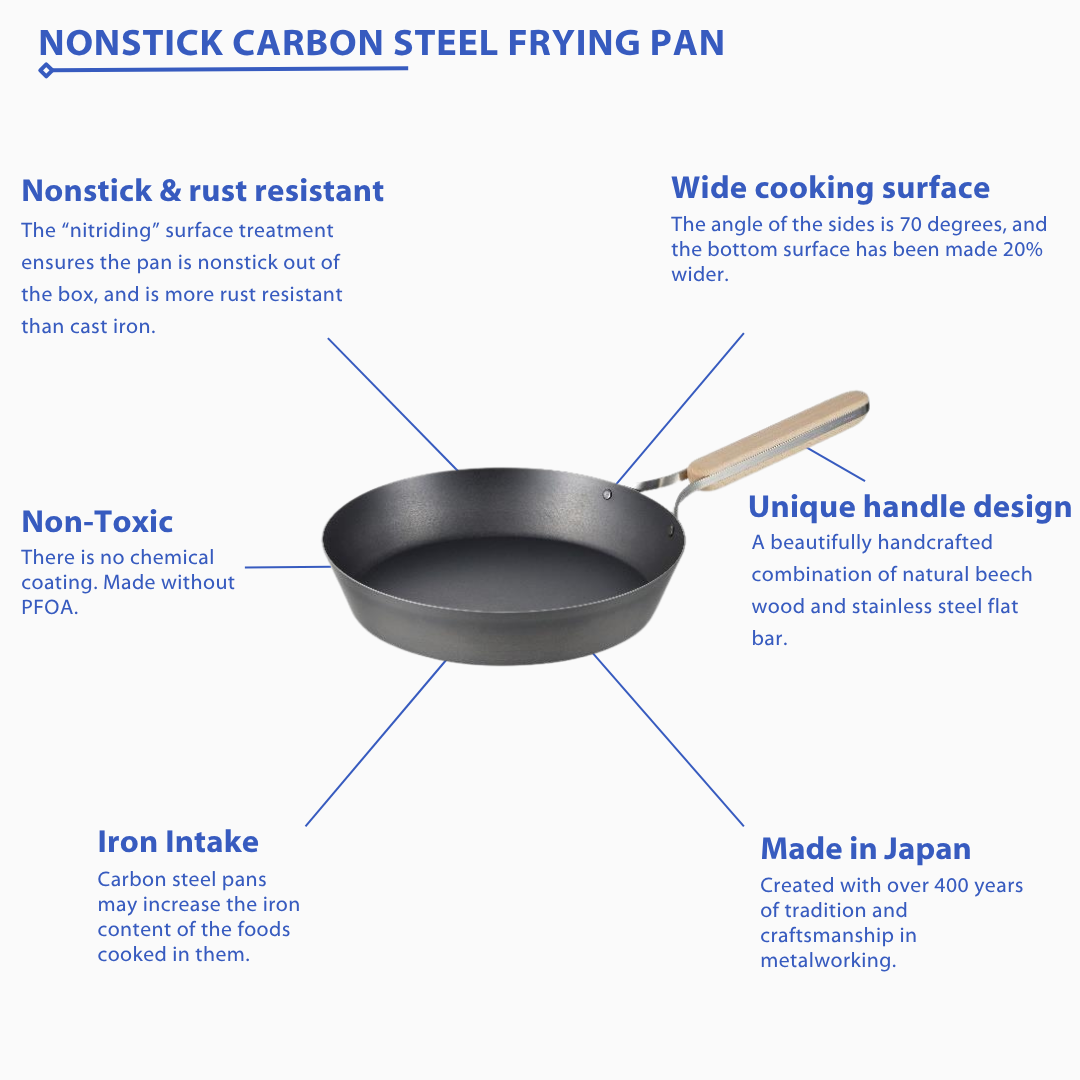
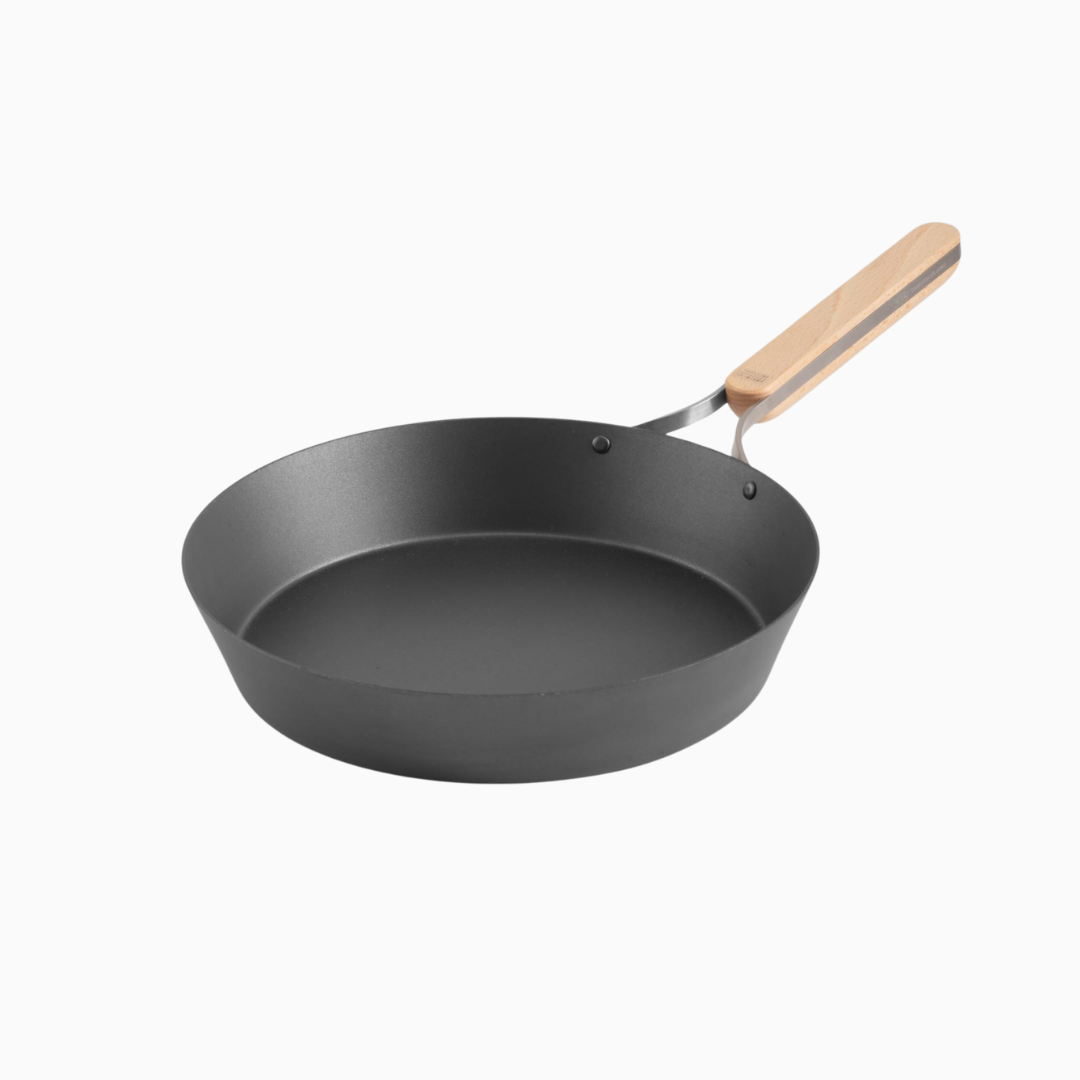
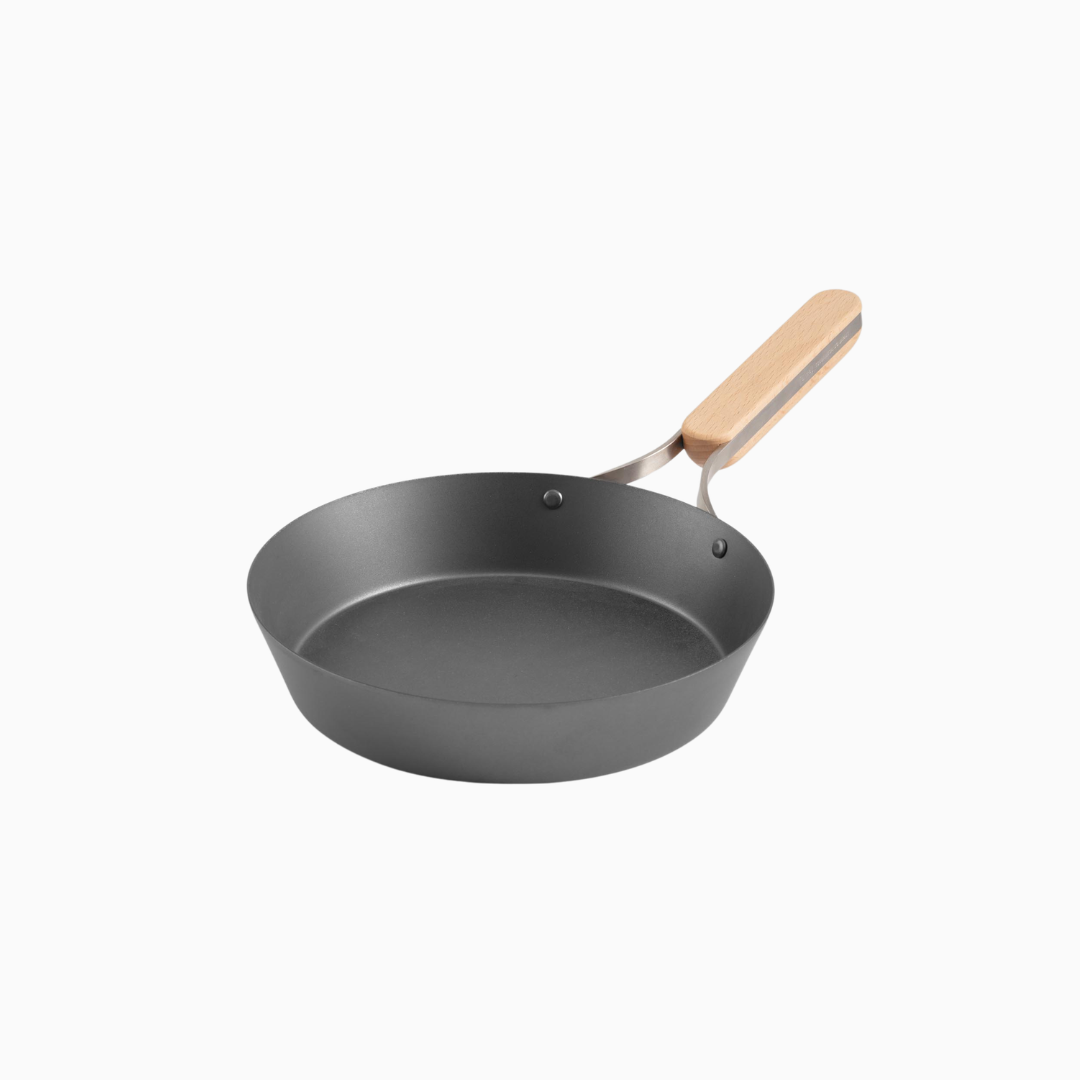
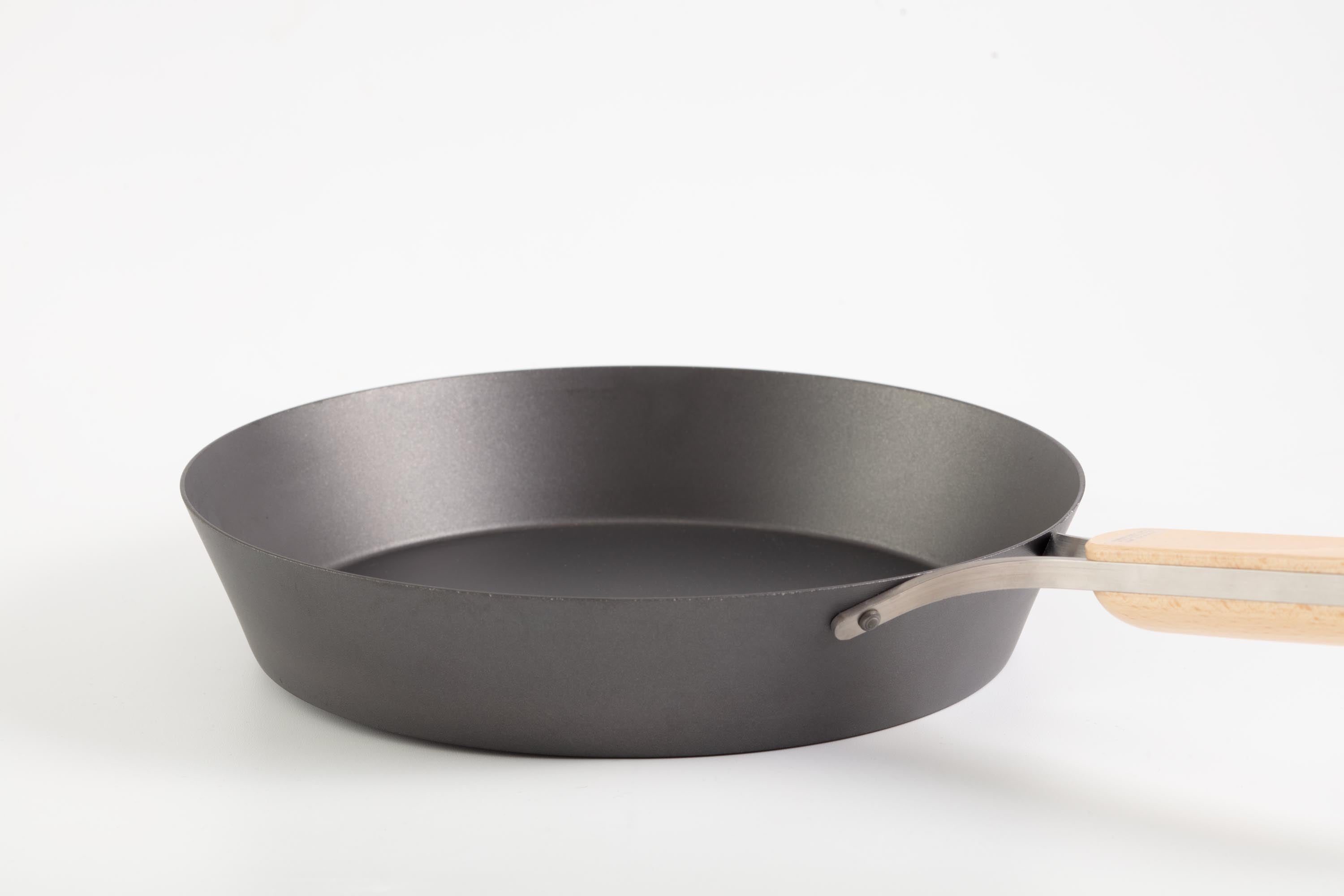
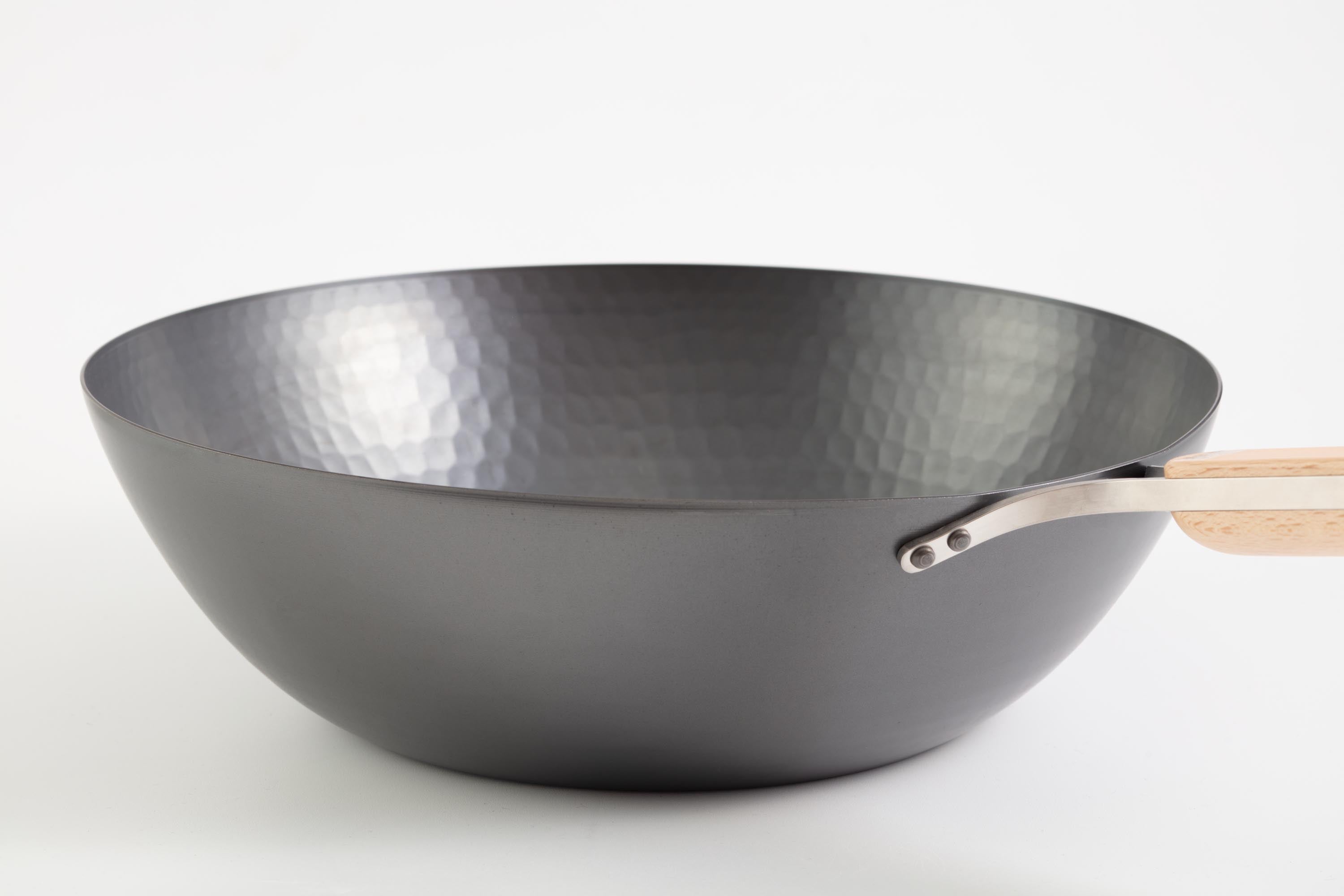
We will use the Enzo carbon steel wok as the reference. It is nitrided carbon steel — iron and a little carbon, given an eight-hour heat treatment that diffuses nitrogen into the surface for hardness and corrosion resistance. That is a change to the metal itself, not a coating, so there is no PTFE and no PFAS, and it is made without PFOA. The non-stick comes from seasoning plus that nitrided surface. Use the general care principles below alongside the instructions supplied with your particular wok.
How do you season a carbon steel wok for the first time?
Seasoning means baking thin layers of oil onto the steel until they polymerize into a hard, slick patina. On the stovetop it takes about half an hour. Do it once properly and the pan is ready for years.
- Wash off the factory oil. A new wok ships with a protective film. Scrub it away with hot water, dish soap and a sponge — mild soap is also useful for normal cleaning when needed — then rinse well.
- Dry it, then heat it dry. Set the empty wok over medium-high heat. As it warms, the steel shifts color — straw, then blue, then a mottled bronze — moving out from the center. Tilt and rotate the pan so the heat travels up the sides.
- Wipe on a very thin layer of oil. Off the heat, add a few drops of a high-smoke-point oil — grapeseed, canola or refined sunflower — and wipe the interior with a paper towel until it looks almost dry. Thin is the whole secret; too much oil turns sticky and streaky.
- Heat until it smokes, then stops. Back on the burner, the oil will shimmer, then smoke as it bonds to the steel. When the smoking eases, the layer has set. Let it cool slightly.
- Repeat two or three times. Each coat deepens the color from silvery to amber to a dark, even brown. Two or three passes is plenty to start; the wok seasons the rest of the way through normal cooking.
A gas flame makes this easiest because you can chase the heat around the bowl, but it works on electric and induction too — carbon steel is magnetic, so induction is fine; you just move the pan over the element to heat the sides. Open a window, since this step is meant to smoke.
How do you use a wok on the stovetop?
The core rule of wok cooking is old and reliable: hot pan, then oil, then food. Get the empty wok genuinely hot first, add a swirl of oil and let it shimmer, and only then add anything. A cold or lukewarm pan is what makes food stick and steam instead of sear.
Carbon steel suits this because it is lighter and more responsive than cast iron: it heats fast and answers quickly when you change the burner. A few habits make the most of it:
- Prep everything before you light the burner. Stir-frying is fast; once the pan is hot there is no time to chop.
- Do not crowd the pan. Too much food at once drops the temperature and everything stews. Cook in batches if you need to.
- Keep it moving. The tall, sloped sides let you toss and push food through the heat. The base is the hottest zone; the sides are cooler parking for what is already done.
- Use wood or silicone tools. A wooden spatula is kind to the seasoning, and the Enzo wok's beech and 304 stainless handle stays comfortable.
What is wok hei, and how do you get it?
Wok hei — roughly, "the breath of the wok" — is the faint smoky, caramelized flavor that separates a great stir-fry from a merely fine one. It is not a spice. It comes from very high heat, a thin film of oil, and food searing in fast motion rather than sitting still.
To chase it at home, heat the wok until the oil is just about to smoke, work in small batches so the pan stays hot, and toss constantly. Dry your ingredients first — surface water cools the pan and prevents browning. You will not match a restaurant jet burner on a home hob, but you get most of the way there, and the flavor is unmistakable when you do.
How to clean a wok after cooking
First identify its surface. A seasoned carbon-steel wok is cleaned differently from a wok with a nonstick coating. For carbon steel, remove the food, hand-wash, dry completely and lightly oil the surface. For a coated wok, follow its maker's instructions and avoid abrasive tools that can damage the coating.
Do not use a dishwasher or an overnight soak for seasoned carbon steel. If sauce or rice has dried on, loosen it with warm water and a pan scraper rather than scraping the entire surface bare. See our carbon-steel cleaning guide for a fuller guide to stuck food, sticky oil and surface rust.
Cleaning is quick and specific, and it protects everything you built during seasoning.
- Clean it warm. Rinse with hot water and loosen any stuck bits with a soft brush or non-scratch sponge. Most of the time, water alone is enough.
- Go easy on soap. A drop for a greasy pan is fine on a well-seasoned wok — but skip long soaks, harsh scrubbers and the dishwasher, which all wear the seasoning down.
- Dry it on the heat. This is the step people forget. Put the rinsed wok back on the burner for a minute until every trace of water is gone. Carbon steel rusts if left wet.
- Wipe on a little oil. With the pan warm and dry, rub a few drops of oil over the inside, then buff it almost off. That thin film keeps rust away and feeds the patina.
One honest caveat applies to all carbon steel: it reacts with very acidic foods. A long tomato, wine or lemon simmer can strip seasoning and leave a faint metallic note. It is not harmful — we cover the full safety picture in is carbon steel cookware safe — it is simply not what a wok is best at. Save the acidic braises for another pan and let the wok do what it loves: fast, hot, dry-heat cooking.
When and how do you re-season a wok?
A wok that is used and oiled regularly mostly seasons itself. You only step in when the surface tells you to: dull gray patches, food sticking where it used to release, or a spot of rust after the pan was put away damp.
The fix is the same short routine as the first seasoning. Scrub the trouble spot back to clean metal — for rust, a little steel wool and elbow grease — then dry the pan, heat it, and bake on one or two thin coats of oil until they darken. You are patching, not starting over, so it rarely takes more than a few minutes. Over time the whole bowl turns a deep, glassy black.
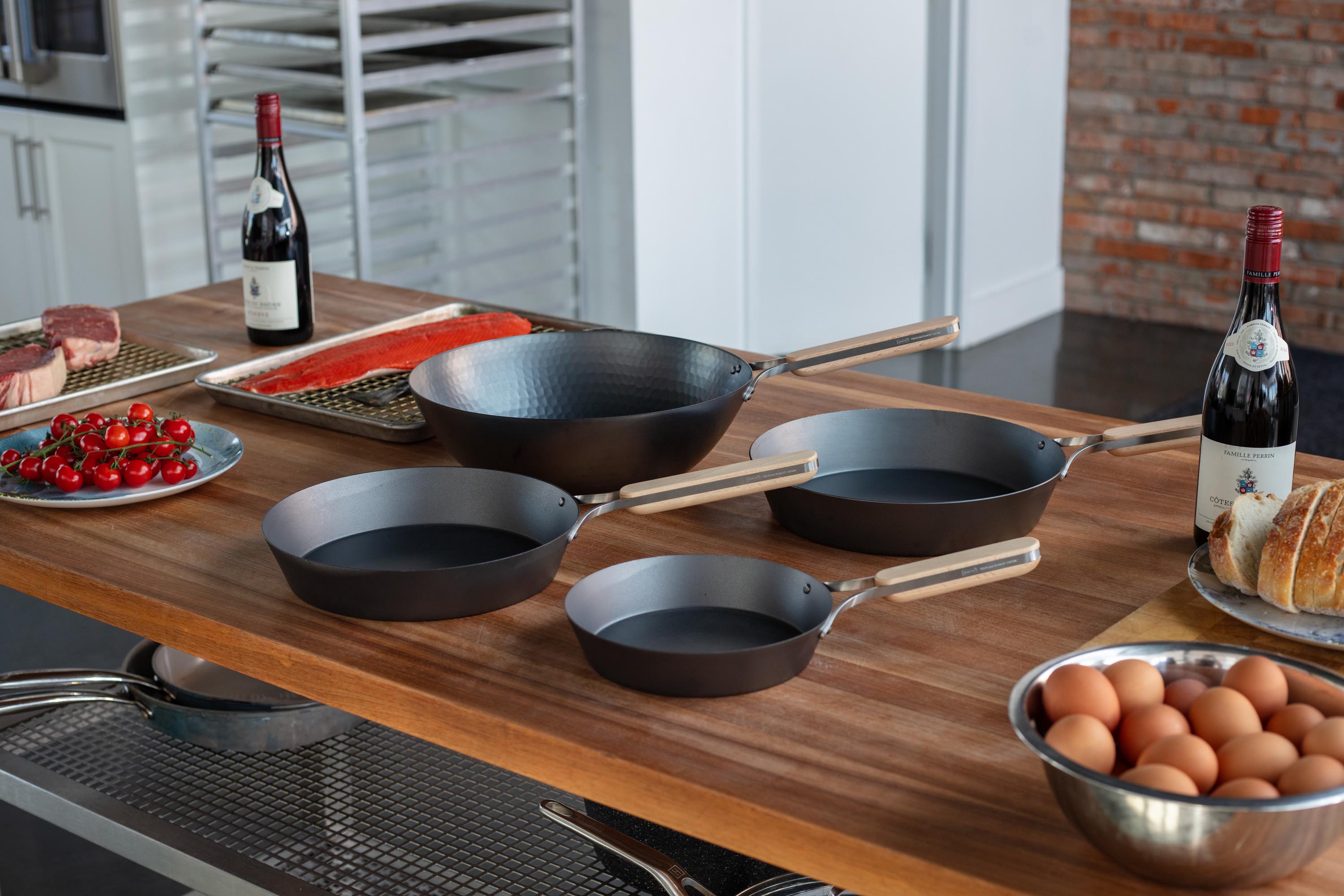
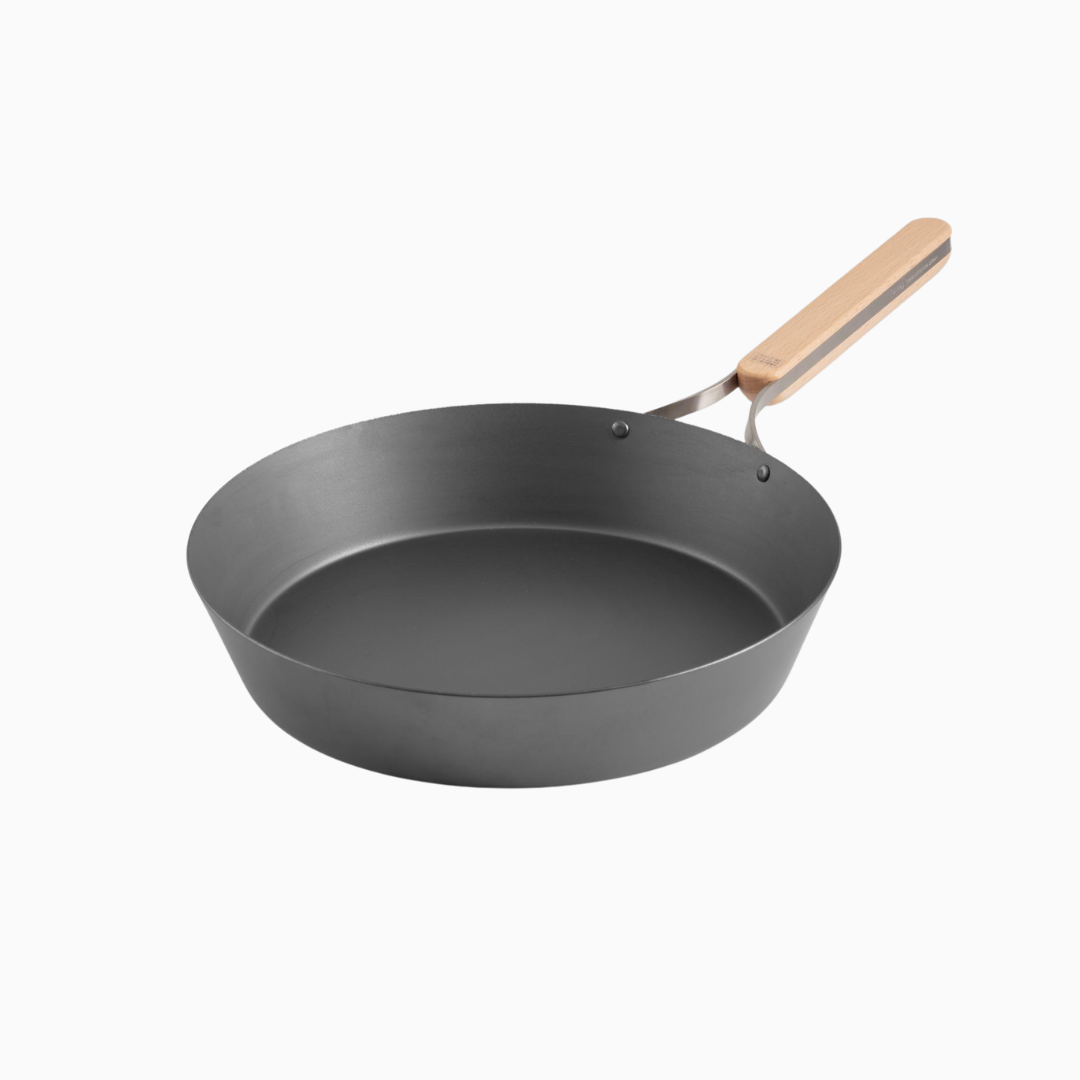
That is the entire relationship: a proper first seasoning, high heat, a dry pan and a wipe of oil. Do that and a carbon steel wok will outlast most of your kitchen. If you are still choosing one, the Enzo carbon steel wok is nitrided and hand-finished in Tsubame-Sanjō, Japan, and pairs naturally with the rest of the Enzo carbon steel pans.
Frequently asked questions
How do you season a carbon steel wok for the first time?
Wash off the factory oil with soap and hot water, dry the pan, then heat it dry until the steel changes color. Wipe on a very thin layer of high-smoke-point oil, heat until it smokes and stops, and repeat two or three times until the surface is dark and slick.
Can you use soap on a carbon steel wok?
A little soap on a well-seasoned wok is fine, and you should use soap when you first wash off the factory oil. What harms the seasoning is long soaking, abrasive scrubbers and the dishwasher — avoid those.
Why does my wok rust, and how do I stop it?
Carbon steel rusts if it is left wet. Always dry the wok on the burner after washing and wipe on a thin film of oil before storing it. If rust appears, scrub it off, then re-season the spot.
What is wok hei?
Wok hei is the smoky, seared flavor of a good stir-fry. You get it with very high heat, a thin film of oil, dry ingredients, small batches and constant tossing so the food keeps meeting the hottest part of the pan.