The short answer
- The best oil for seasoning carbon steel is a neutral oil with a high smoke point that polymerizes well. Grapeseed and canola are reliable, forgiving choices.
- Flaxseed builds a hard shine fast but can flake. It works, with patience and thin coats.
- Avoid extra-virgin olive oil and butter for seasoning. Their low smoke points and solids leave you with sticky, uneven layers.
- The single rule that matters most: wipe the oil on, then wipe almost all of it back off. A layer you can see is too much.
Seasoning is the quiet magic that makes carbon steel work. It is a thin, baked-on layer of oil that has turned from a liquid into a hard, slick film. Get it right and eggs slide, cleanup takes seconds, and the pan only improves with age. Get it wrong and you end up with a tacky, patchy surface that sticks to everything. The oil you choose, and how little of it you use, decides which of those you get.
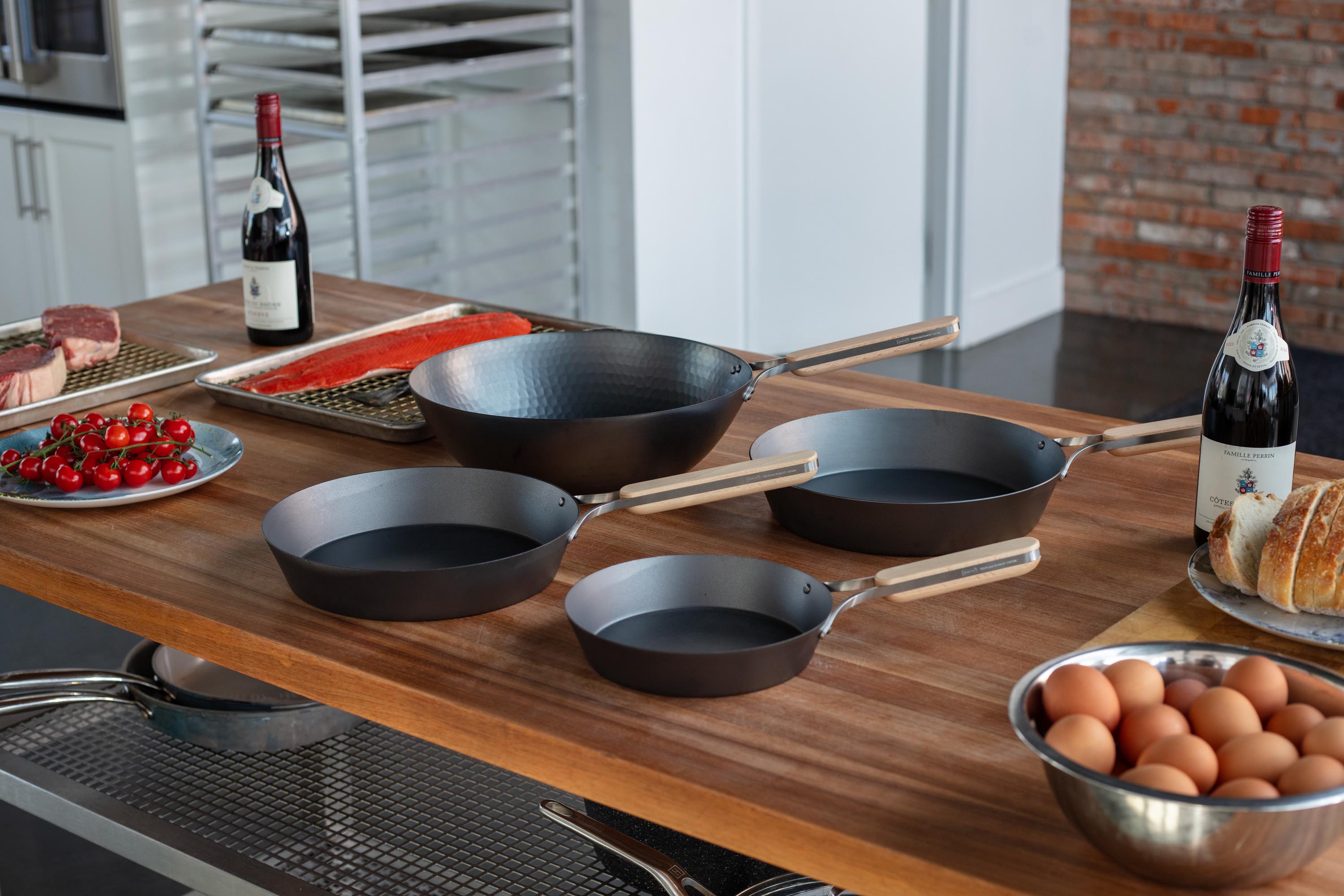
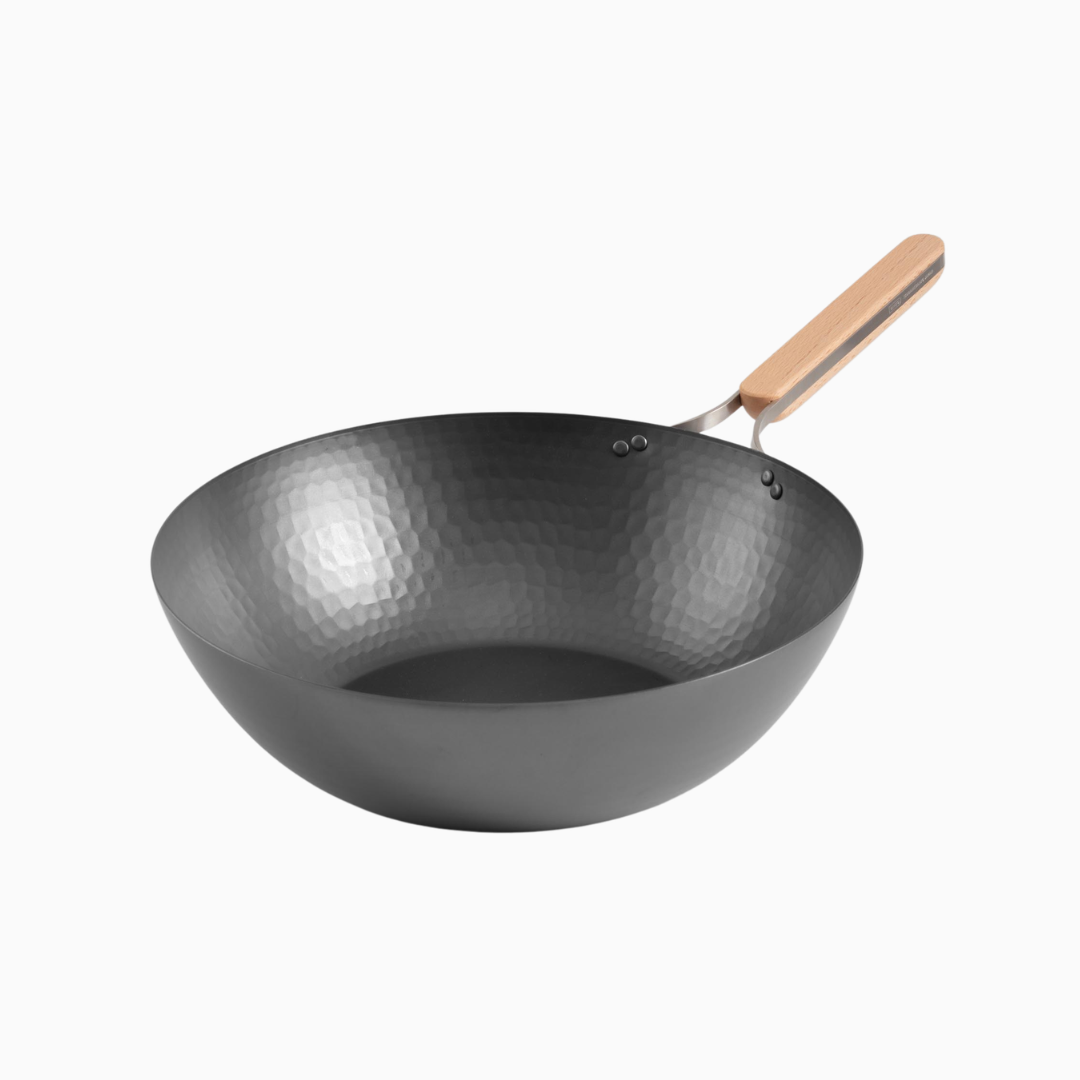
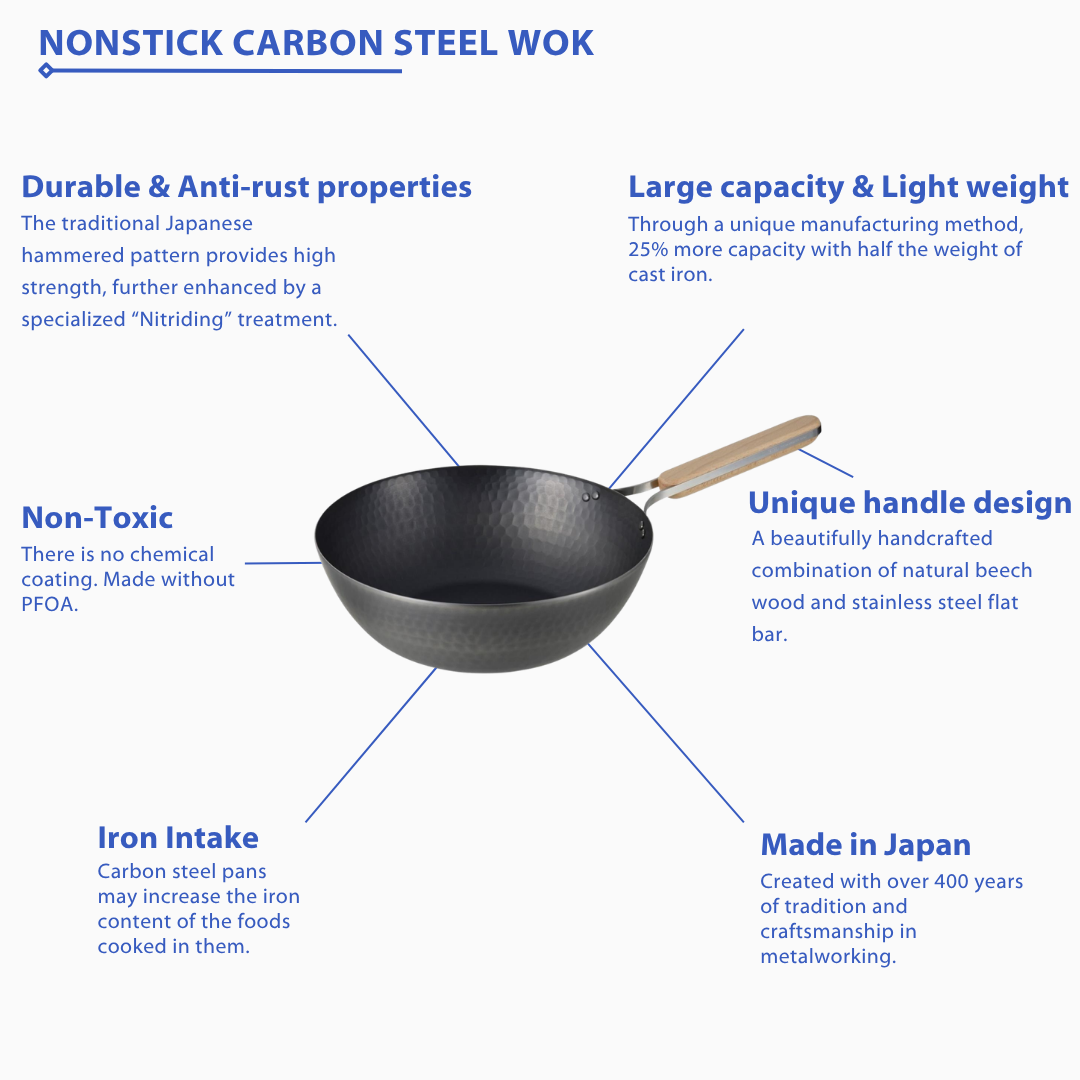
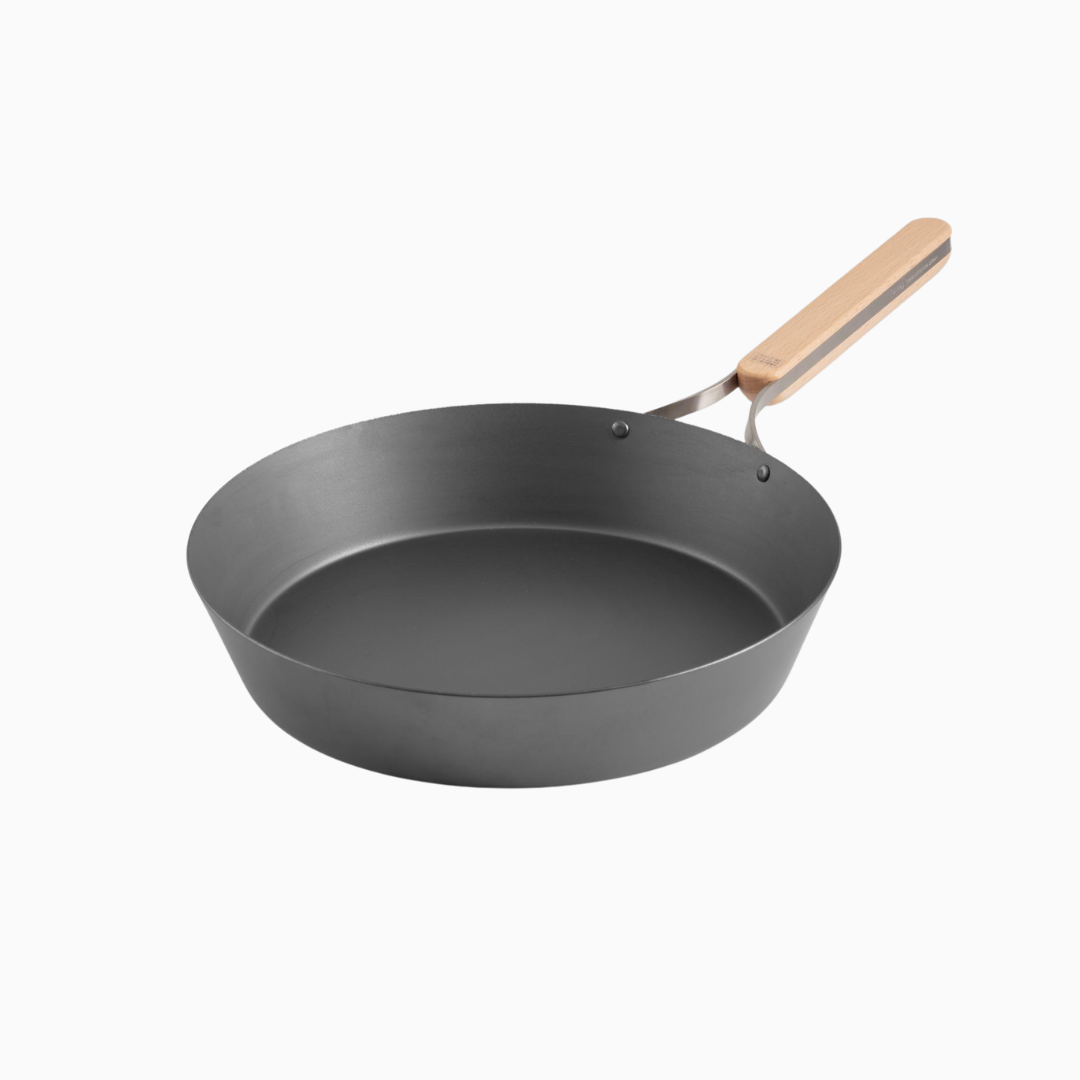
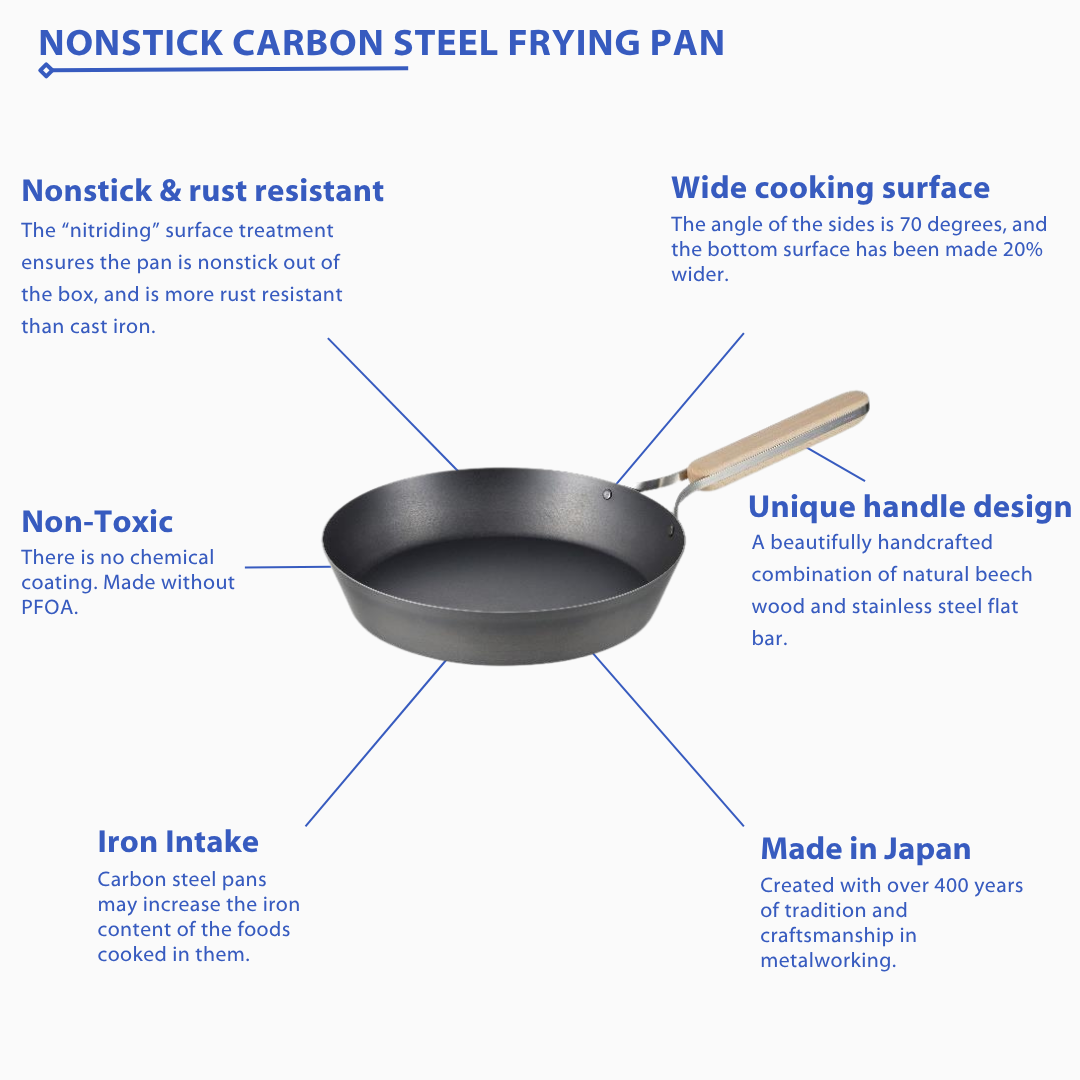
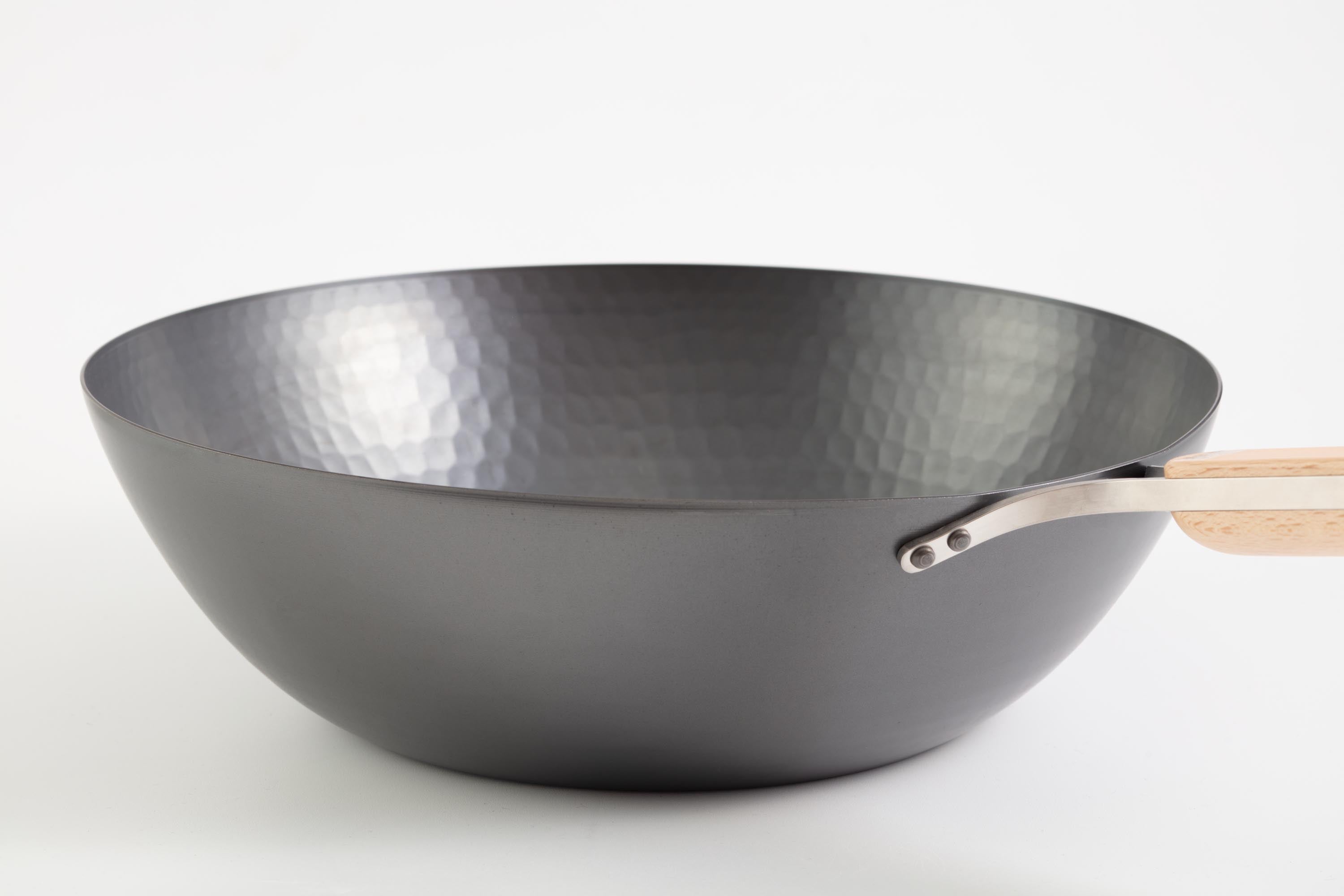
Our Enzo carbon-steel pans arrive with a nitrided surface, an eight-hour heat treatment that diffuses nitrogen into the steel for hardness and corrosion resistance. That is a treatment of the metal, not a coating, so there is no PTFE and no PFAS to worry about. But the true non-stick still comes from seasoning. Here is how to choose an oil for it, and where cooking oil and seasoning oil part ways.
What makes an oil good for seasoning carbon steel?
Two things. First, a high smoke point. When you heat oil past the temperature where it starts to smoke, it breaks down and begins to bond to the metal and to itself. You want an oil that can take real heat before it burns to soot, so it has room to transform instead of just charring.
Second, and more important, the ability to polymerize. Polymerization is the chemistry behind seasoning: heat and oxygen link the oil's molecules into a tough, plastic-like network fused to the steel. Oils high in polyunsaturated fats polymerize more readily, which is why some oils build a hard finish faster than others. It is not dramatic. It is just useful chemistry doing its job.
Neutral flavor is a nice bonus, since you do not want a seasoning oil leaving a taste behind. But smoke point and polymerization are what actually matter.
Which oils season carbon steel best?
Grapeseed oil. For most home cooks, this is the easy answer. It has a high smoke point, a neutral flavor, and enough polyunsaturated fat to polymerize into a smooth, even layer. It is widely available and forgiving. If you want one oil that does the job well without fuss, start here.
Canola oil. Cheap, neutral, and everywhere. Its smoke point is a little lower than grapeseed's but still comfortably high enough for seasoning. Canola builds a slightly softer layer that develops nicely over time and use. There is no shame in reaching for the bottle already in your cupboard.
Flaxseed oil. The enthusiast's favorite, and the most divisive. Flaxseed is extremely high in polyunsaturated fat, so it polymerizes into a hard, glassy shine faster than anything else. The catch: that same hardness makes it brittle. Applied too thick, or built up over too many coats, it tends to flake off in patches that look like peeling paint. If you use flaxseed, use miserly coats and accept that you may occasionally strip and restart. It also costs more and is usually sold refrigerated near supplements. Excellent results, but it demands patience.
Other workable options. Sunflower and safflower oil behave much like grapeseed. Refined avocado oil has one of the highest smoke points of any oil and seasons well, though it costs more. Any of these will get you a solid layer.
Which oils should you avoid for seasoning?
Extra-virgin olive oil. Its smoke point is low, so it burns and smokes before it can properly bond. You end up fighting sticky residue instead of building a smooth film. Save it for the plate.
Butter and other fats with solids. The milk solids in butter scorch and leave dark, uneven spots. Same story with anything that is not pure oil.
Thick tropical oils. Coconut oil is solid at room temperature and low in the polyunsaturated fats that drive polymerization. It can leave a soft, gummy surface rather than a hard one.
None of these are dangerous. They just make seasoning harder than it needs to be. Choose a neutral, high-smoke-point oil and you skip the trouble entirely.
Seasoning oil versus everyday cooking oil: are they the same?
Not quite, and it helps to keep the two jobs separate in your head.
Seasoning oil is applied in a whisper-thin coat and heated deliberately past its smoke point so it polymerizes and bonds to the steel. You want an oil chosen for how it transforms under heat, wiped down to almost nothing. This is maintenance, not cooking.
Cooking oil is chosen for flavor, heat tolerance, and what you are making. Here you can use whatever suits the dish, including olive oil and butter, which are fine to cook with even though they are poor for seasoning. Every time you cook with a little fat over medium-high heat, you are also quietly reinforcing the seasoning already there. A well-used pan is a well-seasoned pan, which is why carbon steel rewards people who actually cook in it. If you want the fuller picture on the material itself, our guide on whether carbon steel cookware is safe covers the surface and the acidic-food caveat in more depth.
How do you apply a thin layer of oil the right way?
The most common seasoning mistake is using too much oil. A thick coat cannot fully polymerize; the top stays sticky and never sets. Thin is everything.
- Start clean and dry. Wash the pan, dry it completely, then warm it on the stove for a minute to drive off any hidden moisture.
- Add a few drops of oil. Really, a few. Pour a small amount onto a paper towel or lint-free cloth.
- Wipe the whole surface, then wipe it back off. Coat the inside, sides, and even the outside. Then take a clean, dry towel and buff off as much as you can. It should look almost dry, with only the faintest sheen. If you can see pooled or streaky oil, there is too much.
- Heat until it stops smoking. Put the pan over medium-high heat, or in the oven upside down, until it smokes and then the smoke tapers off. That is polymerization finishing. Let it cool.
- Repeat for thin layers. Two or three light coats beat one heavy coat every time. Each adds a little more depth and slickness.
After that, upkeep is simple. Cook, rinse with hot water, dry thoroughly, and rub in a trace of oil before storing so the bare steel does not rust. Go easy on very acidic foods like tomato sauce or a squeeze of lemon early on, since acid can strip young seasoning and lend a faint metallic note. The layer thickens and toughens with every meal.
Frequently asked questions
What is the best oil for seasoning carbon steel?
Grapeseed oil is the best all-around choice for most people: high smoke point, neutral, and it polymerizes into a smooth, durable layer. Canola is a reliable, cheaper substitute, and flaxseed builds a harder shine if you are willing to use very thin coats.
Can I use olive oil to season my pan?
It is best avoided for seasoning. Extra-virgin olive oil has a low smoke point and tends to leave a sticky, uneven film. You can still cook with it once the pan is seasoned.
Why is my seasoning sticky?
Almost always too much oil. If the coat is thick, the surface cannot fully polymerize and stays tacky. Wipe nearly all the oil off before heating, and build up thin layers instead.
How often do I need to re-season?
Rarely, if you cook regularly. Everyday cooking with a little fat maintains the layer on its own. Re-season only if food starts to stick, or after scrubbing off a patch or cooking something very acidic. See the full Enzo pan range for what a factory-nitrided surface starts you with.