The short answer
- Yes, you can cook tomatoes, lemon, and wine in carbon steel. A quick simmer or a splash to deglaze is fine.
- Long acidic cooks are the issue. They can dull your seasoning and leave a faint metallic note in the food.
- This is a taste and seasoning question, not a safety one. Carbon steel is iron and a little carbon.
- Manage it with a well-seasoned pan, shorter cooks, and a quick re-season if the surface looks patchy.
Most people who buy their first carbon steel pan ask this within a week. You want to make a pan sauce, or throw a handful of cherry tomatoes into a hot skillet, and somewhere in the back of your mind a voice says: is that allowed? The honest answer is yes, with a caveat that has nothing to do with your health and everything to do with the finish on your pan.
Let us walk through what actually happens, when it matters, and how to cook acidic food in carbon steel without second-guessing yourself.
Can you cook tomatoes in carbon steel?
You can. A tray of blistered tomatoes, a five-minute tomato-and-garlic sauté, a splash of passata to finish a pan of sausages: all fine. The pan will not be harmed by a short encounter with acid, and neither will you.
The situation changes when the cook gets long. A tomato sauce that reduces gently for forty-five minutes is a different animal from a quick sauté. Acid slowly dissolves the seasoning, the polymerized oil layer that gives carbon steel its slick, dark surface. Do it for long enough and you may notice two things: the pan looks lighter and blotchier where the sauce sat, and the sauce itself picks up a faint metallic, slightly tinny edge. Neither is dangerous. Both are avoidable.
So the practical rule is not "never cook tomatoes." It is "keep the acidic simmers short, and save the two-hour Sunday ragù for a pot that does not rely on seasoning" — an enameled Dutch oven or stainless is the tool for that job.
What about lemon, wine, and vinegar?
Same principle, different ingredients. A squeeze of lemon over fish you have just seared is a non-event. Deglazing with a glug of white wine, letting it bubble down for a minute or two into a sauce, is one of the things carbon steel does beautifully. The pan is screaming hot, the liquid hits, it reduces fast, and you pour it over the plate before the acid has any real time to work on the surface.
The thing to be wary of is the slow acidic braise: wine-heavy stews left to tick over, a vinegar-based sauce reducing for half an hour, lemon slices confiting in liquid over low heat. Long, wet, and sour is the combination that strips seasoning. Short and sharp is not.
If you think in terms of time rather than ingredient, the whole thing gets simpler. A few minutes of contact with acid is nothing. Half an hour or more is when the finish starts to complain.
Is it safe to cook acidic food in carbon steel?
Yes. This is worth saying plainly, because the internet tends to blur "my pan looks different" into "my food is contaminated," and the two are not the same.
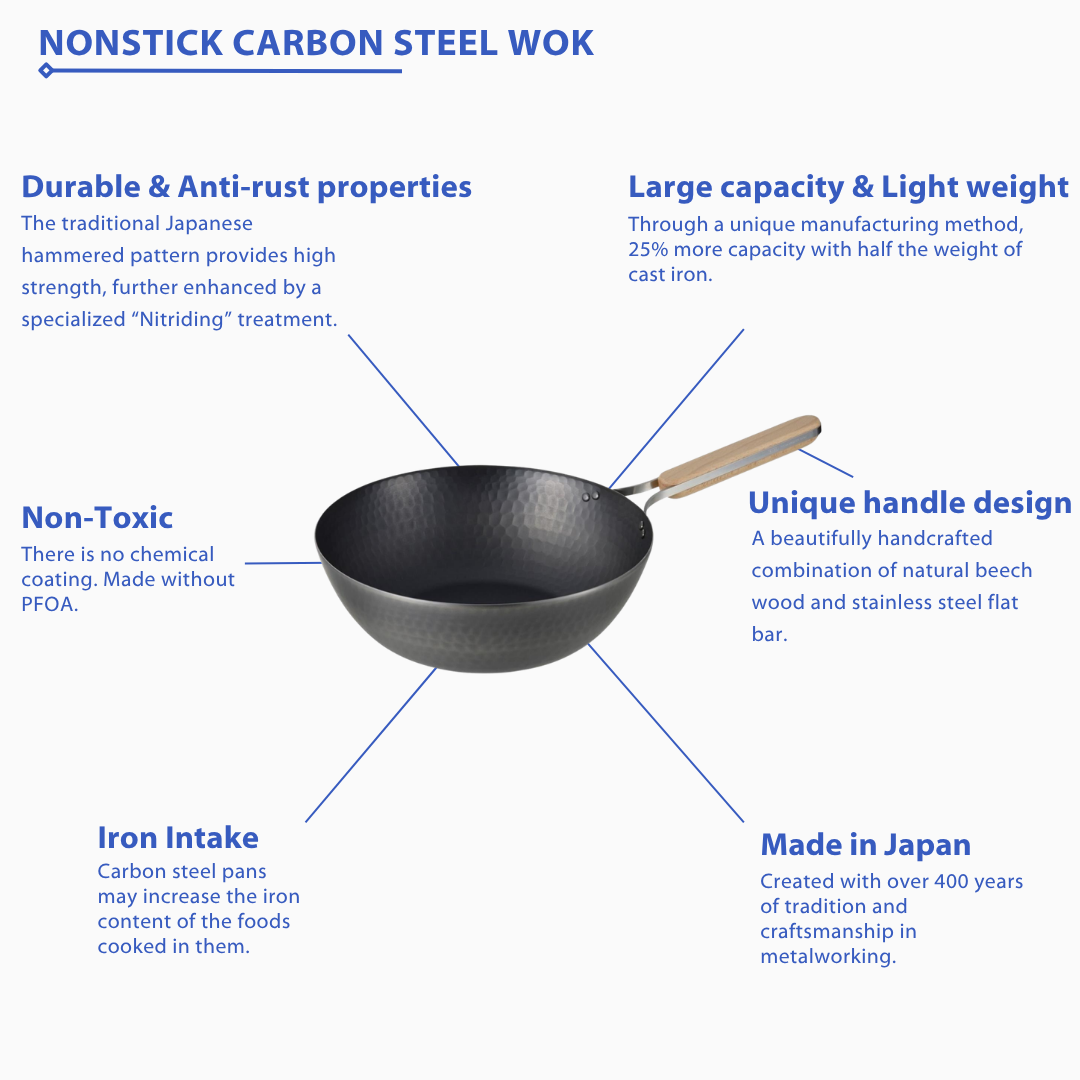
Carbon steel is iron with a small amount of carbon. When acid interacts with a bare or thinly seasoned spot, what migrates into the food is a trace of iron — the same iron that is in a cast iron skillet, in a spinach salad, and in the supplement aisle. For most people a little extra dietary iron is harmless and, if anything, mildly useful. The one caveat worth flagging: people with hemochromatosis or another iron-overload condition should be mindful of any iron cookware, carbon steel included, and can ask their doctor if they are unsure. For everyone else, the metallic note is a flavor issue, not a health one.
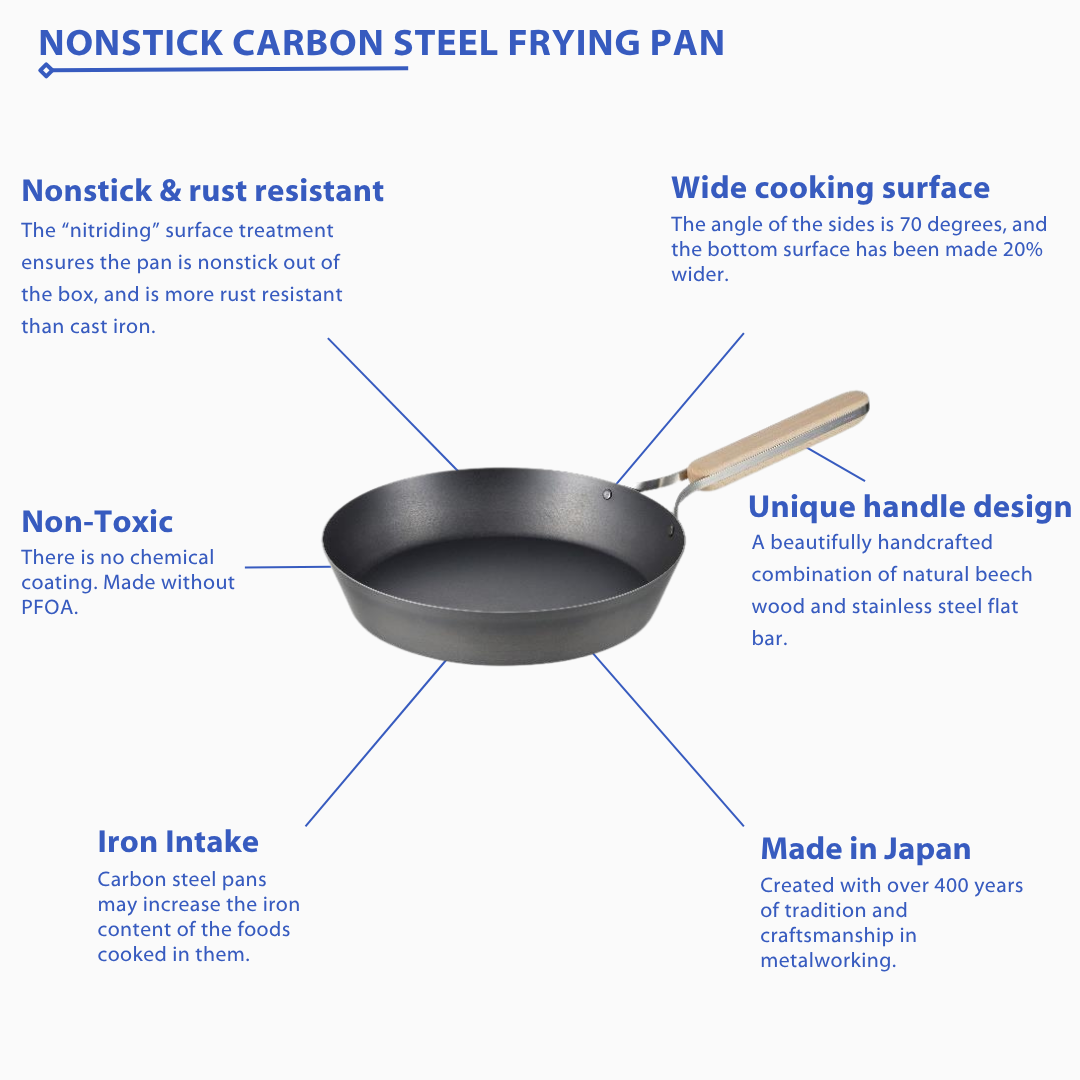
Our full write-up on whether carbon steel is safe goes deeper on the materials, but the headline holds: there is no coating to scratch off, no PTFE, no PFAS. Julien's Enzo pans are nitrided carbon steel — the surface is heat-treated, not coated — so there is nothing synthetic between your food and the metal to worry about in the first place.
How to cook acidic food without wrecking your seasoning
A few habits make the whole question disappear. None of them are fussy.
Start with a well-seasoned pan. A thick, mature seasoning layer is your buffer. A pan you have cooked fatty, high-heat food in for a few weeks shrugs off a splash of wine that a brand-new pan might not. If your pan is young, do the acidic cooking a little later in its life.
Get the pan hot and keep the cook short. Acid does its damage slowly and prefers a cool, wet surface. A hot pan reduces liquid quickly, which means less contact time. Deglaze, reduce, pour, done.
Do not let acidic liquid sit. The real seasoning-killer is walking away and leaving a tomato or wine sauce parked in the pan to cool for an hour. Serve it, or move it to another vessel, and give the pan a rinse before it goes cold.
Re-season when needed — it takes minutes. If a cook leaves the surface looking dull or patchy, you have not ruined anything. Wipe the pan, put it back on the heat, add a thin film of neutral oil, and let it smoke off. That single pass rebuilds most of what a sauce stripped. Carbon steel is meant to be maintained this way; a spot repair is normal, not a failure.
So what should you actually make in it?
Play to the pan's strengths. Carbon steel is lighter and more responsive than cast iron and heats fast, which makes it superb for searing, sautéing, eggs, stir-fries, and anything finished with a quick pan sauce. That last category is where acid and carbon steel are friends rather than enemies: sear a steak, pull it out, splash in wine or a squeeze of lemon, scrape up the browned bits, mount with a little butter, and you have a sauce built in under three minutes of acid contact.
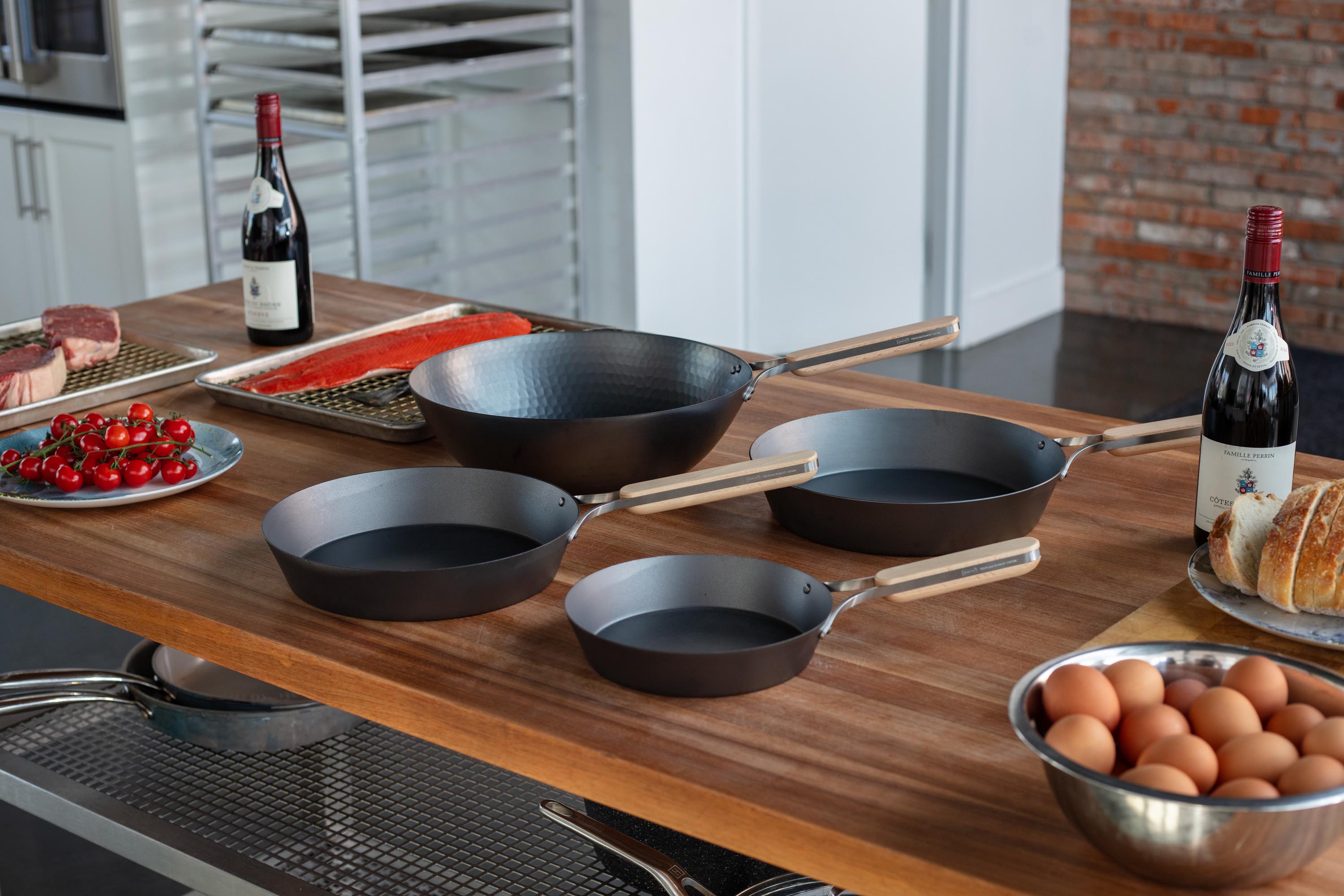
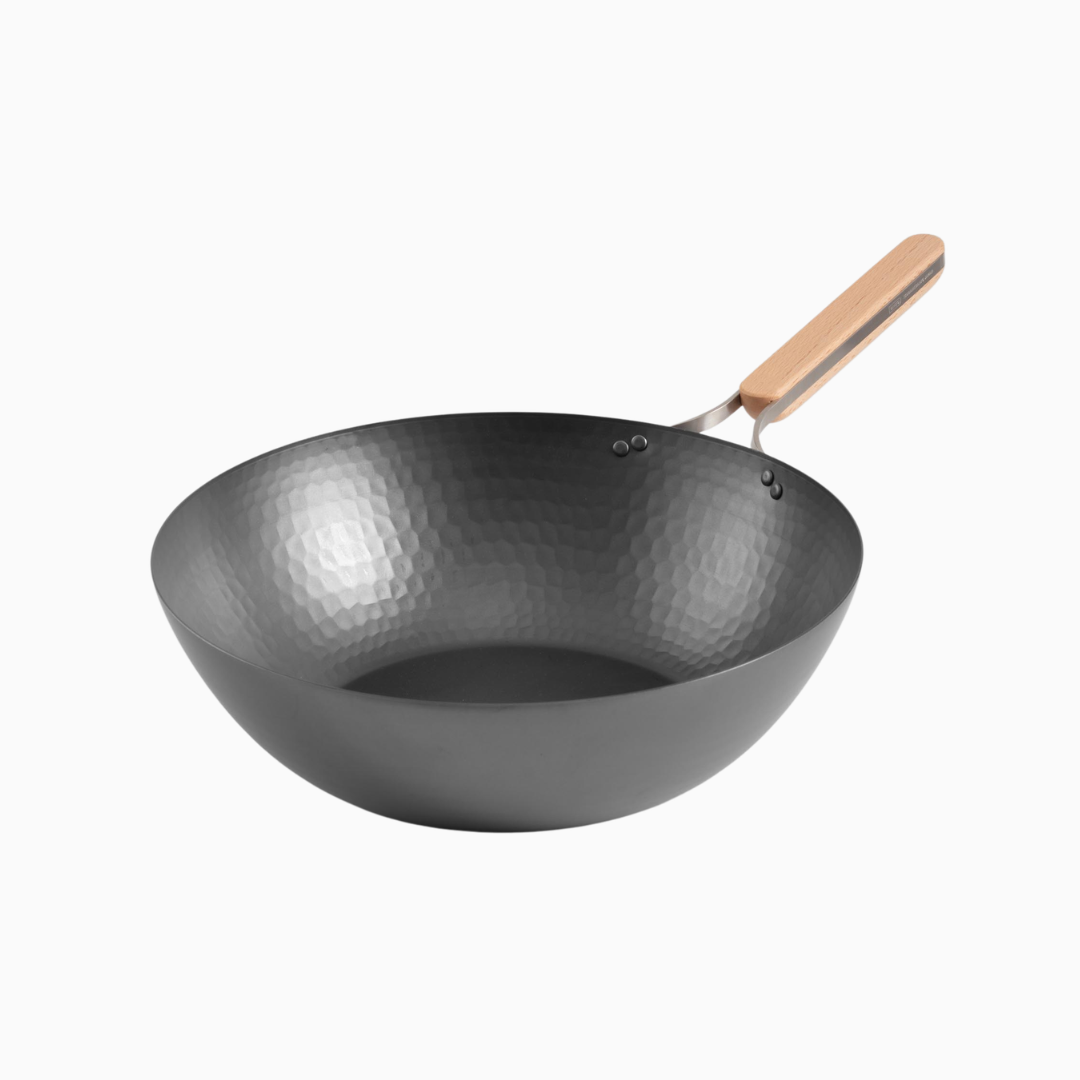
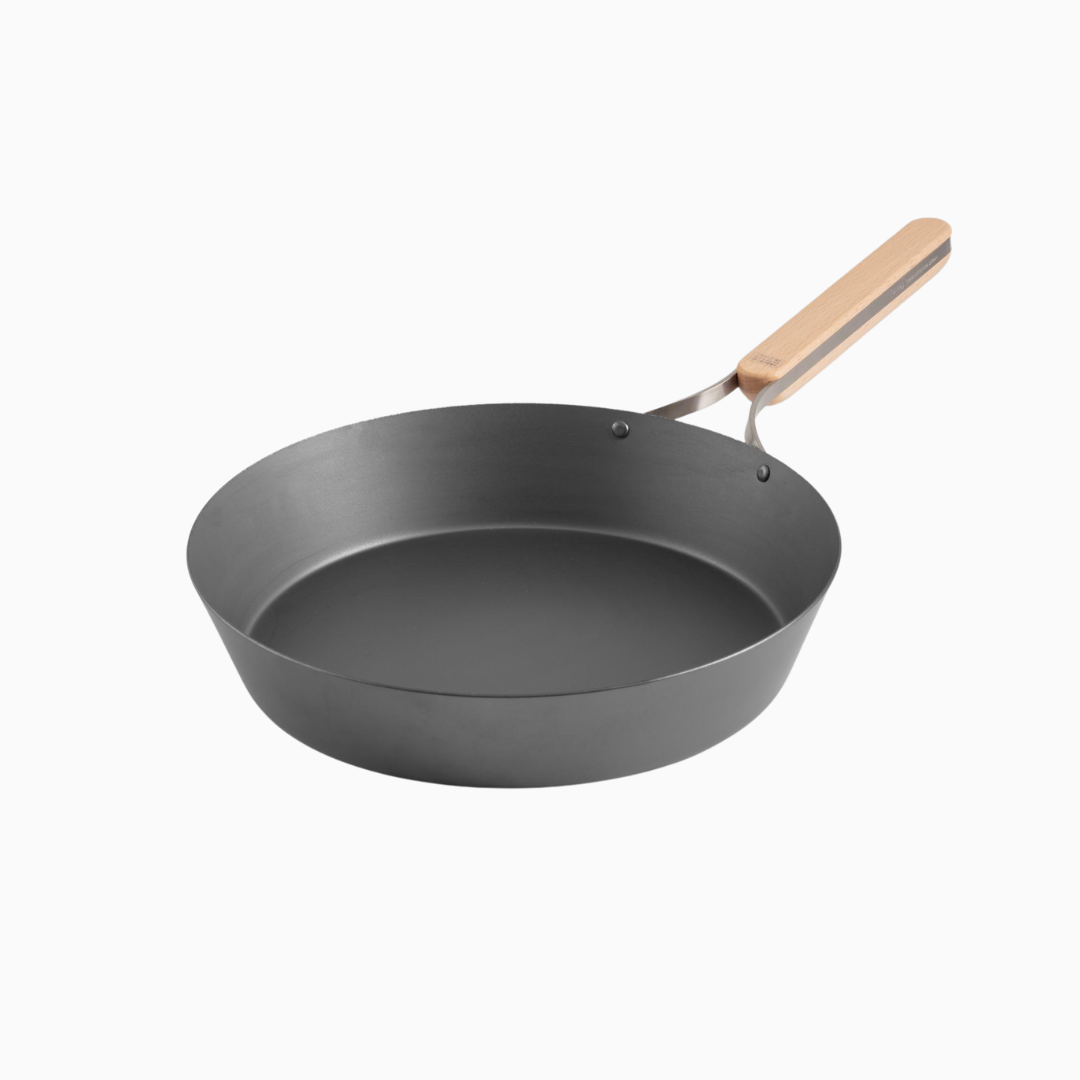
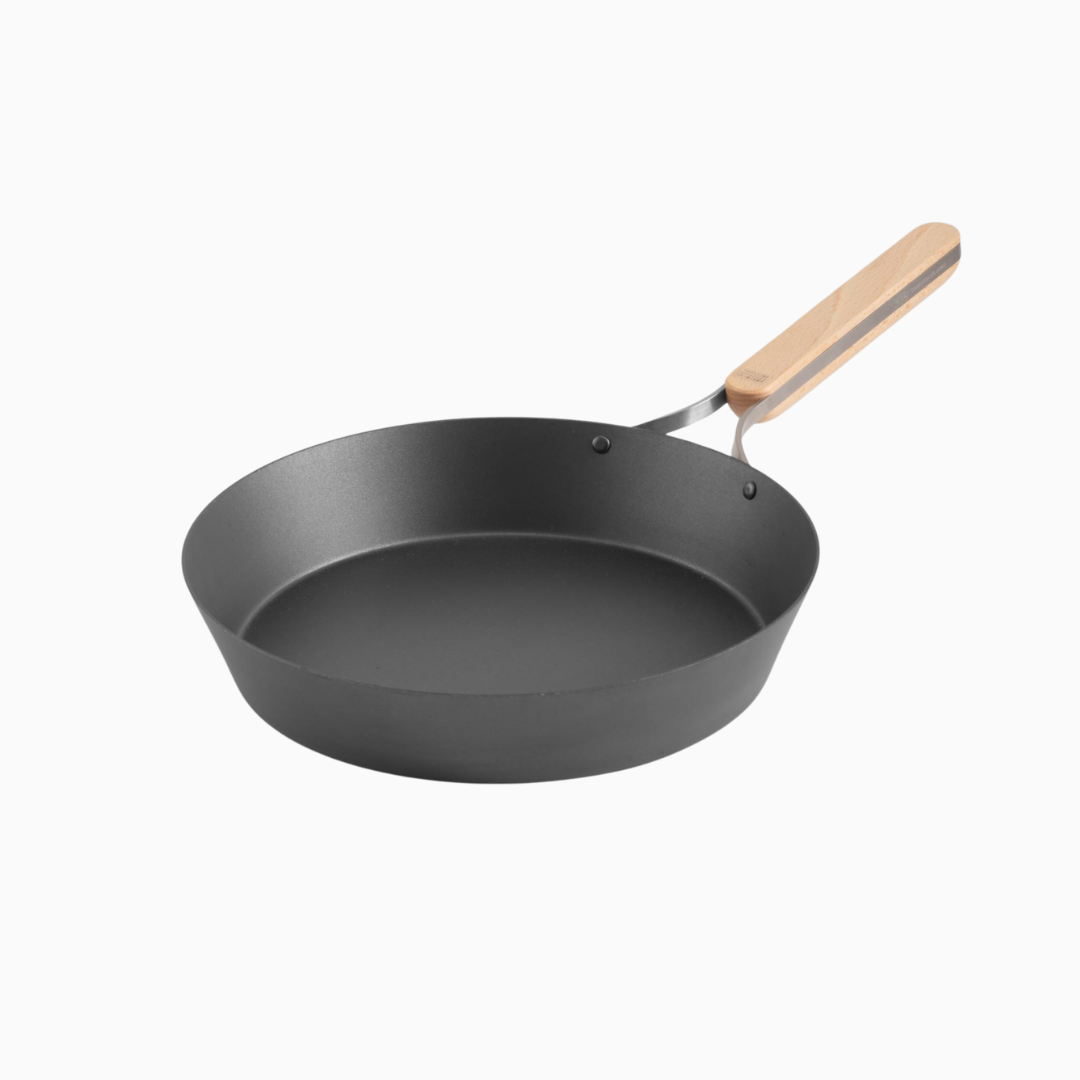
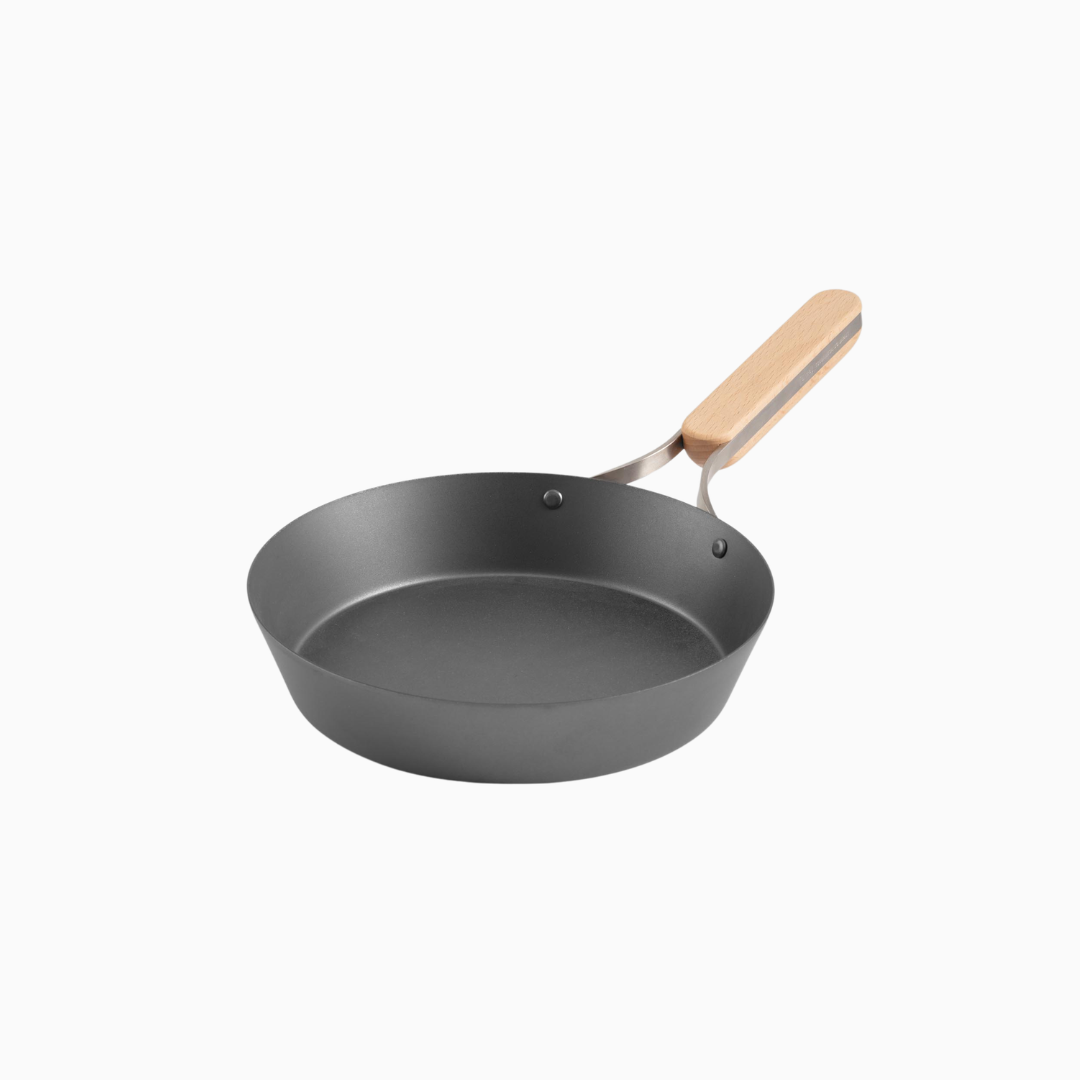
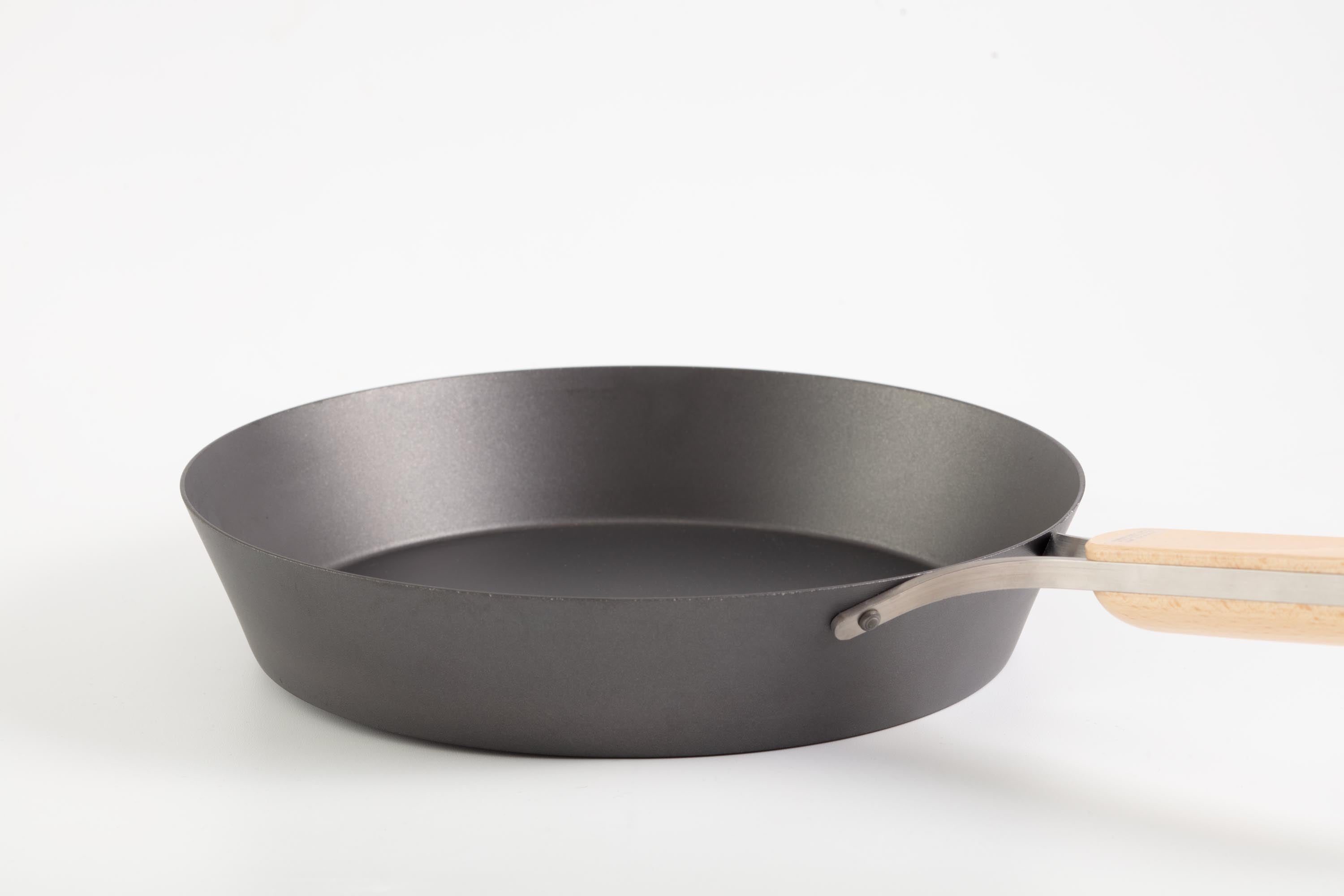
Leave the long acidic projects — the all-afternoon ragù, the vinegar-braised anything — to cookware that does not depend on seasoning. Use the right pan for the job and you will never fight your carbon steel. If you are still choosing yours, the Enzo carbon-steel pans are built for exactly this kind of everyday, high-heat cooking, made in Tsubame-Sanjō, Japan.
Frequently asked questions
Will cooking tomatoes ruin my carbon steel pan?
No. A short tomato cook is fine on a well-seasoned pan. Only long acidic simmers strip seasoning, and even then a quick re-season fixes it.
Why does my food taste metallic after cooking with lemon or wine?
Acid interacted with a bare or thin spot in the seasoning and picked up a trace of iron. It is a flavor issue, not a safety one. Build up your seasoning and keep acidic cooks short to avoid it.
Can I deglaze a carbon steel pan with wine?
Yes, and it is one of the best uses for the pan. A hot pan reduces the wine in a minute or two, so the acid has little time to affect the surface.
Is the iron from an acidic reaction bad for me?
For most people it is harmless, and dietary iron is the same iron. People with hemochromatosis or iron-overload conditions should be mindful of all iron cookware and can check with their doctor.