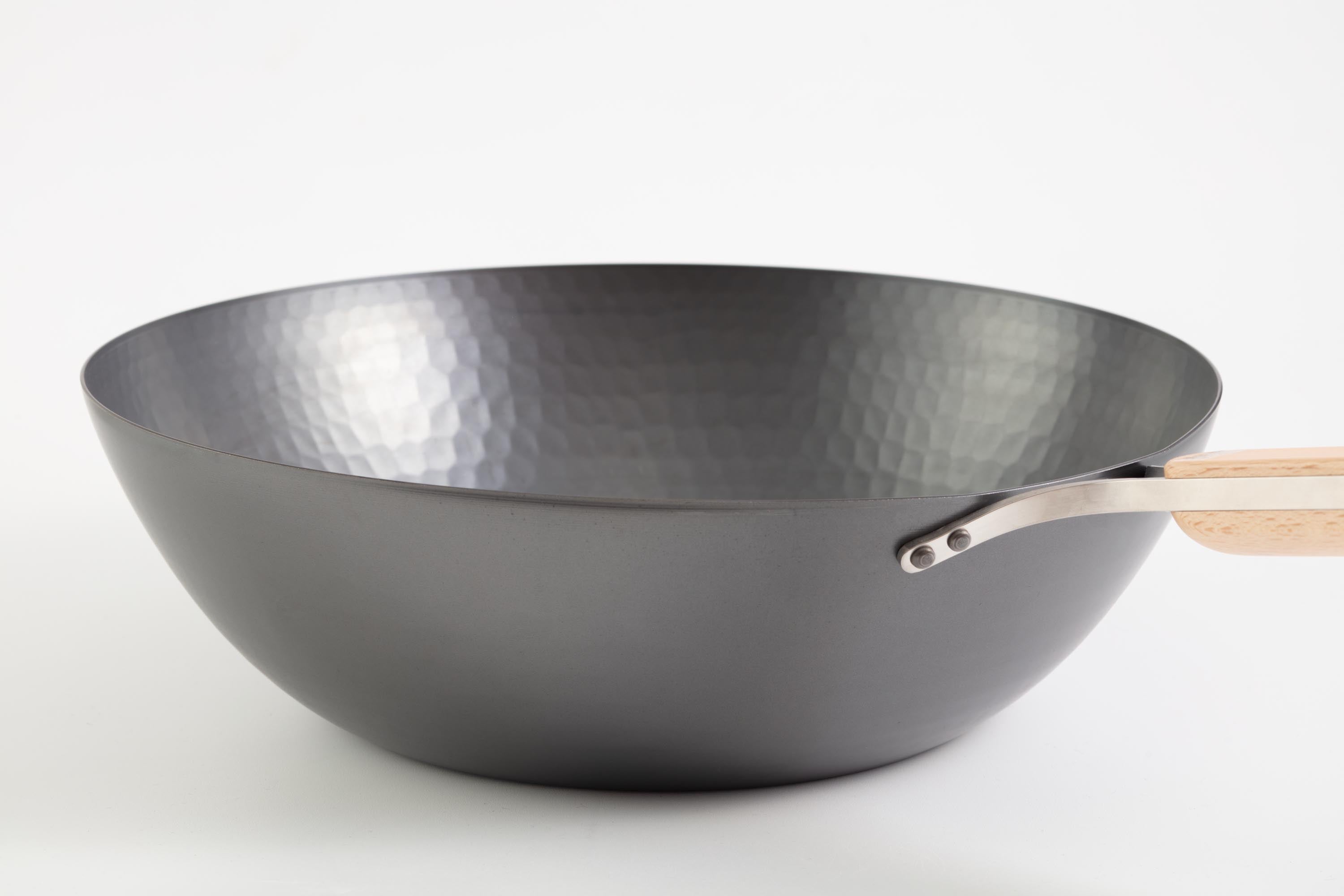
The short answer
- The healthiest pans have nothing on the cooking surface that can degrade, flake, or leach a synthetic chemical into your food.
- Bare metal wins: cast iron, carbon steel, and stainless steel have no coating to wear out and stay stable at high heat.
- Carbon steel is our pick. It cooks like cast iron but lighter, its non-stick comes from seasoning, and it works on induction.
- The one real caveat: iron pans add a little dietary iron to your food. Good for most people, worth checking if you have hemochromatosis.
“Healthiest” is one of those words that gets thrown around cookware marketing until it means nothing. So let’s be plain about it. When people ask for the healthiest pans to cook with, they are usually asking one question: is anything from this pan ending up in my food? That is a fair thing to want to know, and it has a real answer.
What makes a pan “healthy” in the first place?
Strip away the noise and it comes down to three things.
No coating that can degrade. Most of the worry about cookware is really worry about coatings. A synthetic non-stick surface is a thin layer sitting on top of the metal. Layers wear. They scratch, they chip, and eventually they stop being a barrier and start being flakes. A pan with no coating has nothing to shed.
Stable at the heat you actually cook at. A healthy pan should not care whether you are gently softening onions or searing a steak in a screaming-hot pan. Bare metals shrug off high heat. Some coated pans are rated only to modest temperatures, and pushing past that is where materials start to break down.
Nothing of concern leaching into food. No pan is perfectly inert, and that is fine. The honest question is whether what transfers is something you would rather not eat, or something harmless. We will come back to that, because it is the interesting part.
Which pan materials are actually the healthiest?
You can reference cookware in broad families, and the healthiest options tend to be the plainest ones.
Cast iron. A slab of bare iron, seasoned with polymerized oil. No coating, wildly durable, holds heat like nothing else. The downsides are weight and a slow response to temperature changes. It is a workhorse, not a sprinter.
Stainless steel. Also bare metal, non-reactive, and it takes acidic foods without complaint. It is not naturally non-stick, so eggs and delicate fish take some technique. But for sauces, braises, and anything with tomato or wine, it is hard to beat.
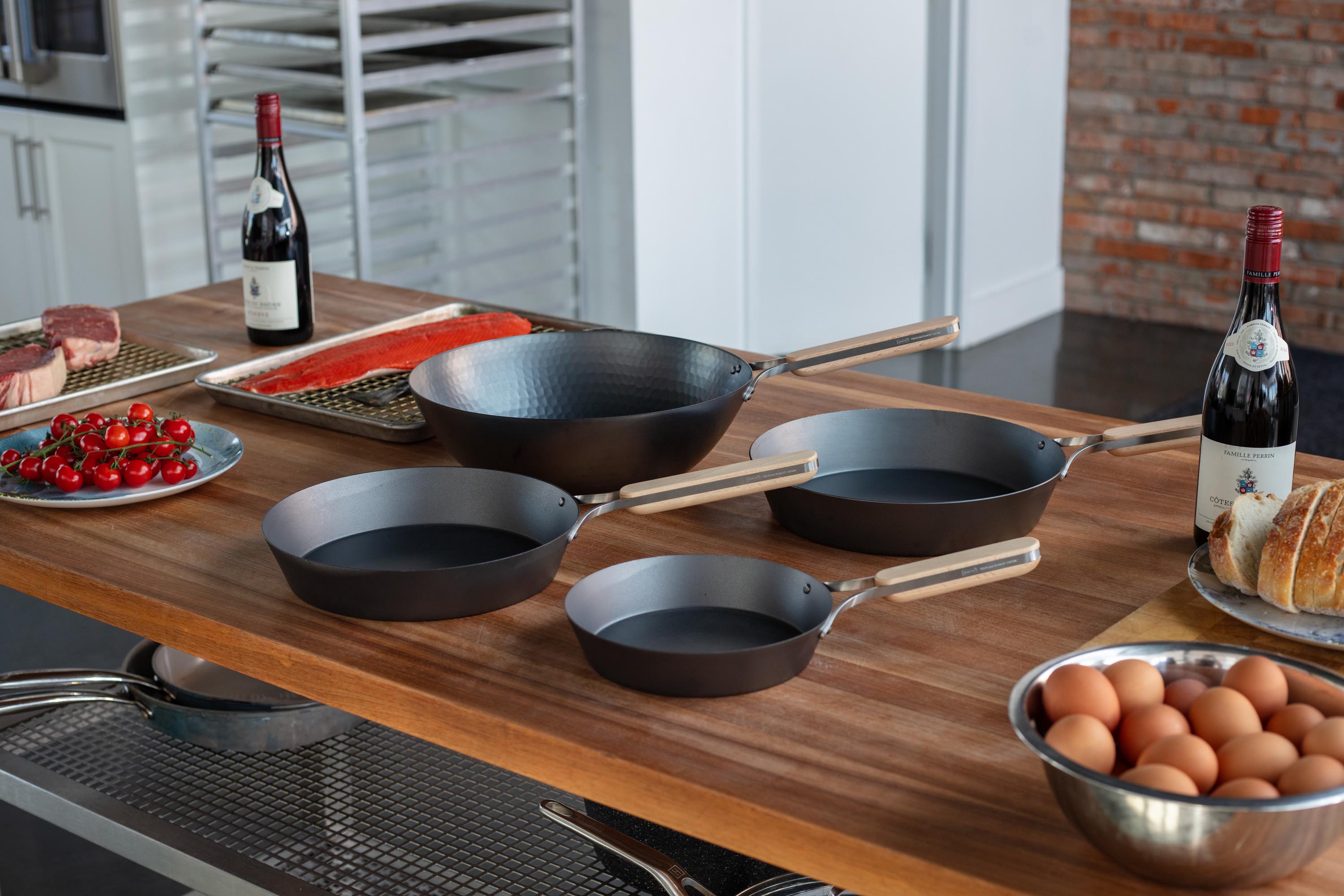
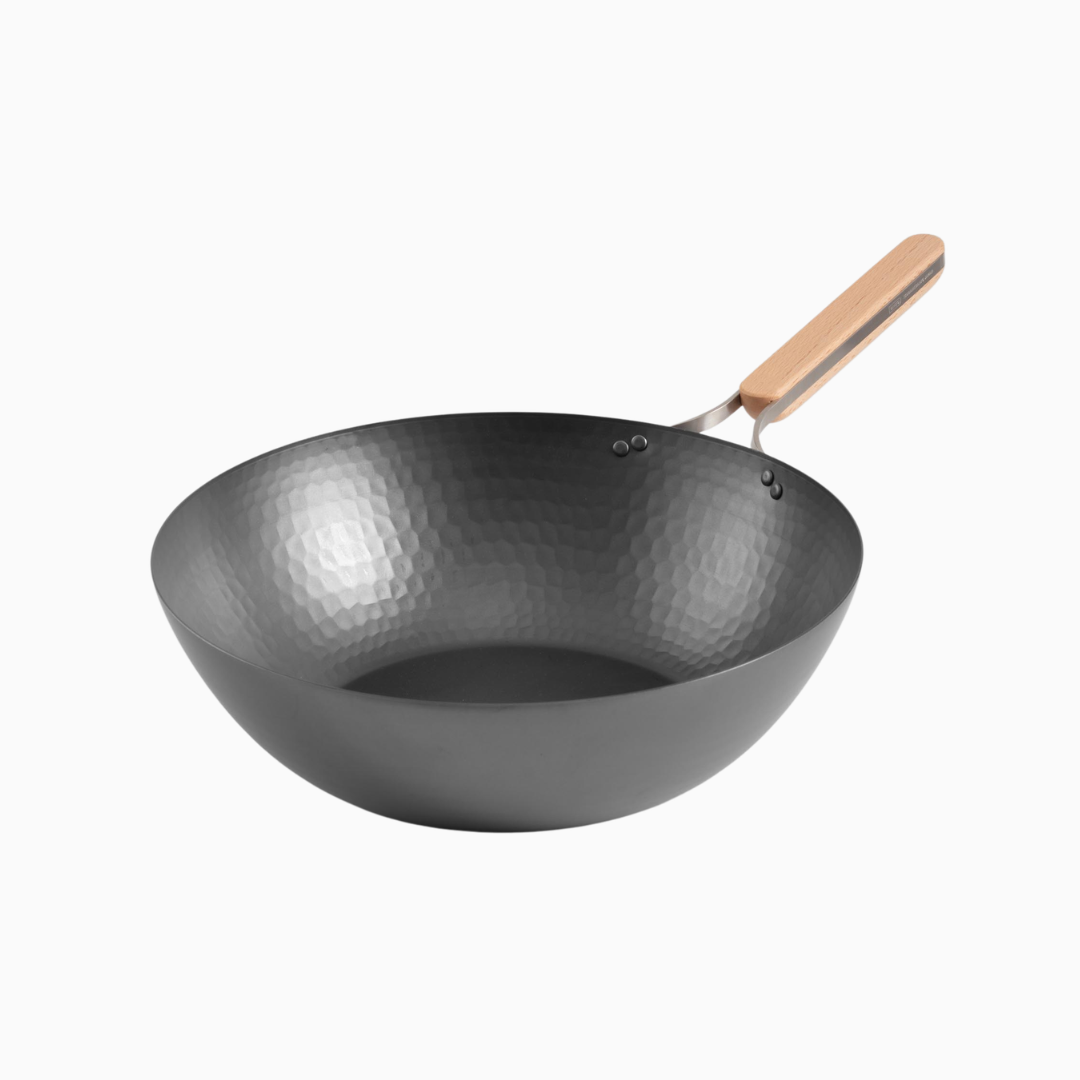
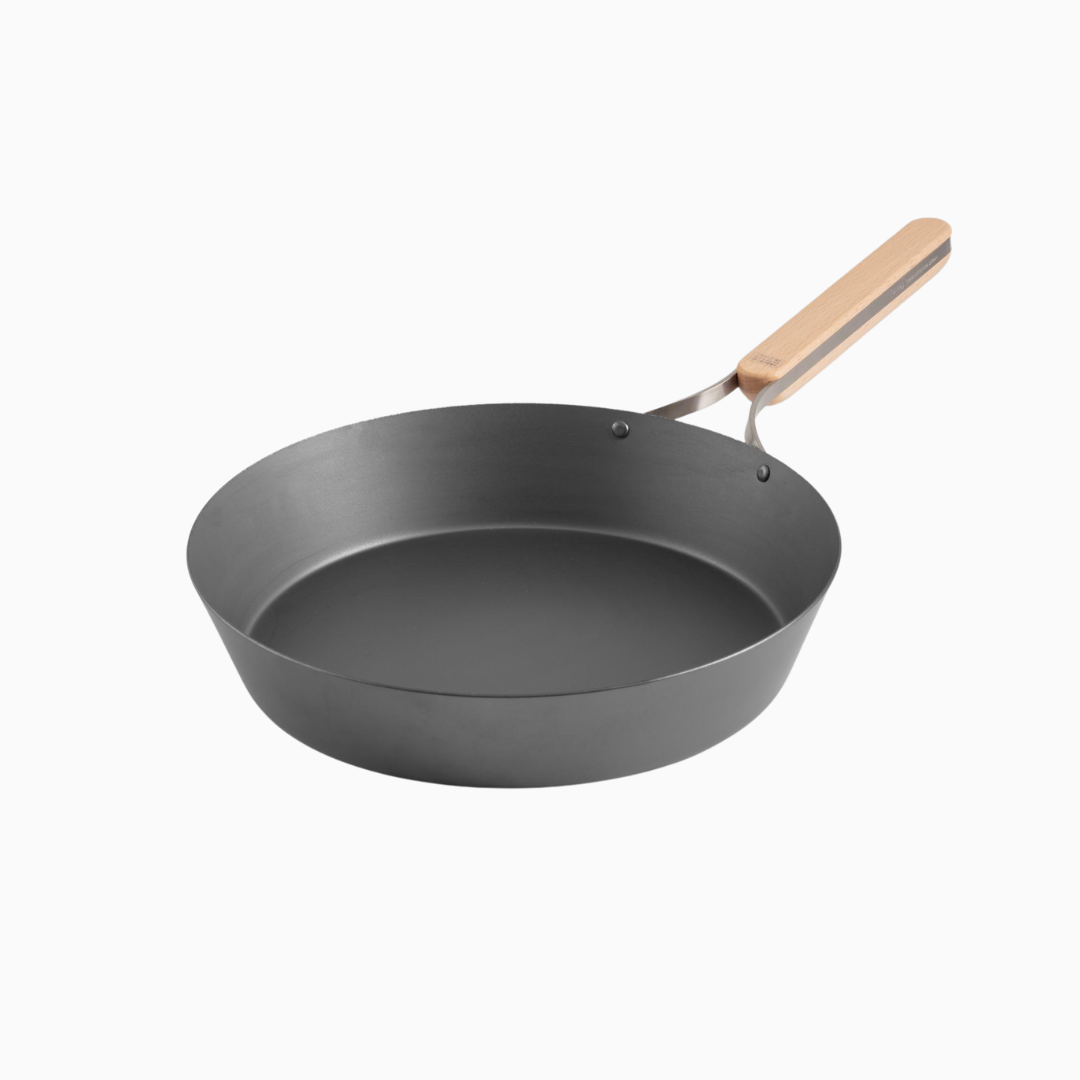
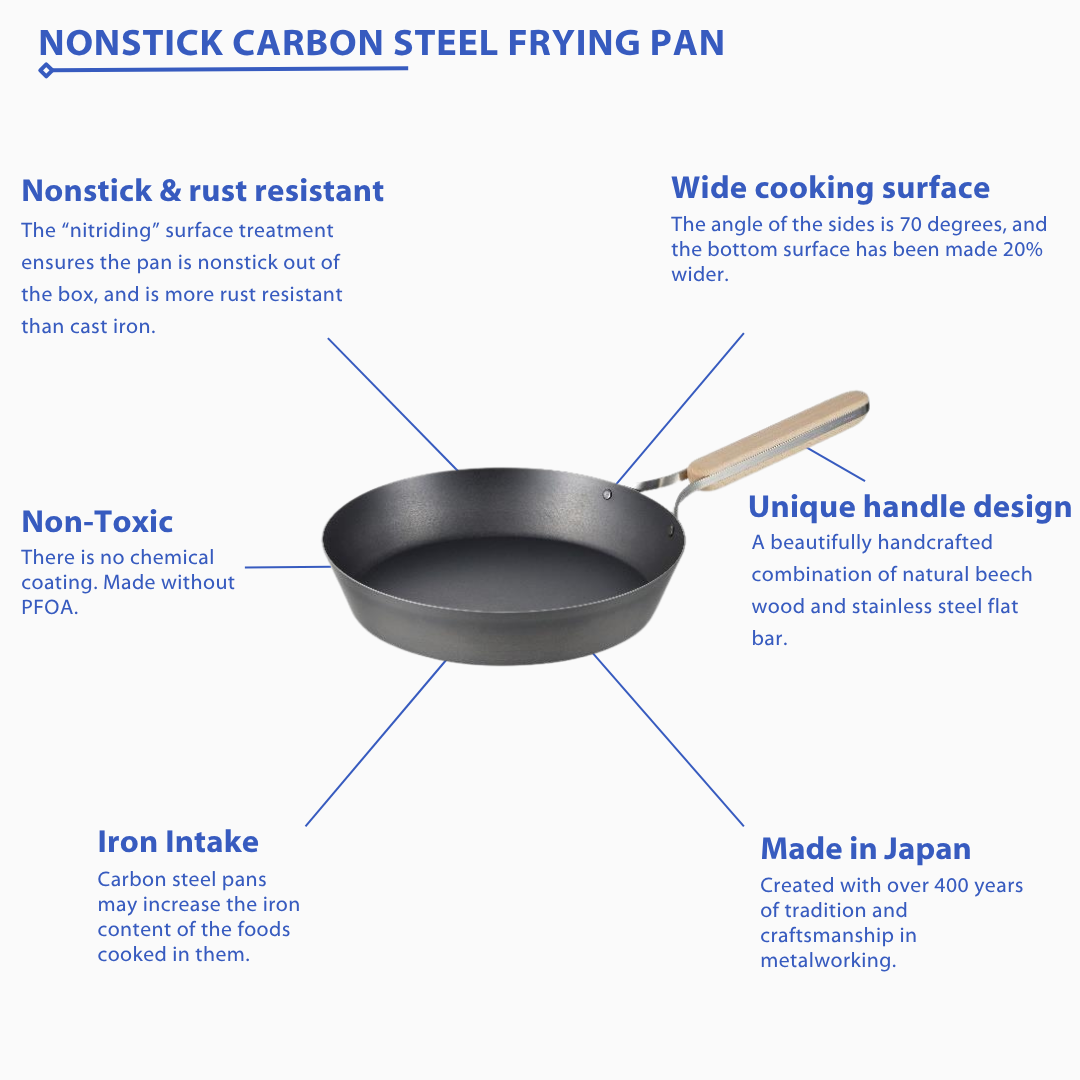
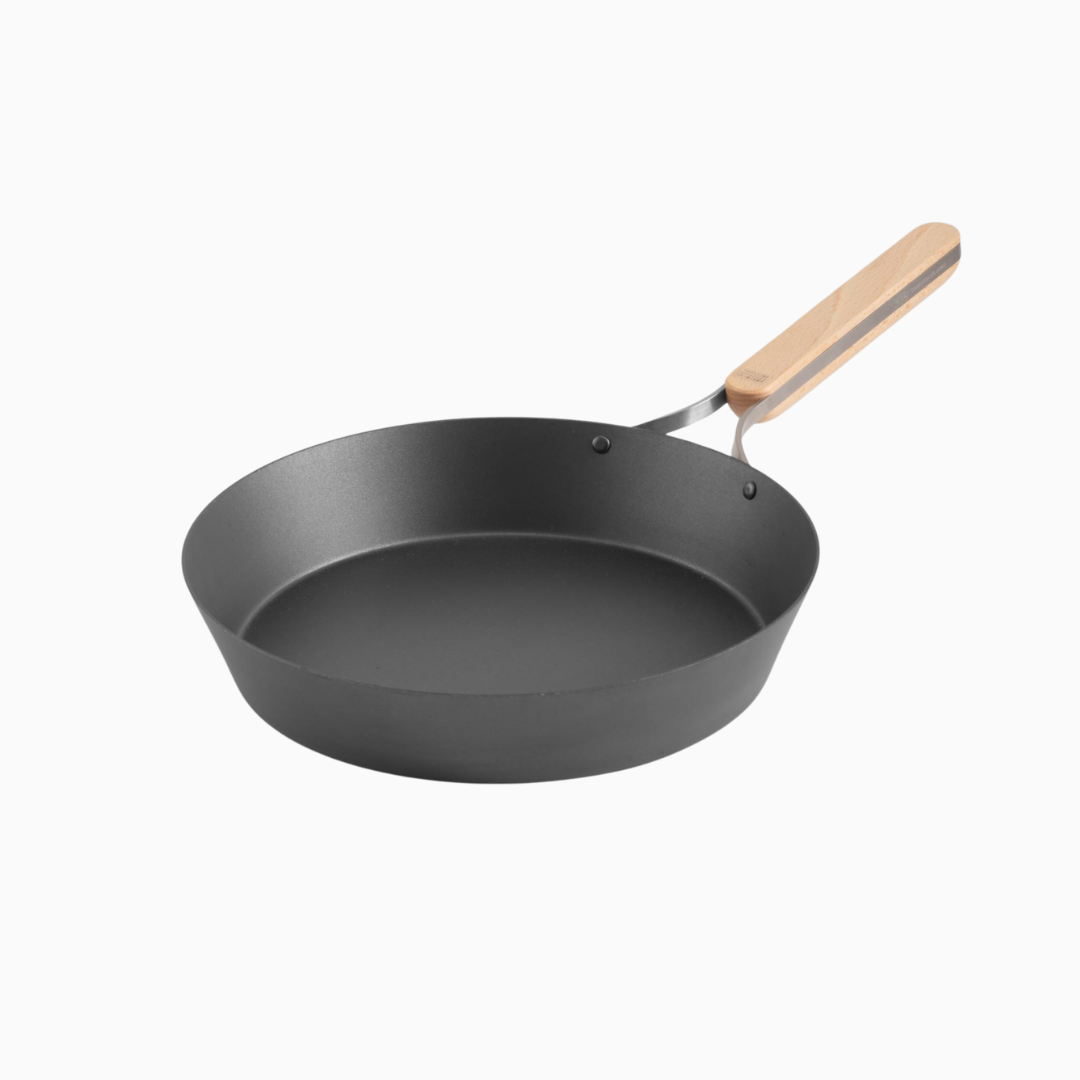
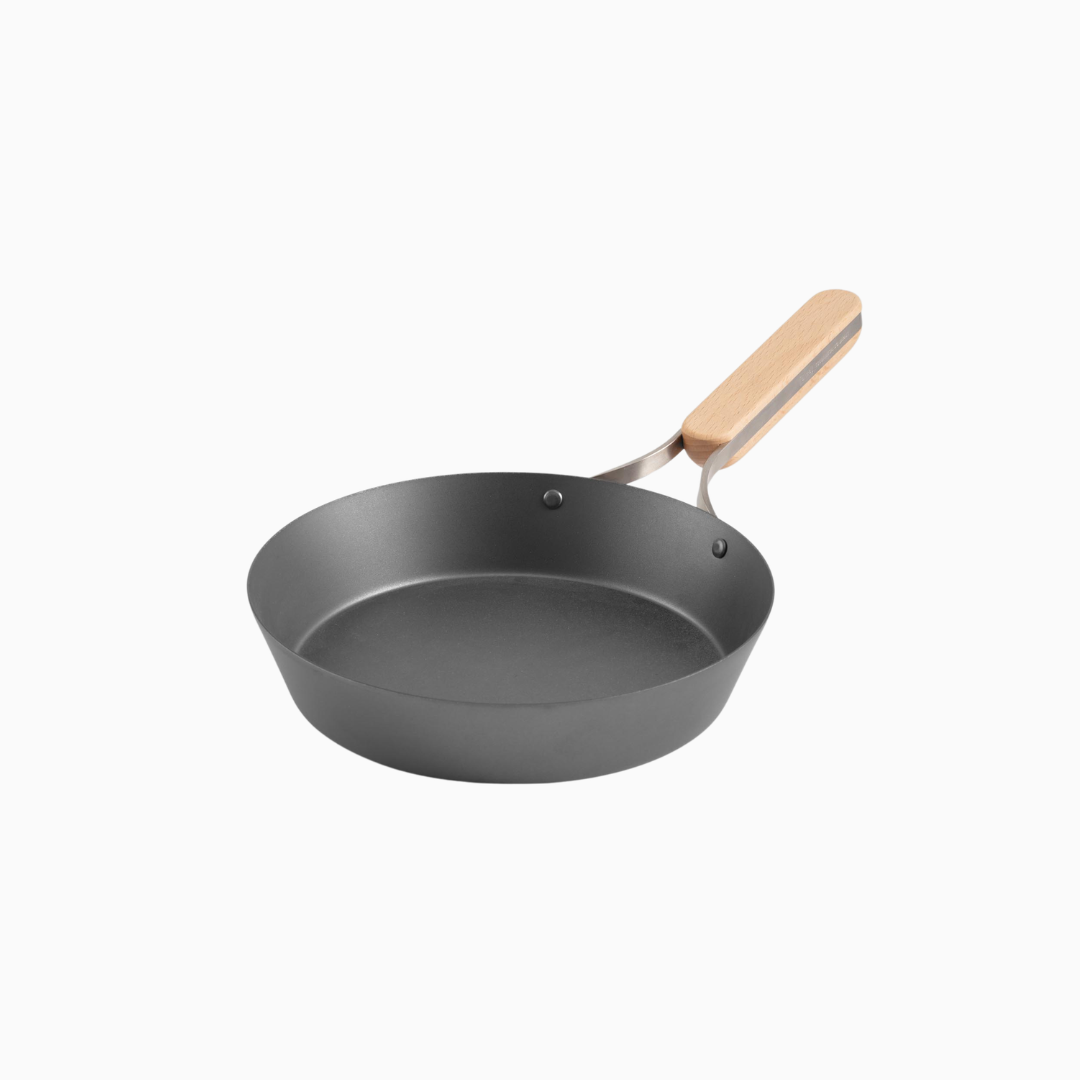
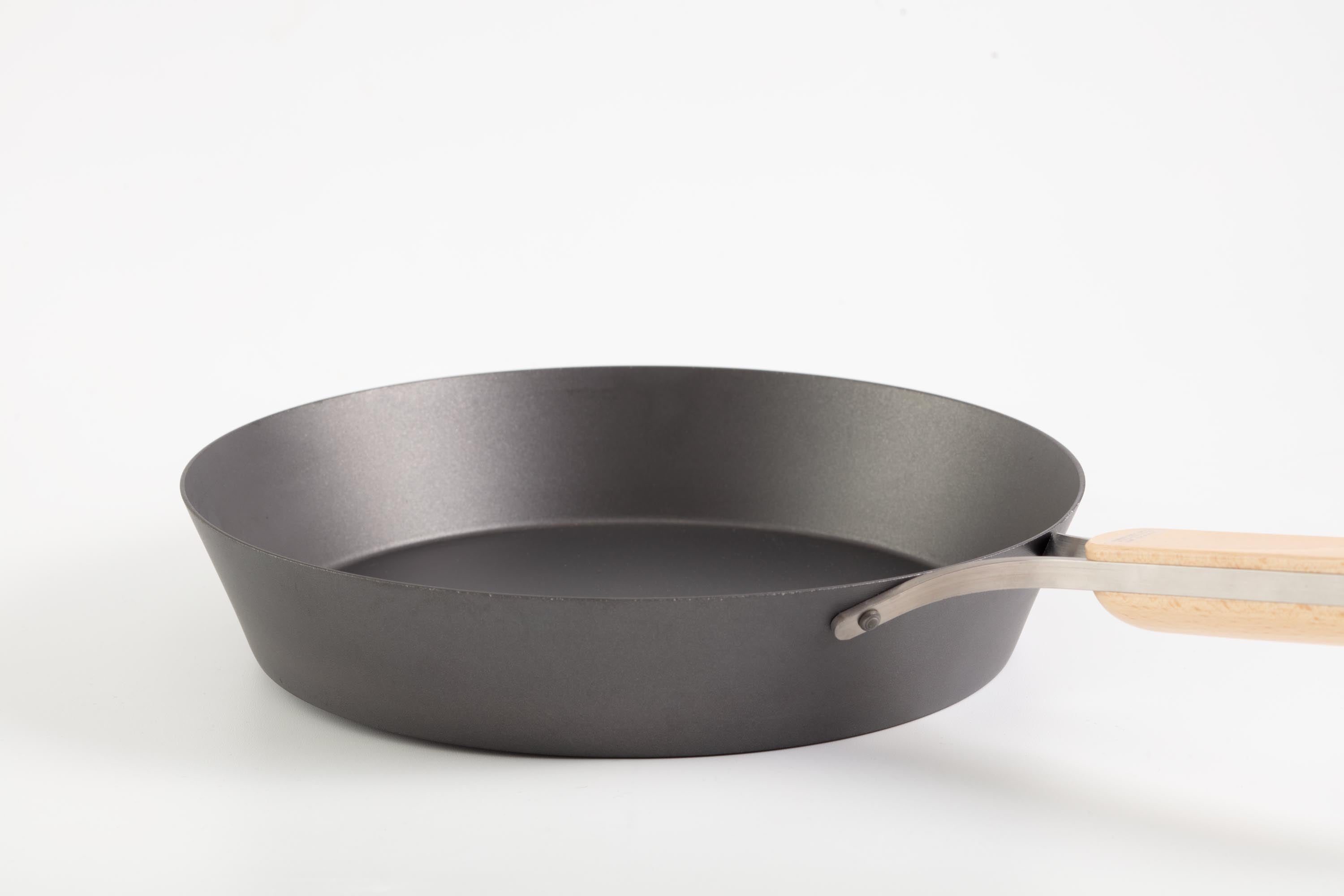
Carbon steel. Iron with a little carbon. It behaves like cast iron — bare metal, seasoned surface, no coating — but it is lighter and far more responsive to heat. More on this below, because it is what we make.
Ceramic and Teflon-style (PTFE) non-stick. These are the coated categories. Modern PTFE cookware is generally made without PFOA now, and ceramic is marketed as the “natural” alternative. Both can be fine to use. But both share the same structural fact: there is a coating, and coatings do not last forever. If your goal is a pan with nothing to degrade, a coating is the thing you are trying to avoid.
Why we make the case for carbon steel
We are not neutral here, so we will show our work. Carbon steel is, to our minds, the most quietly sensible choice for a home cook who wants a healthy pan they will actually enjoy using.
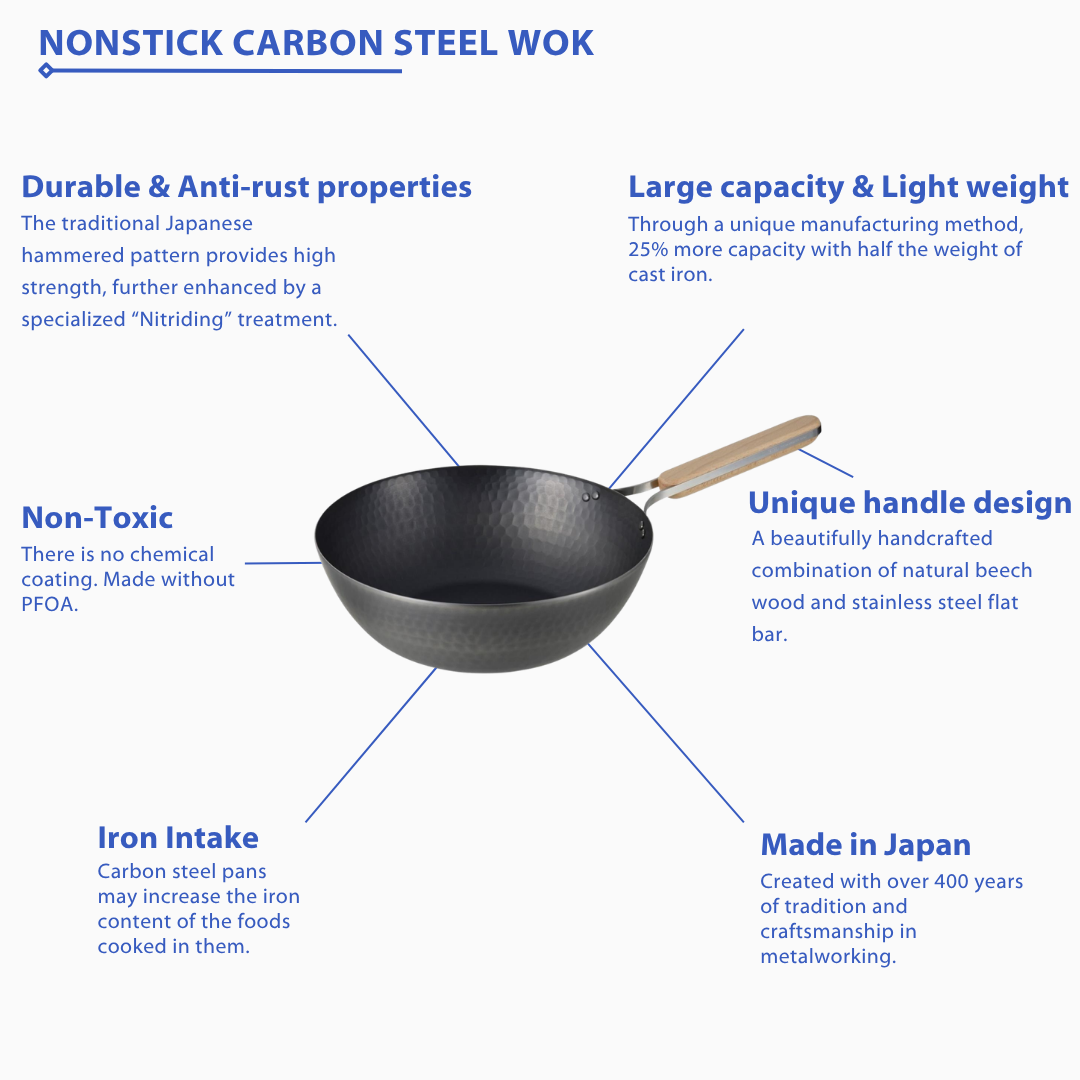
It is bare metal, so there is no synthetic non-stick coating of any kind — no PTFE, no PFAS. Our Enzo pans are made without PFOA. The non-stick you get comes from two honest sources: the seasoning, which is just oil polymerized onto the surface over time, and the nitrided steel underneath. Nitriding is an eight-hour heat treatment that diffuses nitrogen into the surface of the steel to improve hardness and resistance to wear and corrosion. It is worth being precise about this: nitriding is a treatment of the metal itself, not a coating laid on top. There is no separate layer to scratch off.
Because carbon steel is lighter than cast iron and responds quickly to changes in heat, it is pleasant to cook with day to day. It is magnetic, so it works on induction. It gets ripping hot for a sear and calms down fast when you pull the heat back. Ours are made in Tsubame-Sanjō, in Niigata, Japan — a region that has been working metal for four hundred years.
It is not a miracle pan, and we would rather tell you the honest trade-offs than pretend they do not exist. Carbon steel reacts with very acidic foods; a long tomato simmer can strip some seasoning and leave a faint metallic note, so those jobs are better in stainless. And bare iron will rust if you leave it wet. Dry it, give it a light film of oil, and it is happy. That is the whole maintenance ritual. If you want the deeper safety detail, we wrote a fuller piece on whether carbon steel cookware is safe.
What about iron leaching — is that a problem?
This deserves a straight answer rather than a scare or a shrug. Iron pans — cast iron and carbon steel alike — do transfer a small amount of iron into food, more so with acidic dishes and longer cook times. The important thing is what kind of transfer this is. It is not a synthetic chemical breaking down. It is dietary iron, the same nutrient your body needs and that shows up on the side of a cereal box.
For most people, a little extra dietary iron is neutral to mildly helpful. Iron deficiency is common; iron overload from cooking is not a realistic worry for a typical healthy adult.
The honest caveat: a small number of people should be careful. If you have hemochromatosis, or another condition that causes your body to store too much iron, cooking daily in iron pans can add up in a way that matters for you. That is not a reason for everyone to avoid iron cookware — it is a reason for those specific people to talk to their doctor about it. If that describes you, stainless steel is the more neutral choice.
So which pan should you buy?
If “healthiest” means “nothing on the surface that can wear out or worry me,” you want bare metal, and you cannot really go wrong among cast iron, stainless, and carbon steel. Pick by how you cook. Want one responsive pan for eggs, vegetables, and a great sear, without babying a coating? That is carbon steel, and it is why we built the Enzo carbon-steel pans the way we did. It is not dramatic. It is useful.
Frequently asked questions
What is the healthiest type of pan to cook with?
A bare-metal pan with no coating to degrade: cast iron, stainless steel, or carbon steel. None of them have a synthetic non-stick layer that can flake or break down at high heat.
Is carbon steel cookware safe and healthy?
Yes. Carbon steel is bare metal with no synthetic non-stick coating, no PTFE, and no PFAS, and Enzo pans are made without PFOA. Its non-stick comes from seasoning and the nitrided steel surface, not a coating.
Does cooking in iron or carbon steel pans leach iron into food?
A small amount, yes, especially with acidic foods. It is dietary iron, which is neutral to helpful for most people. If you have hemochromatosis or another iron-overload condition, ask your doctor and consider stainless steel instead.
Are ceramic and Teflon pans unhealthy?
Not necessarily; modern versions are generally made without PFOA and can be fine to use. But they are coated, and coatings wear out over time. If you want a pan with nothing to degrade, bare metal is the safer long-term bet.