The short answer
- A traditional wok is bare carbon steel with no synthetic non-stick coating, so there is nothing to flake, scratch off, or break down at high heat.
- Coated non-stick woks rely on a thin surface layer that degrades over time and is not built for the very high temperatures a wok is meant to reach.
- Carbon steel gets its slickness from seasoning, a baked-on layer of polymerized oil that you build and maintain yourself.
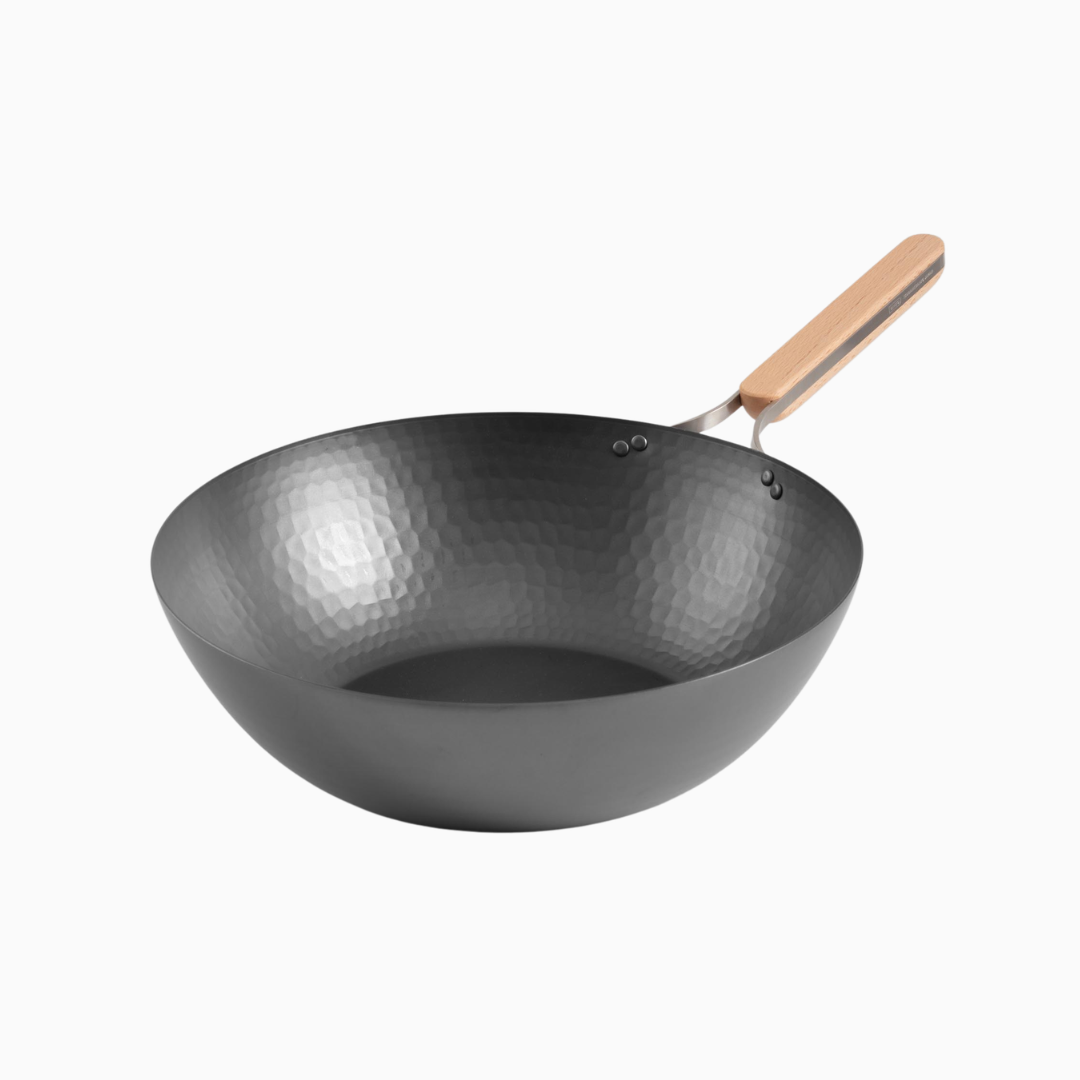
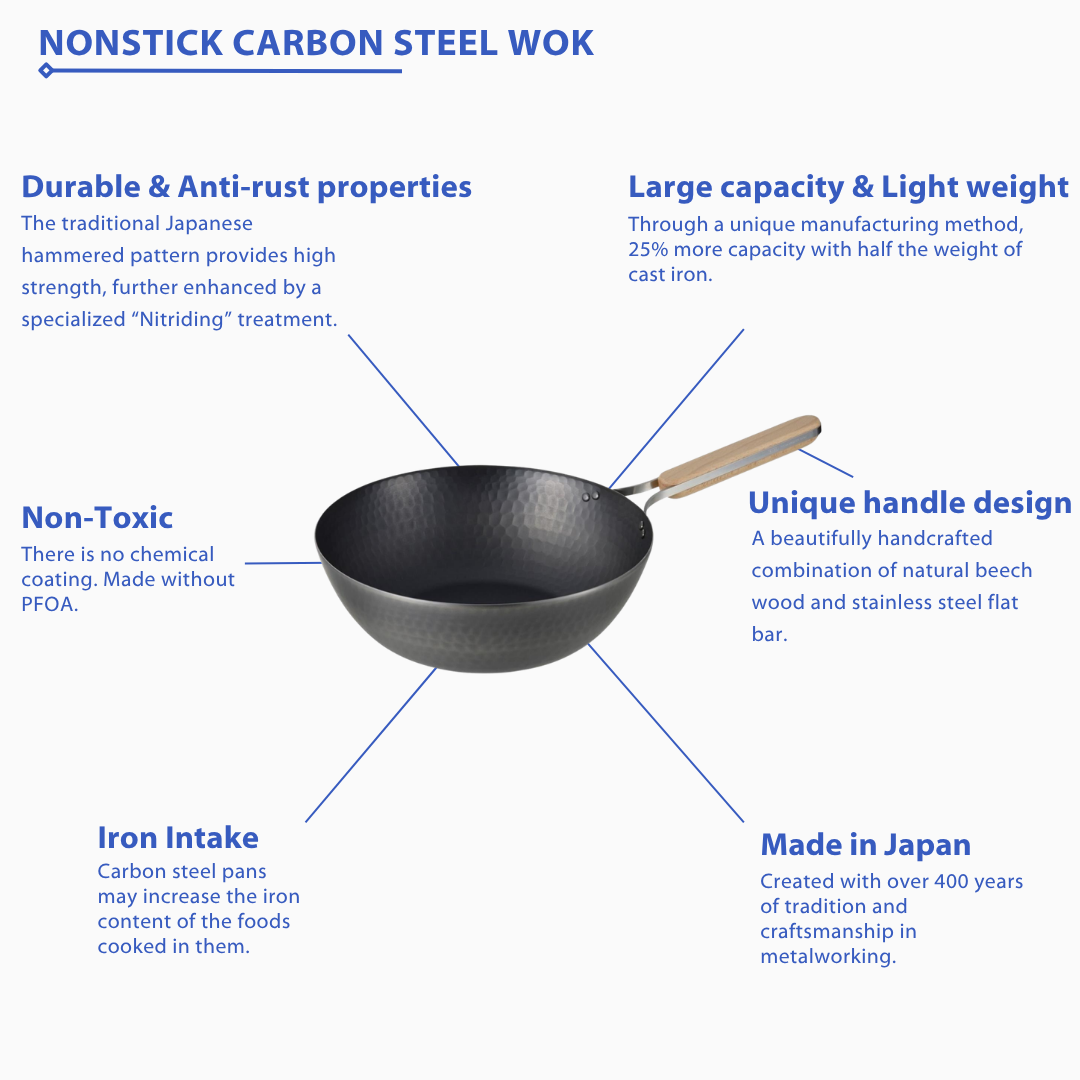
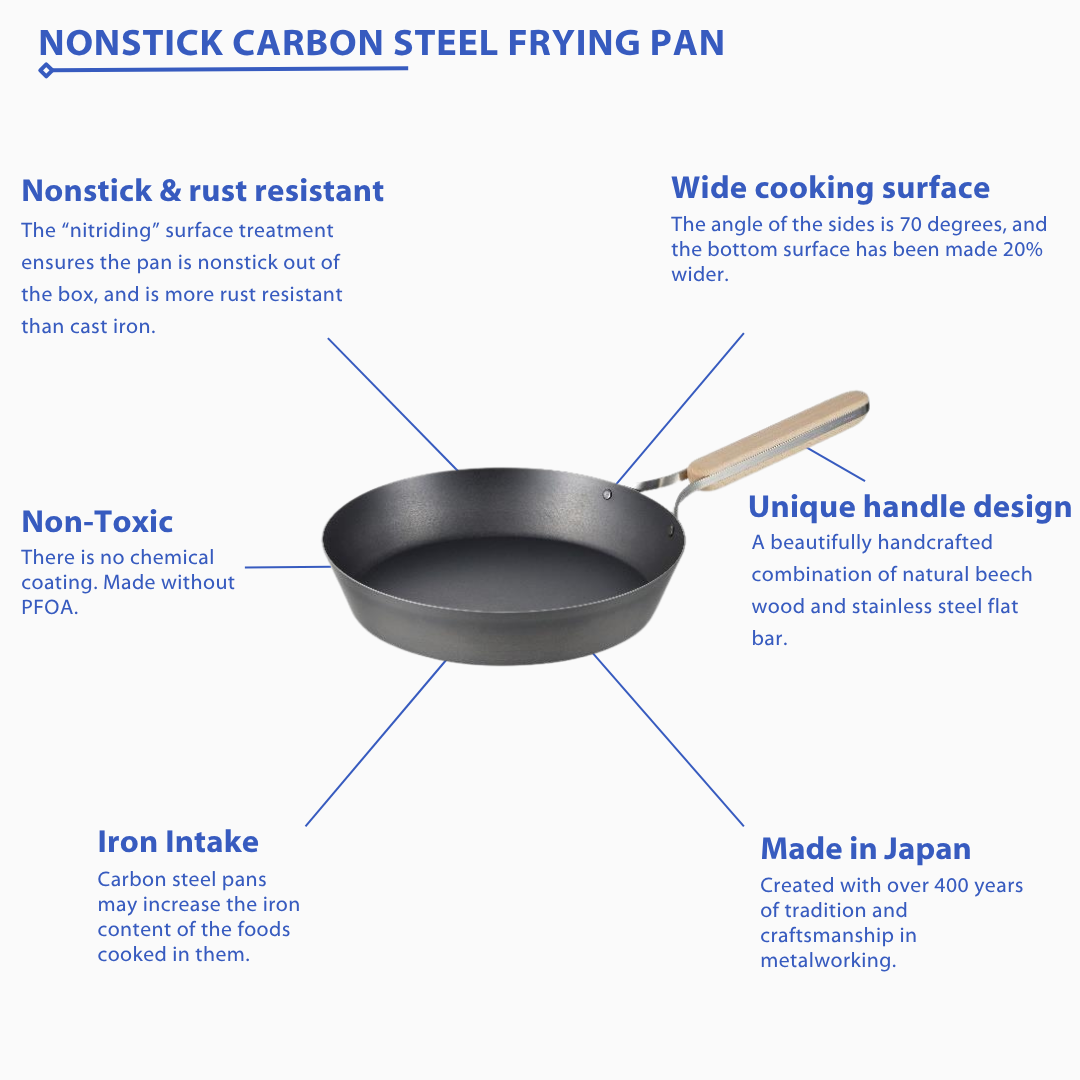
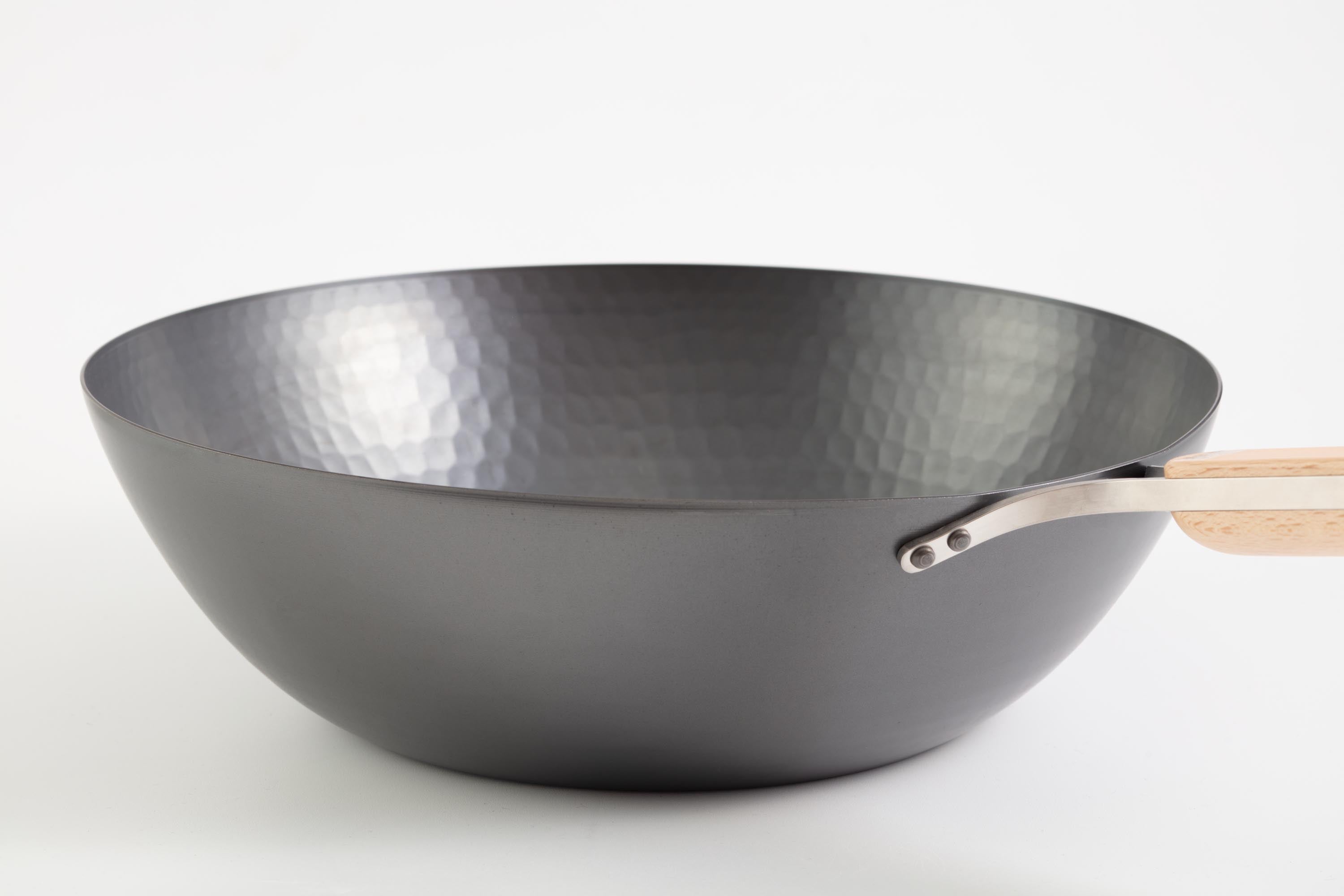
- The Enzo 12.5" carbon steel wok is nitrided, uncoated, made without PFOA, and free of PTFE and PFAS.
Search for a "non toxic wok" and you will find a wall of pans promising safe coatings and chemical-free cooking. It is easy to miss the simplest answer, which has been sitting in professional kitchens for a very long time. A traditional wok is carbon steel. It has no coating at all. There is nothing on the surface to worry about, because there is no surface treatment doing the non-stick work in the first place.
That is the idea worth understanding before you buy. The safest high-heat wok is usually the one that skips the coating entirely.
What makes a wok non toxic in the first place?
When people ask whether a pan is toxic, they are almost always asking about the coating. Most concern centers on synthetic non-stick layers, the PTFE and broader PFAS family often grouped under the Teflon name. These coatings are useful, but they are a thin film on top of the metal. They can scratch, wear thin, and break down when pushed past the temperatures they were designed for. A wok, by its nature, gets very hot.
A bare carbon steel wok removes that variable. Carbon steel is just iron with a little carbon added. There is no film on top, so there is nothing to flake into your food and nothing to degrade over a hot burner. The non-stick performance comes from seasoning instead, which is a layer of oil you polymerize onto the metal through cooking. That layer is food, essentially, baked hard and smooth.
This is why the traditional material and the "non-toxic" goal line up so neatly. Carbon steel was never trying to be a coated pan. It earns its slickness the old way.
Why does carbon steel beat coated non-stick for a wok?
Two reasons, and both come down to heat.
First, a wok is built for high heat. Stir-frying works because the pan is screaming hot, the oil shimmers, and food hits the metal and sears in seconds. That is how you get the smoky, slightly charred flavor that makes wok cooking what it is. Coated non-stick pans are generally not meant for that kind of temperature. Push them there and you are shortening the life of the coating, which defeats the point of buying one.
Second, carbon steel is responsive. It is lighter and quicker to react than cast iron, so it heats fast, and it cools fast when you pull it off the flame. That control matters when you are moving food constantly. It is also magnetic, so it works on induction as well as gas and electric.
There is a durability angle too. A coated wok has a built-in expiration date, because the coating eventually wears out and the pan becomes something you replace. A seasoned carbon steel wok goes the other way. The more you use it, the better the surface gets. It is not dramatic. It is useful.
What is nitriding, and is it a coating?
The Enzo 12.5" wok is nitrided carbon steel, and this is worth explaining because it sounds like a coating and is not one.
Nitriding is an eight-hour heat treatment that diffuses nitrogen into the surface of the steel. It changes the metal itself, adding hardness and improving resistance to wear and corrosion. Nothing is layered on top. There is no film to scratch through, because the treatment happens inside the surface of the steel rather than on it. You still season a nitrided wok, and it still cooks like carbon steel. It just starts out a little tougher and a little more forgiving about rust.
So the Enzo wok carries no synthetic non-stick coating of any kind. No PTFE, no PFAS, and it is made without PFOA. The non-stick comes from the seasoning you build plus the nitrided surface underneath it. If you want the longer version of the safety question, we wrote a full piece on whether carbon steel cookware is safe.
How do you season and care for a carbon steel wok?
Seasoning sounds fussy and is not. The goal is to bake thin layers of oil onto the metal until it darkens and turns slick.
The routine looks like this. Wash the new wok to remove any factory film and dry it fully. Heat it until it just starts to change color, add a very thin film of a high-smoke-point oil, and wipe most of it back off so almost nothing looks left behind. Heat it until the oil stops smoking, then let it cool. Repeat a few times. You are not trying to build a thick coat in one session. Thin and repeated is the whole trick, and the layer keeps deepening every time you cook.
Daily care is simple. Cook, then rinse with hot water and a soft brush while the pan is still warm. Skip long soaks and harsh scouring that would strip your seasoning. Then the one step people forget: dry it completely and rub in a light film of oil. Bare carbon steel will rust if you leave it wet, so that quick wipe of oil is what keeps it in shape.
One honest caveat. Carbon steel reacts with very acidic foods. Simmering a tomato or vinegar-heavy sauce for a long stretch can strip some seasoning and leave a faint metallic note. For fast, hot stir-fries this rarely comes up, and it is easy to work around. If you want a low-acid workhorse, the wok is happiest doing what a wok does.
Is a carbon steel wok worth it for a home kitchen?
If you cook over high heat and you care about what is or is not on the surface of your pan, yes. You get the searing temperatures a wok needs, a surface that improves with use instead of wearing out, and no coating to think about. The trade is a few minutes of seasoning up front and a habit of drying and oiling after each wash.
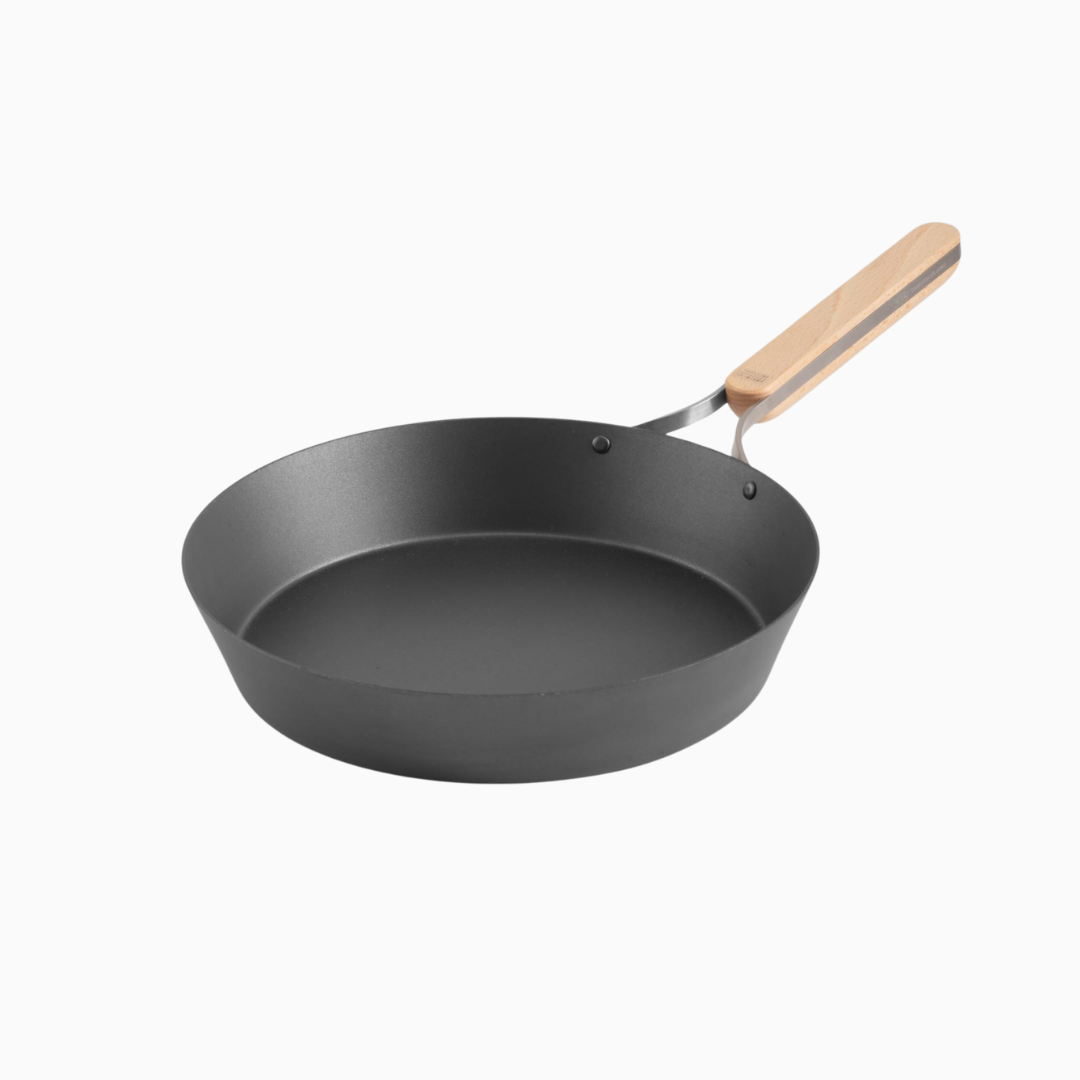
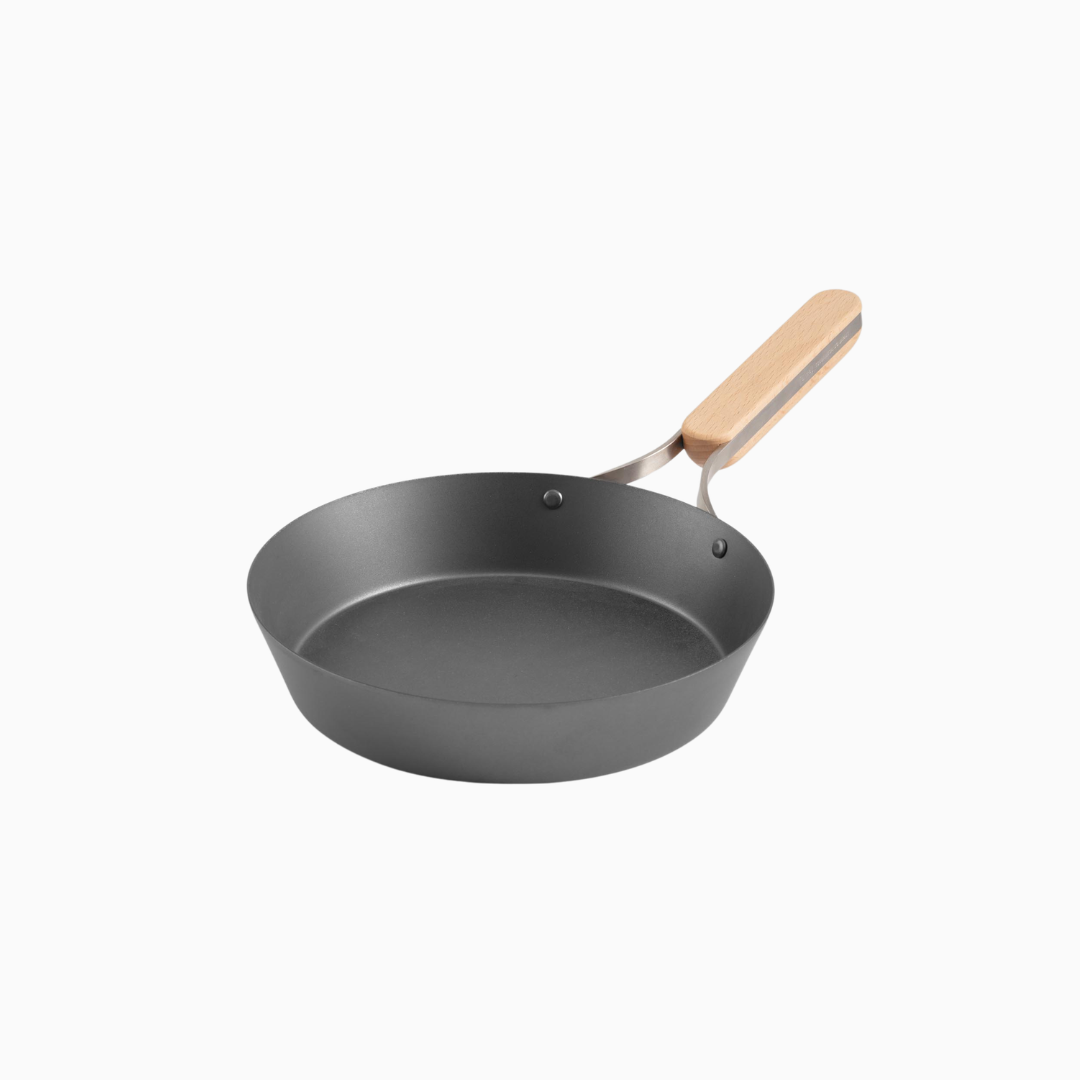
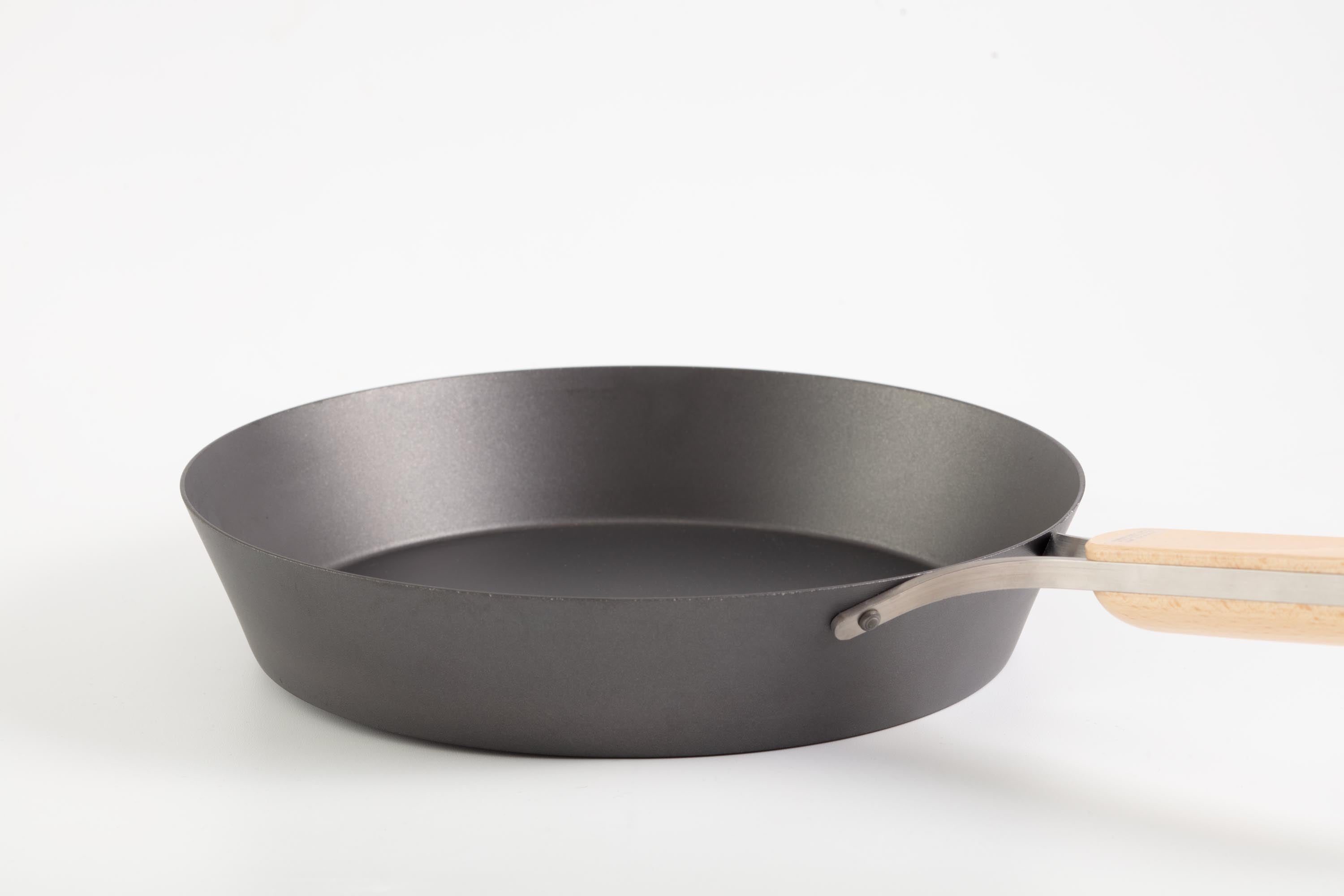
The Enzo 12.5" carbon steel wok is made in Tsubame-Sanjō in Niigata, Japan, a region with roughly four hundred years of metalworking behind it, with a beech wood and stainless handle. It is uncoated by design, which is exactly what makes it a straightforward non toxic choice.
Frequently asked questions
Is a carbon steel wok non toxic?
Yes. Carbon steel is iron with a small amount of carbon and no synthetic non-stick coating. The Enzo wok is nitrided carbon steel made without PFOA and free of PTFE and PFAS, so there is no coating to flake or break down at high heat.
Does a non-stick wok work better than carbon steel?
Not for real wok cooking. Coated non-stick woks are generally not built for the very high heat stir-frying needs, and the coating wears out over time. A seasoned carbon steel wok handles high heat and actually improves with use.
Is nitriding a coating?
No. Nitriding is a heat treatment that diffuses nitrogen into the surface of the steel to make it harder and more corrosion resistant. It changes the metal itself rather than adding a layer on top, so there is nothing to scratch off.
How do I keep a carbon steel wok from rusting?
Dry it completely after washing and rub in a light film of oil before storing it. Bare carbon steel can rust if left wet. Also go easy on long-simmered acidic foods, which can strip seasoning over time.