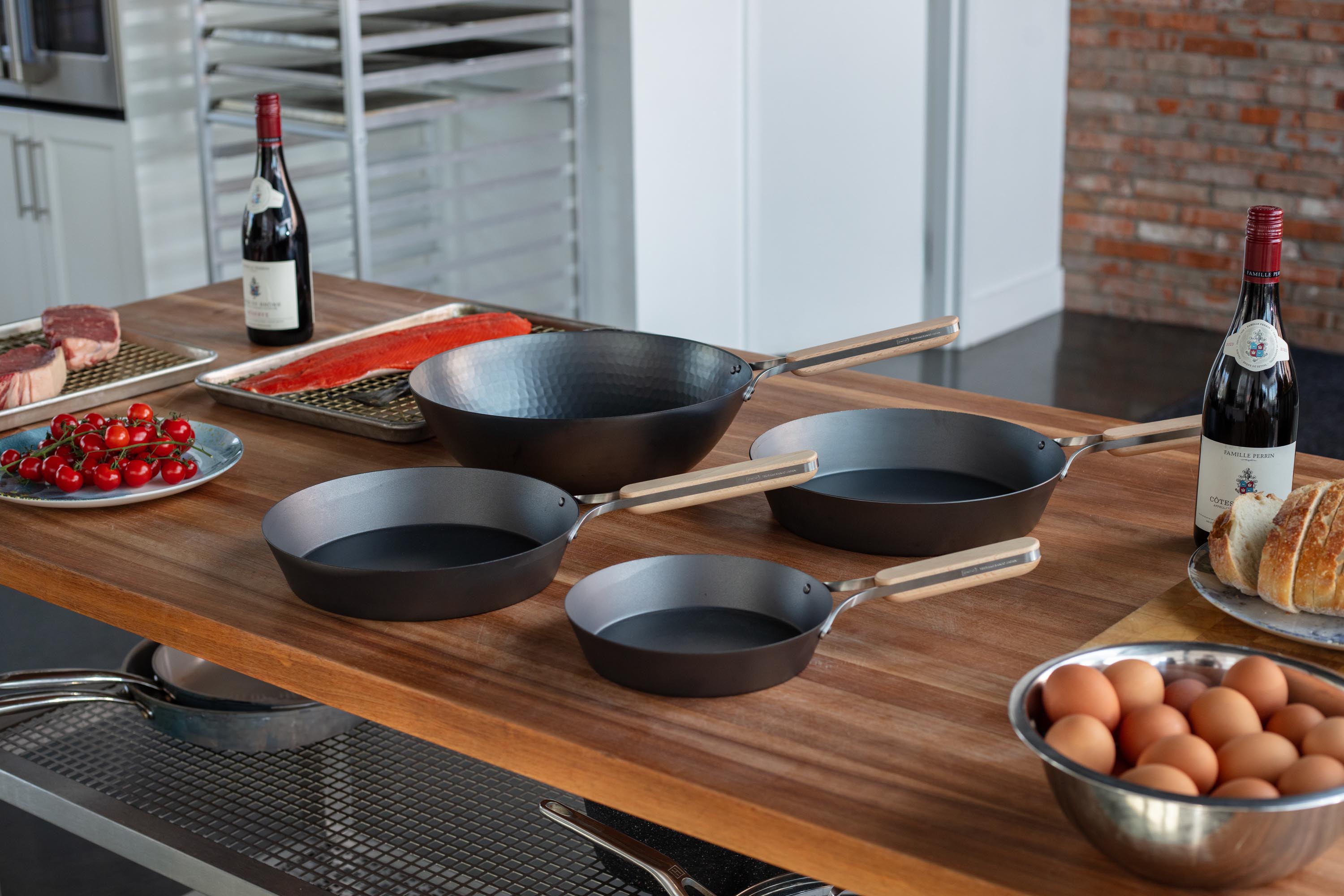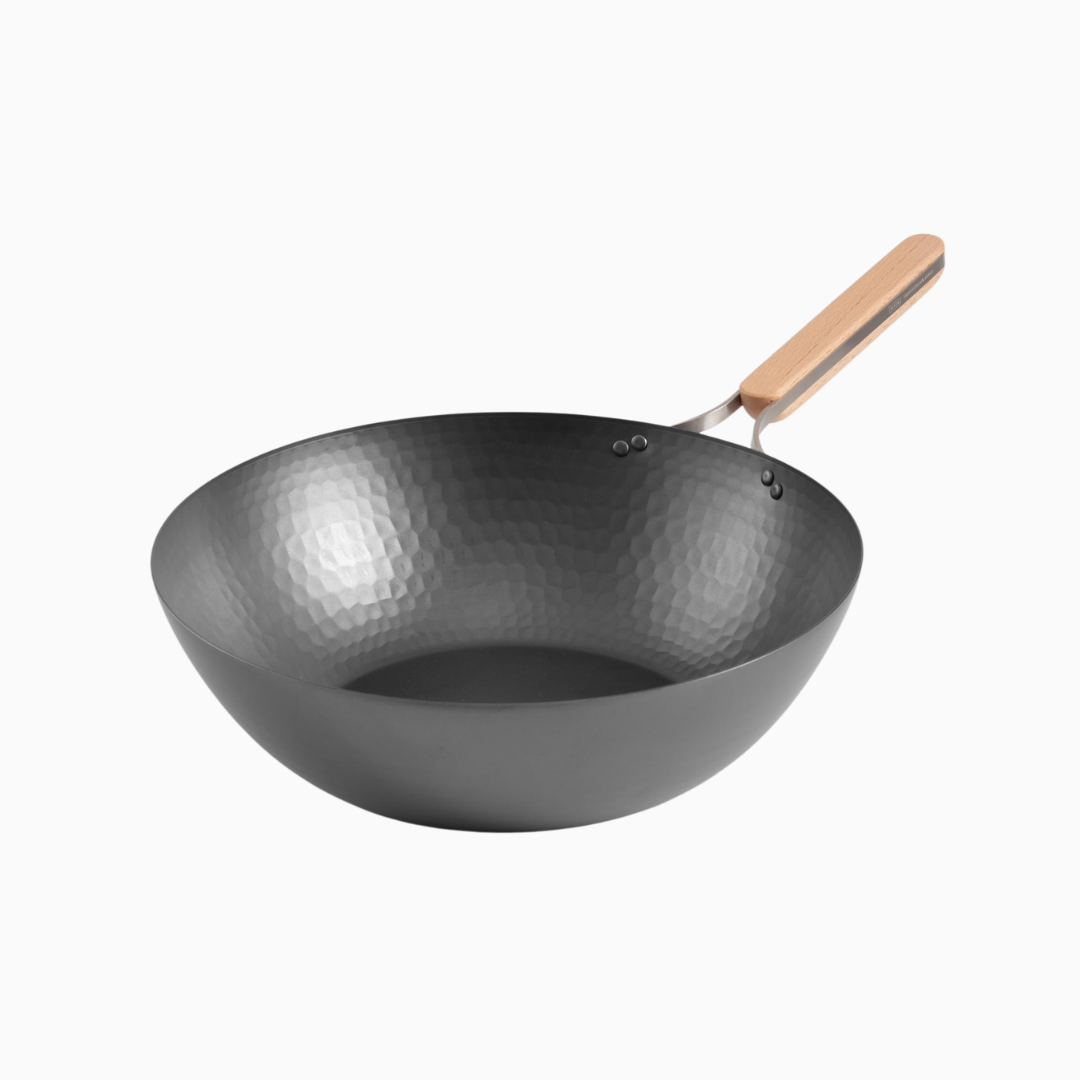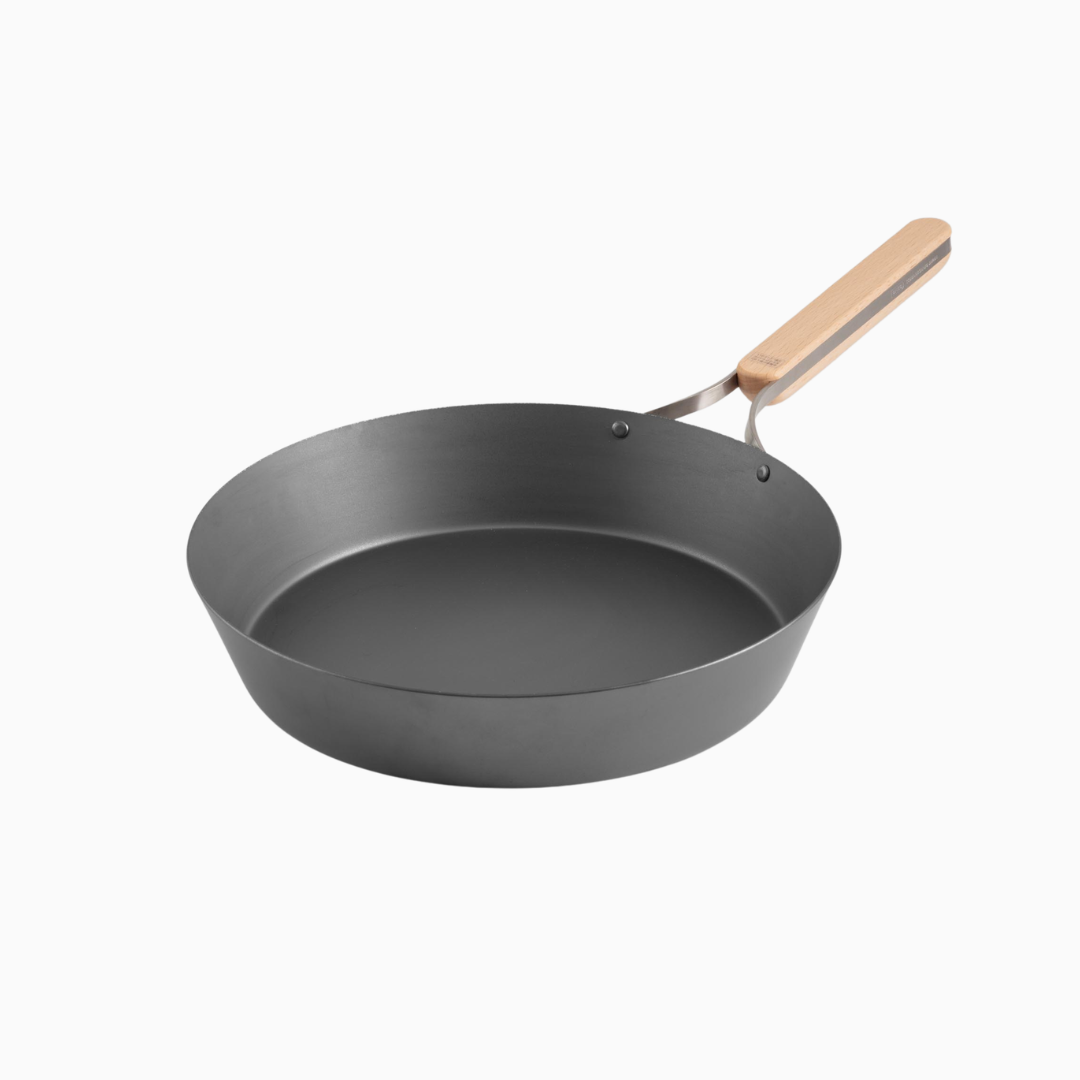
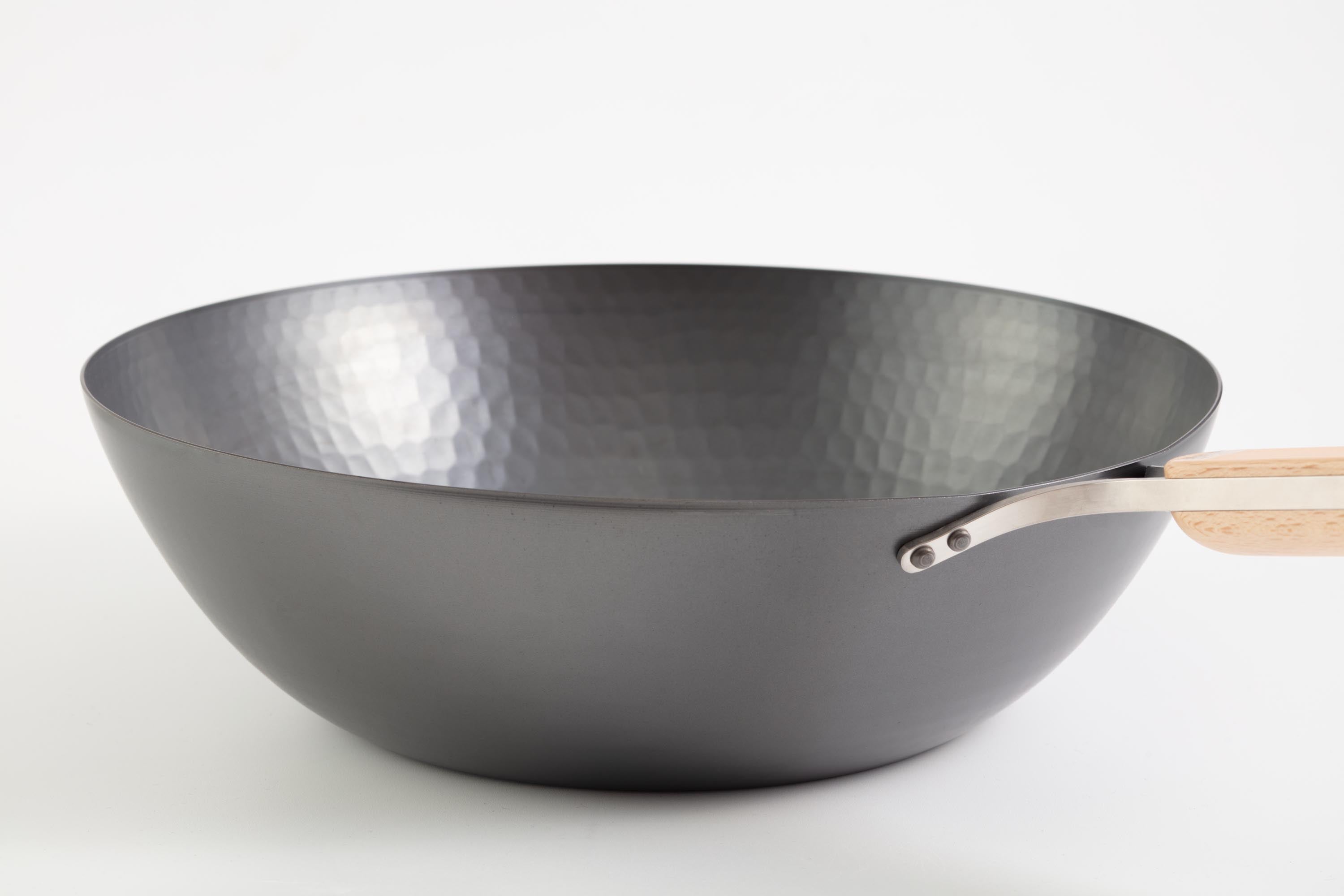
To clean a carbon steel pan, let it cool enough to handle, hand-wash it, remove food residue, dry it completely and wipe on a very thin film of cooking oil. A dark, uneven colour is normal. A greasy, rough or sticky surface is a different problem—and adding more oil usually does not solve it.
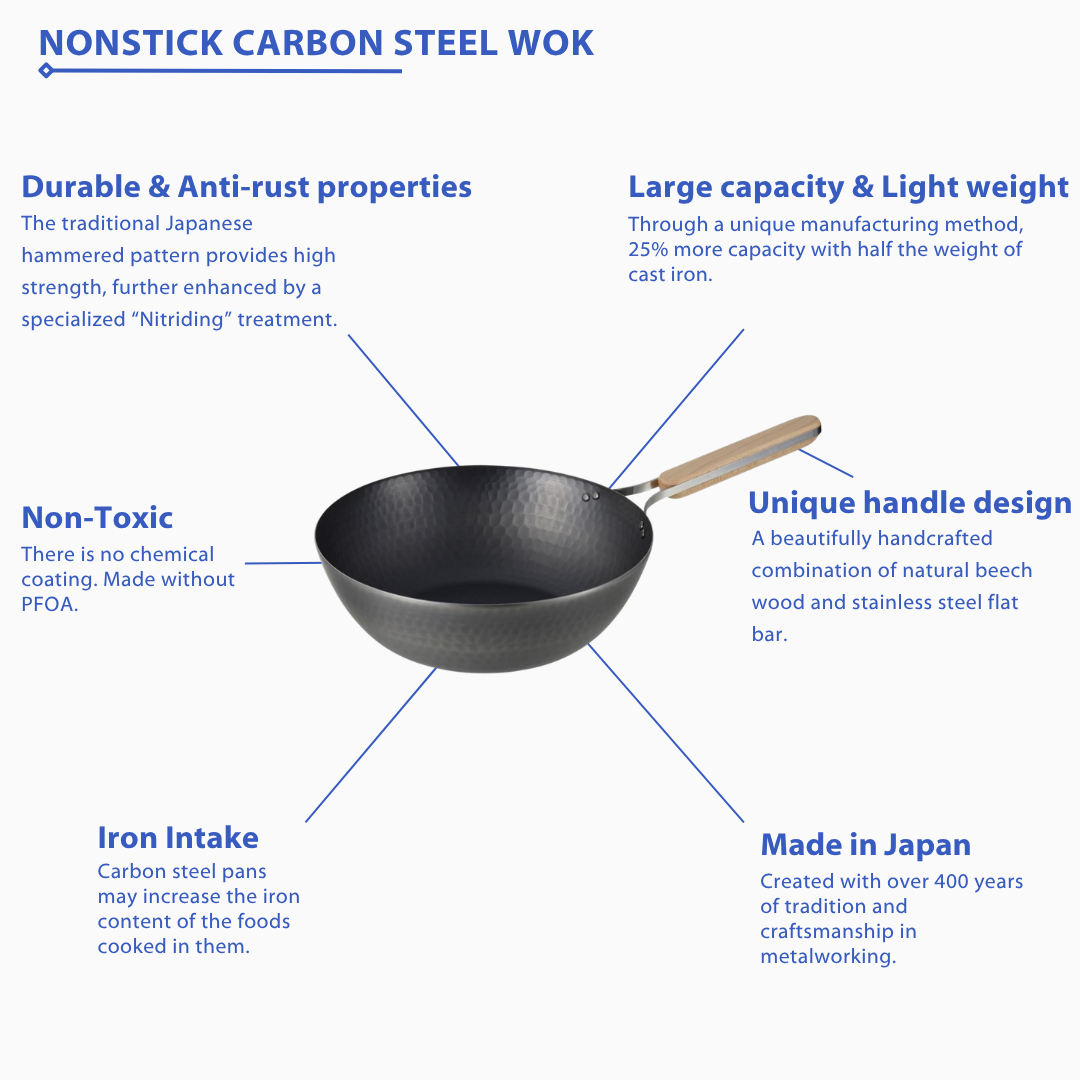
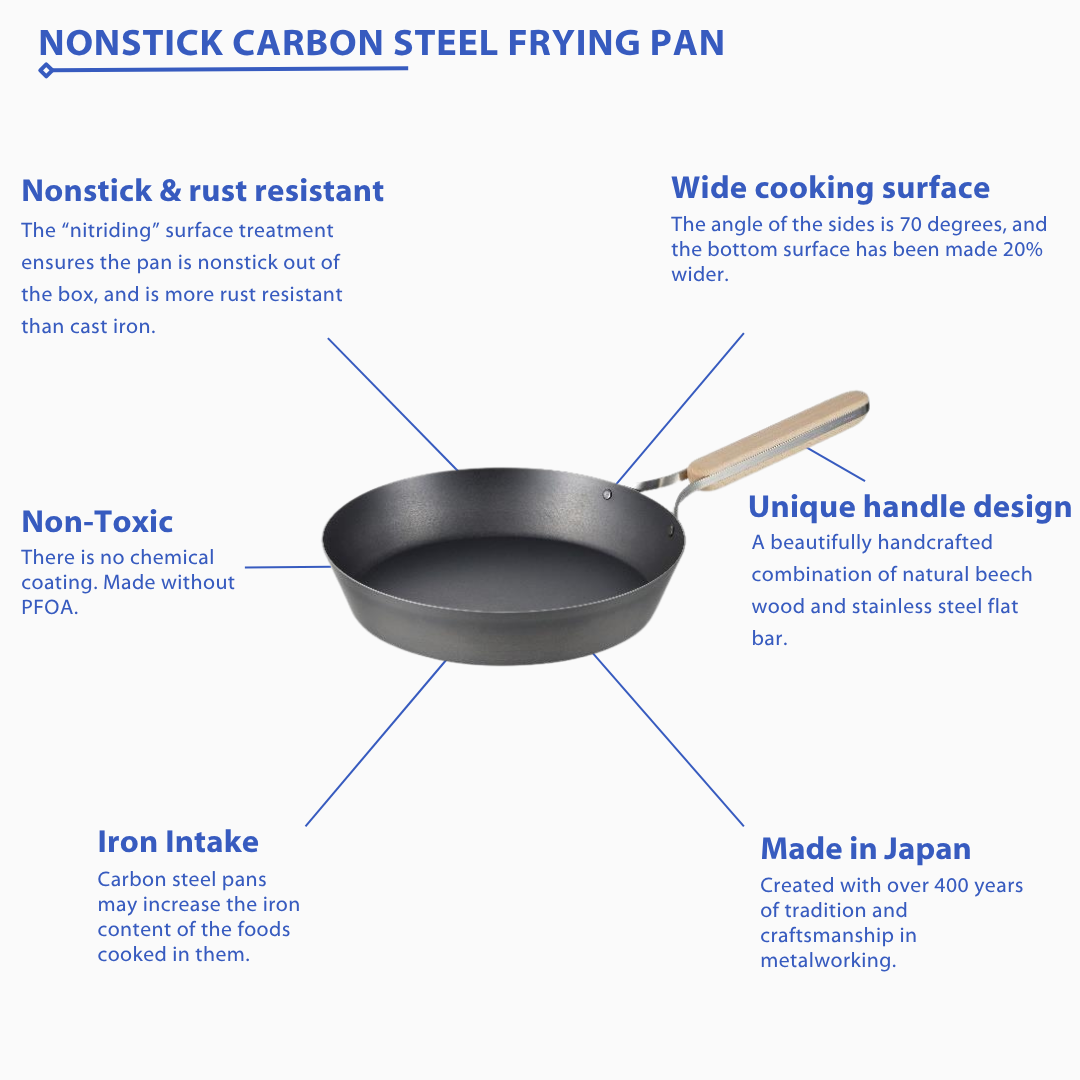
This guide covers uncoated and seasoned carbon steel. If your pan has a special coating or treatment, follow its maker's care instructions. A nonstick-coated pan needs a gentler approach than bare steel.
The everyday cleaning routine
- Let the heat settle. Do not put a very hot pan under cold running water. Set it somewhere heat-safe until it is comfortable to work around.
- Wash off dinner. Use warm water, a soft brush or sponge, and a little mild dish soap when needed. Clean the sides and rim as well as the cooking surface.
- Loosen food that will not lift. Try a pan scraper. For stubborn bits, briefly simmer a shallow layer of water, loosen the residue, then wash again once the pan is safe to handle.
- Dry all of it. Towel-dry, then use gentle stovetop heat to evaporate remaining moisture. Switch the burner off; do not leave the empty pan heating unattended.
- Protect the dry steel. Once safe to handle, spread a few drops of oil over the surface and buff them nearly away. The pan should not feel greasy.
For reference, Lodge's carbon-steel care instructions also allow mild soapy water and recommend a scraper or a short water simmer for stuck food.
Identify the problem before scrubbing
| What you notice | What to try |
|---|---|
| Smooth brown or black patches | Wash normally. Colour alone is not a reason to strip the pan. |
| Raised, rough black bits | Remove the stuck food or loose residue before cooking again. |
| A tacky surface after oiling | Clean away excess oil, dry, then use much less oil. |
| Orange-brown surface rust | Remove the rust, clean and dry the area, then restore its seasoning according to the maker's instructions. |
Can you use soap on carbon steel?
Yes: a small amount of mild dish soap is compatible with ordinary seasoned carbon steel. You do not need to leave grease or food behind to preserve seasoning. Avoid treating every wash as a deep restoration; start with the gentlest cleaning that actually removes the mess.
How to deal with surface rust
For light rust, use the pan maker's recommended scrubber on the affected area, rather than stripping the whole pan by default. Rinse, dry thoroughly and re-season exposed steel. De Buyer describes mechanical rust removal followed by re-seasoning. Strong abrasives can also remove good seasoning, so reserve them for a real problem. If there is deep pitting or damage beyond surface rust, ask the manufacturer to assess it.
What if the pan feels sticky or leaves black residue?
A sticky pan after seasoning often has excess oil that has not formed a good, thin layer. Clean the tacky area before applying more. Follow our seasoning guide when the surface needs rebuilding.
A little dark colour on a towel does not tell you, by itself, whether the pan needs restoring. Check for loose flakes, gritty food deposits or a greasy feel. Remove material that is coming away; leave a smooth, firmly attached patina alone. The useful test is whether the surface is clean and cooks well, not whether it looks uniformly black.
Can carbon steel go in the dishwasher or soak overnight?
No. Hand-wash it promptly and dry it rather than leaving it submerged or on a wet draining board. Store the cooled pan somewhere dry. If stacking pans, use a clean, dry protector and avoid trapping moisture between them.
For a carbon-steel wok, the same basic routine applies; handle the deep sides carefully. Our wok-cleaning guide also explains why coated woks need different care.