The short answer
- "Non-toxic" is a marketing word. It means nothing on its own. Trust a brand only when it either has no coating at all, or publishes third-party test results.
- Two honest camps: coating-free makers (carbon steel, cast iron, stainless) and PFAS-free ceramic-coated pans.
- Coating-free cookware lasts more or less indefinitely. Ceramic coatings are convenient but wear out over a few years.
- If you want coating-free without the from-scratch seasoning ritual, carbon steel is the low-maintenance middle ground.
Walk down the cookware aisle and everything is "non-toxic" now. It is a comforting word that, by itself, tells you nothing. There is no standard behind it and no one checking. What actually matters is simpler: does the pan have a synthetic coating, and if it does, has anyone independent tested it? That single question sorts the whole market into two honest groups. Here is a brand-by-brand look at both, and who each one is really for.
What does "non-toxic cookware" actually mean?
The concern most people are trying to avoid is PFAS, the family of "forever chemicals" used in traditional PTFE (Teflon) nonstick. There are two credible ways for a brand to earn your trust here. The first is to have no coating at all, so there is nothing to flake, degrade, or off-gas. The second is to use a PFAS-free coating and then publish independent lab testing to prove it. Everything else is a claim without evidence. Keep that filter handy as you read.
Coating-free makers (zero PFAS risk)
If there is no coating, there is nothing to worry about. These pans get their cooking surface from the bare metal itself, which means they can last for decades. The trade-off is that most of them ask a little more of you: some heat control, some drying, some care.
Julien — the low-maintenance carbon-steel option
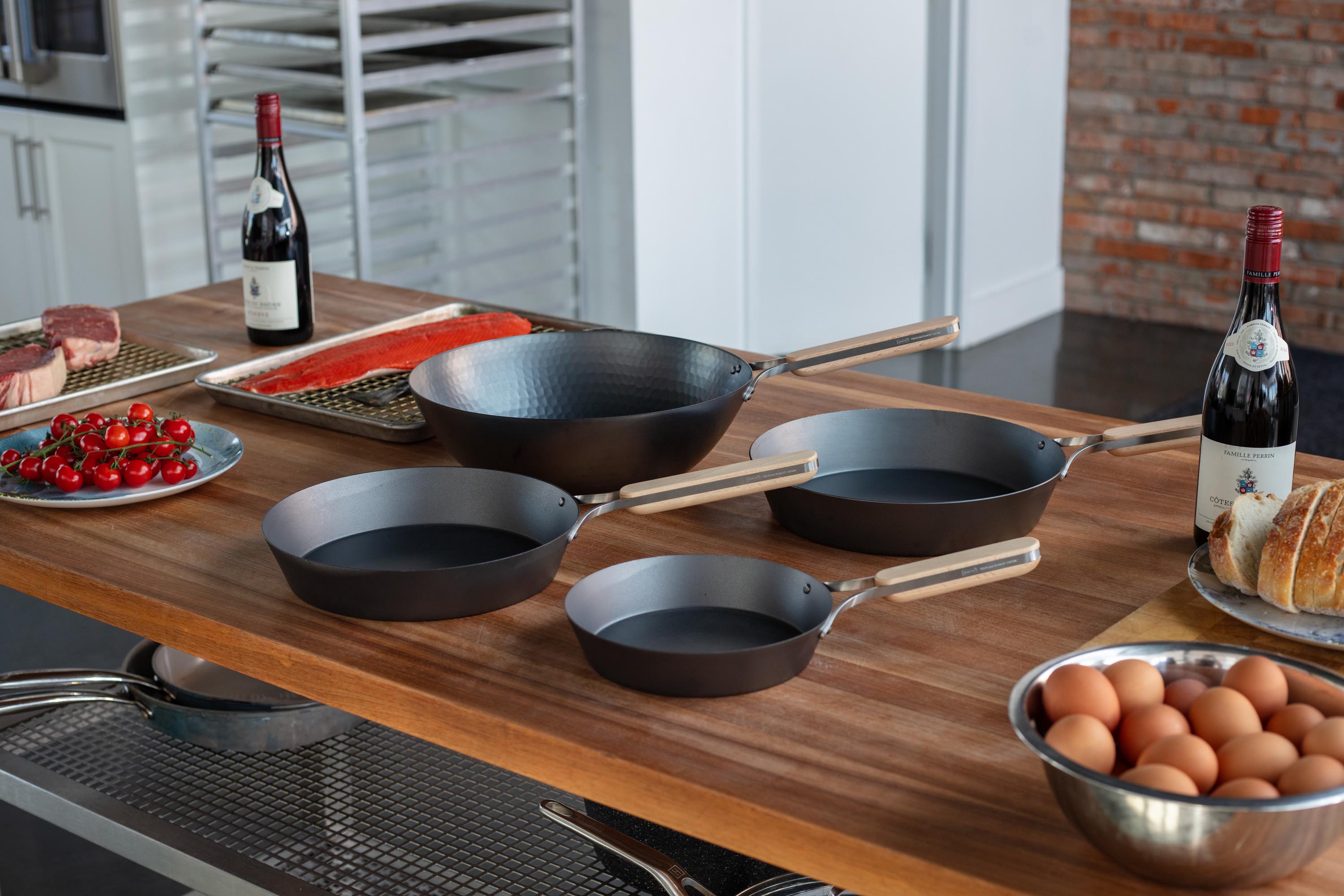
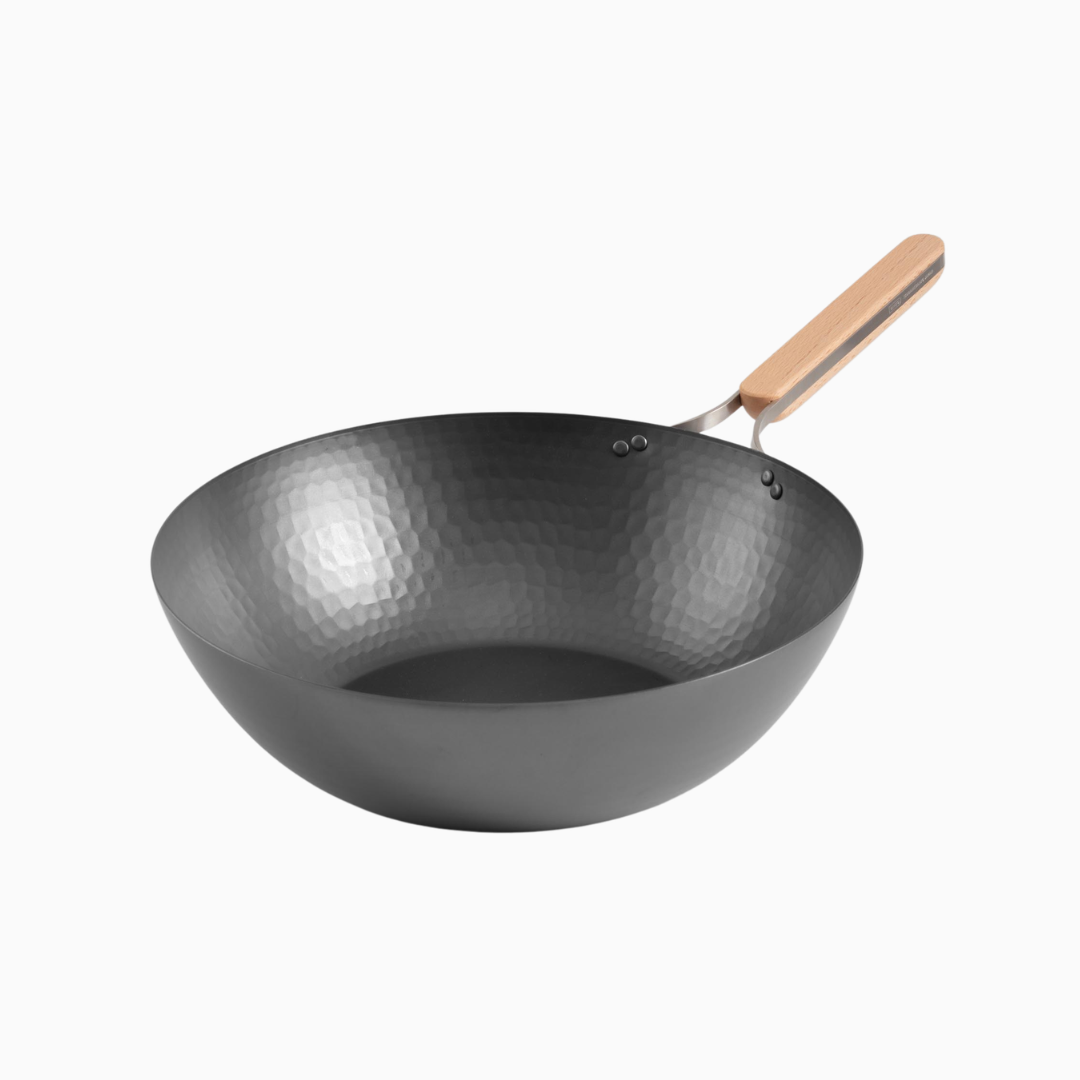
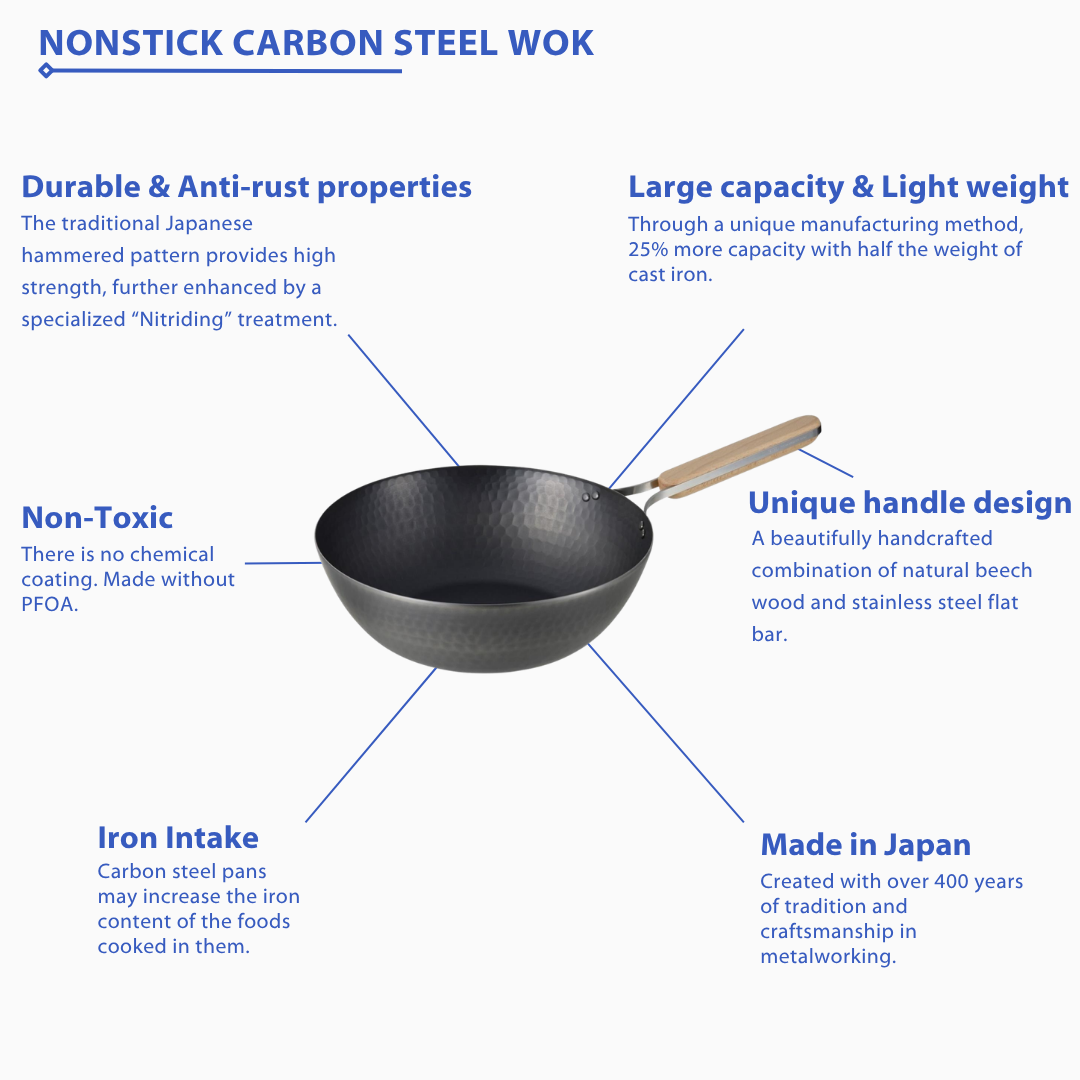
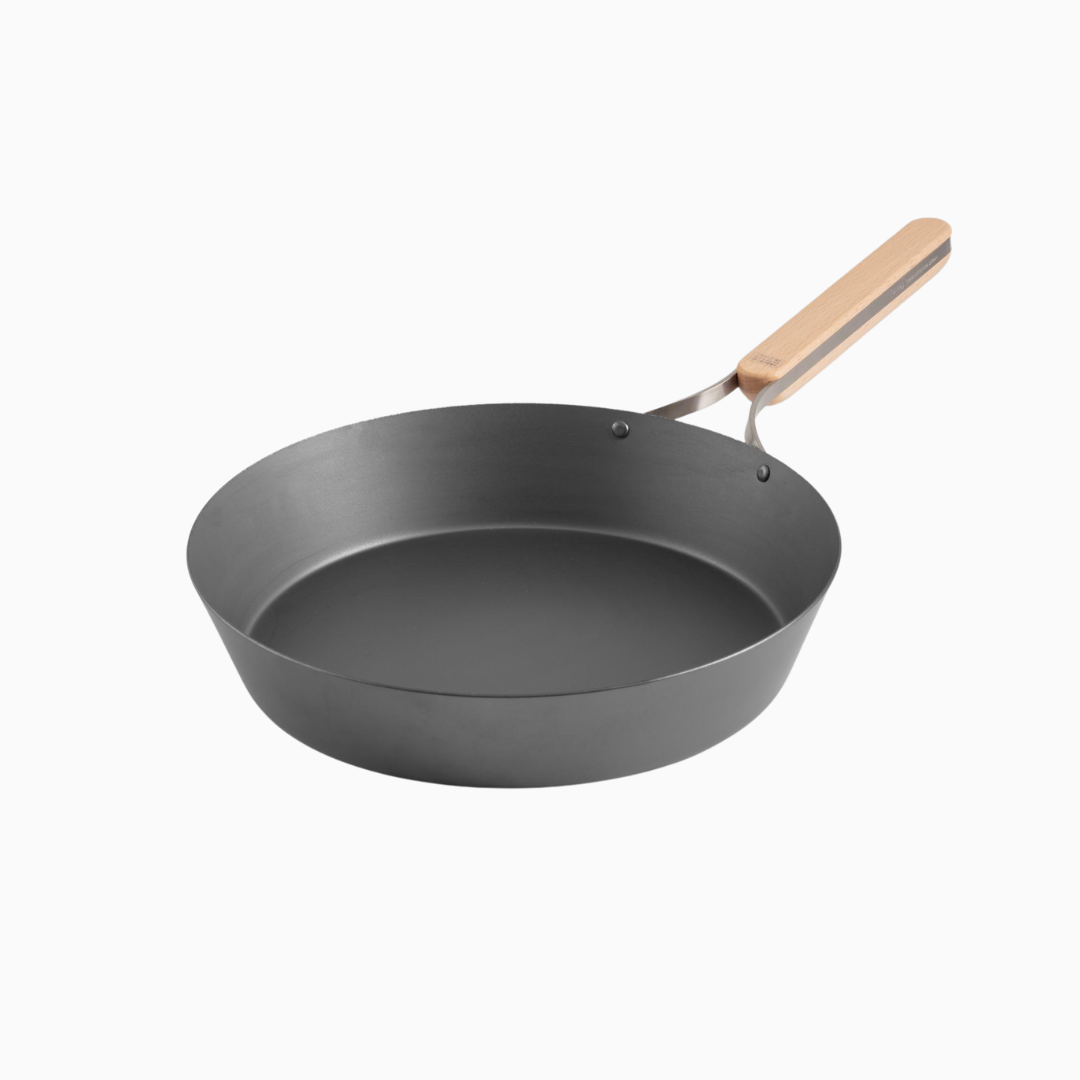
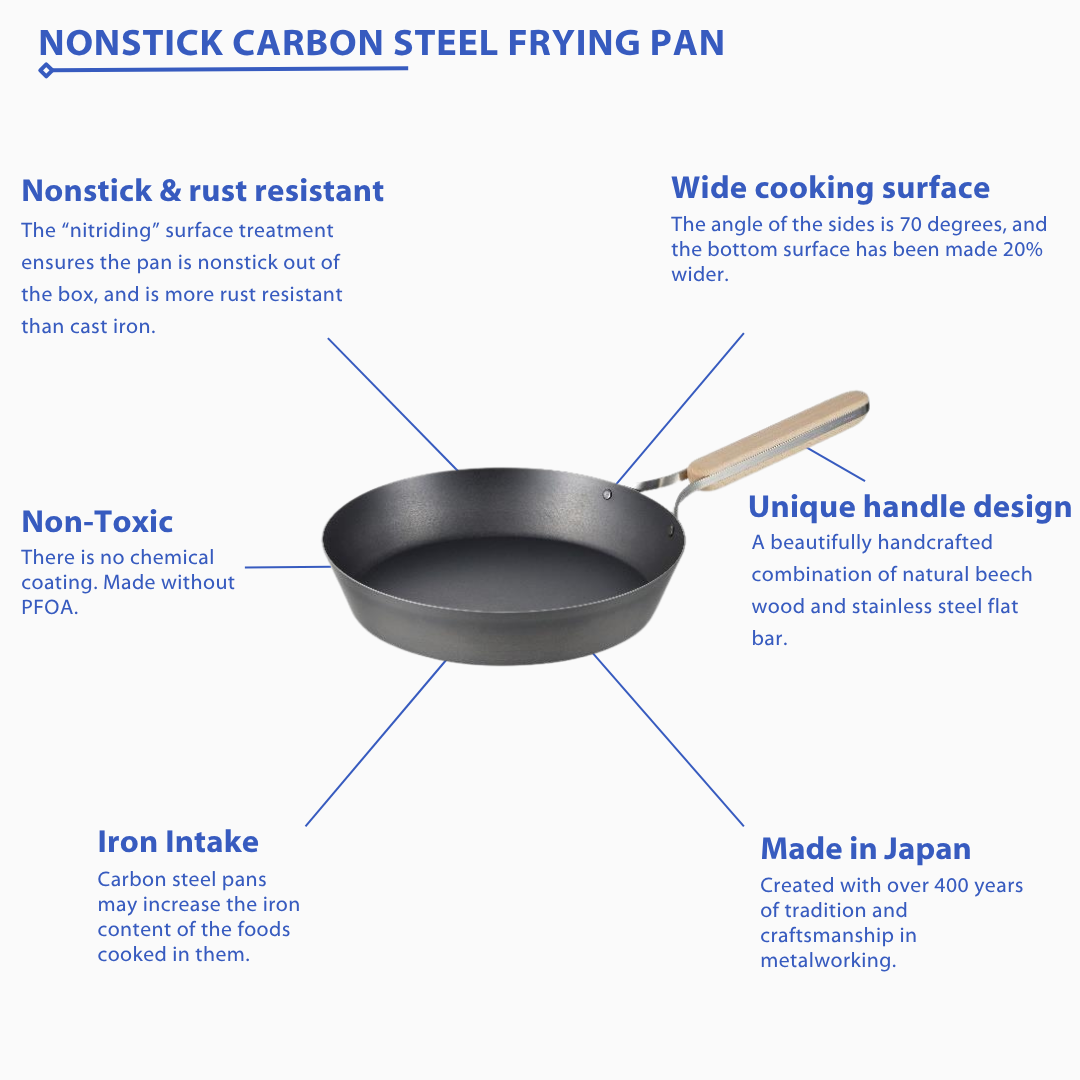
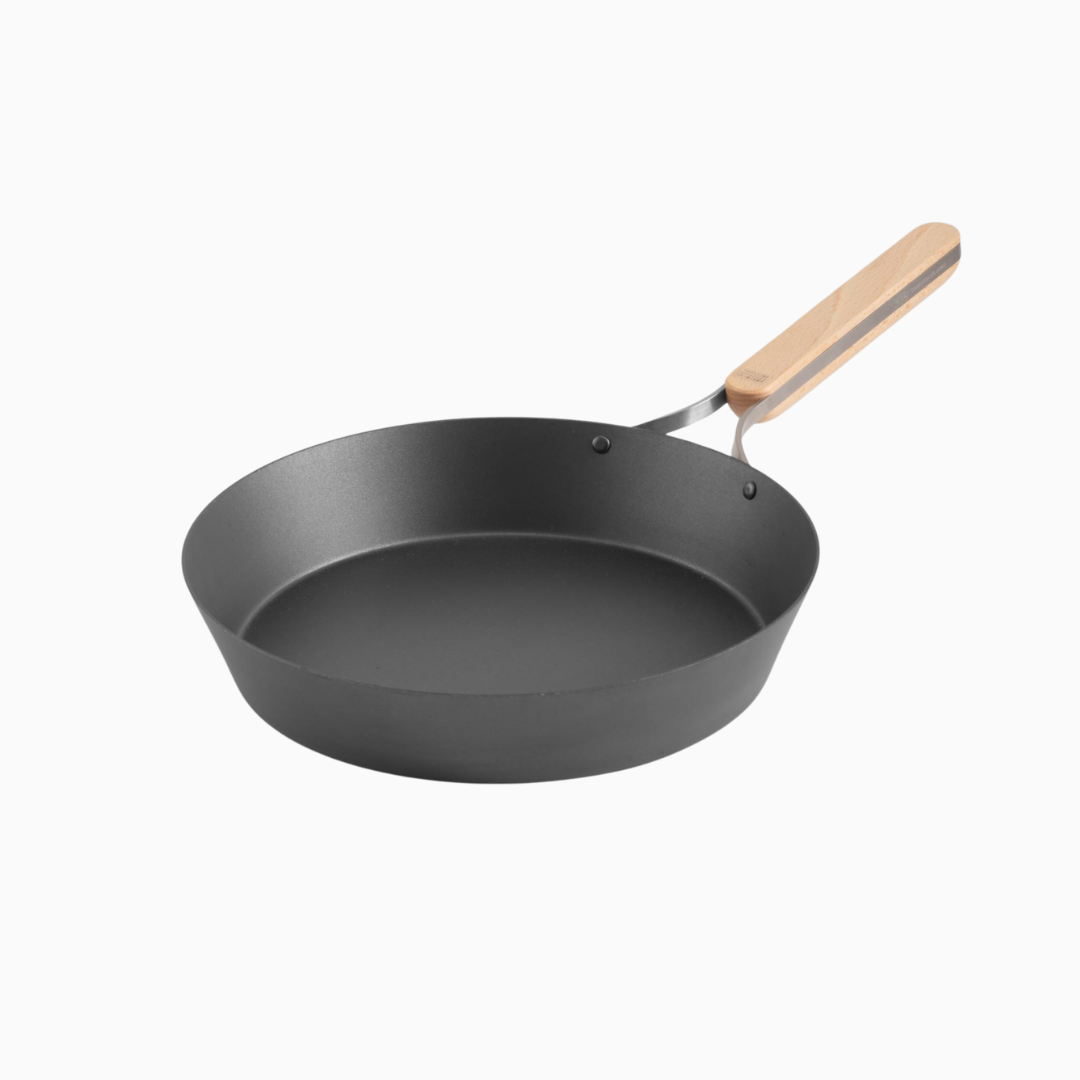
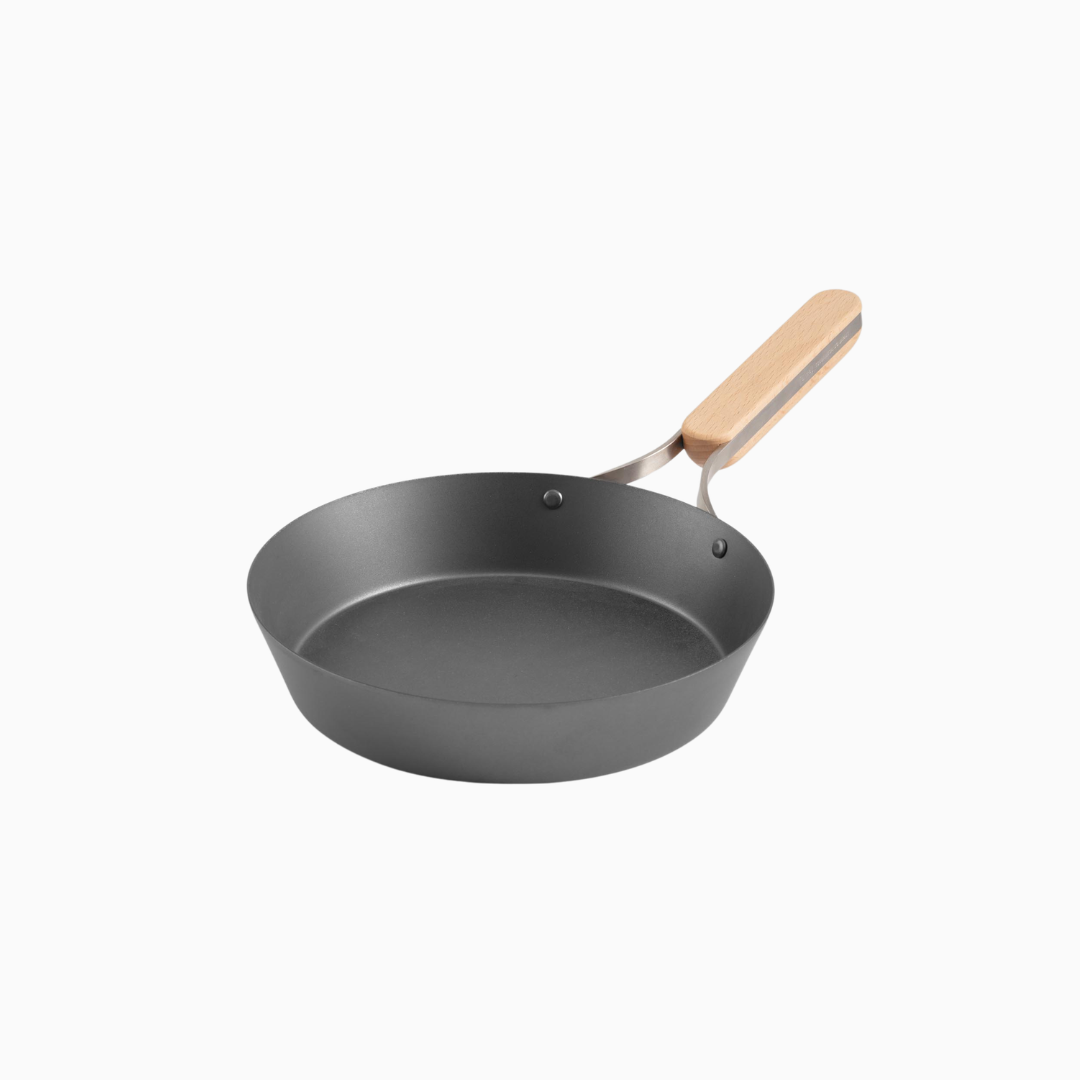
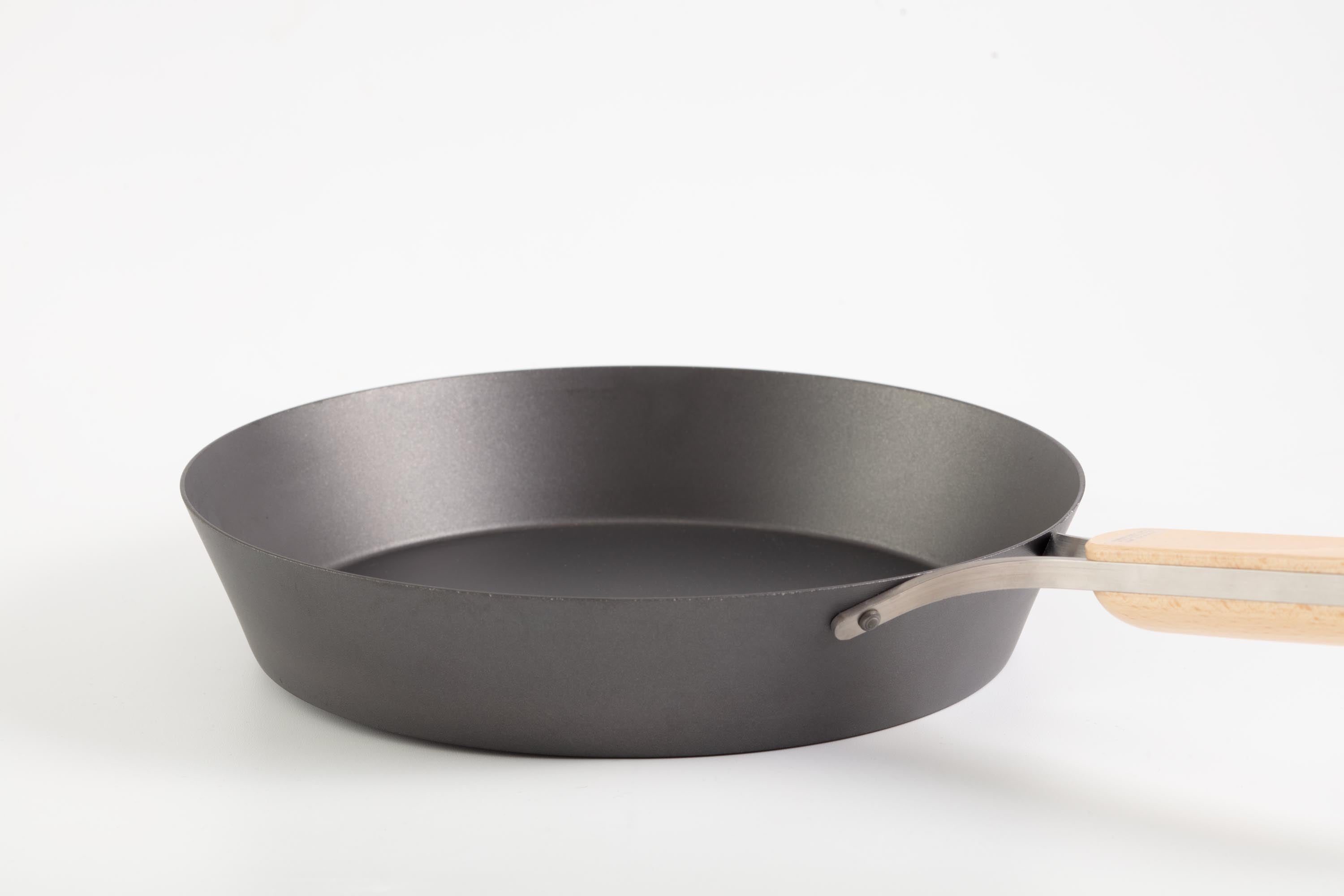
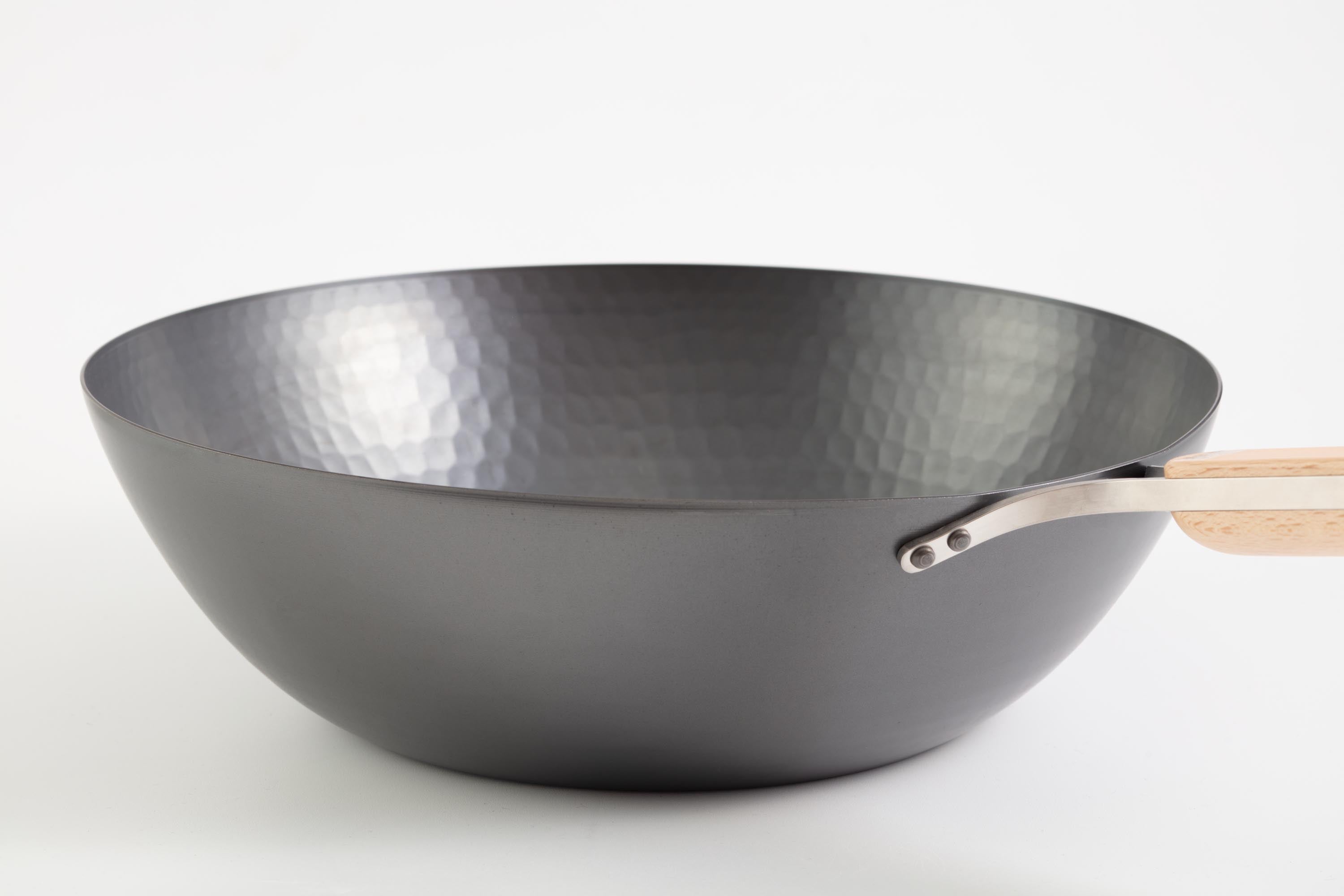
Julien makes nitrided carbon-steel pans (the Enzo line) with no synthetic coating of any kind. That is the honest headline: no PTFE, no PFAS, made without PFOA. The non-stick comes from two places, the metal's nitrided surface and a layer of seasoning (polymerized oil), not from anything sprayed on. Nitriding is an eight-hour heat treatment that diffuses nitrogen into the steel for hardness and corrosion resistance. It is a treatment of the metal, not a coating. The pans arrive pre-seasoned and made in Tsubame-Sanjō, Japan, so you skip the multi-round from-scratch seasoning that classic bare carbon steel demands. Carbon steel is lighter and more responsive than cast iron, and it is magnetic, so it works on induction. Who it suits: cooks who want the permanence of coating-free cookware without the fuss, and who are happy to dry and lightly oil a pan rather than baby a fragile surface. You can see the range at the Enzo pans collection.
Lodge — cast iron, budget-friendly
Cast iron is the oldest coating-free answer there is, and Lodge is the American name most people start with. The pans come pre-seasoned, cost very little, and will outlive you if you treat them reasonably. They are heavier than carbon steel and slower to change temperature, which some cooks love for searing and others find cumbersome. Who it suits: anyone who wants proven, coating-free cooking on a small budget and does not mind the weight.
All-Clad — stainless, the do-everything workhorse
Stainless steel has no coating to fail and no seasoning to maintain. It is dishwasher-friendly, handles acidic foods without complaint, and is the default in most professional kitchens. All-Clad is the widely praised standard here. The catch is that stainless is not naturally non-stick, so eggs and delicate fish take some technique. Who it suits: cooks who want the most low-drama, forgiving coating-free option and are comfortable trading easy release for zero upkeep.
de Buyer — bare carbon steel for purists
de Buyer's Mineral B is a French classic and a longtime reviewer favorite: heavy, thick, honest bare carbon steel. Unlike a nitrided pan, it needs to be seasoned from scratch and then built up over time. Done right, it develops a superb natural non-stick surface. Who it suits: hands-on cooks who enjoy the ritual and want a heavy-duty pan they will maintain for years.
PFAS-free ceramic brands (convenient, but they wear)
Ceramic-coated pans are the easy-release, PFAS-free alternative to Teflon. They are genuinely convenient and slick out of the box. The honest caveat is lifespan: even the good ones are coatings, and coatings degrade. Expect roughly one to three years of prime performance before the non-stick fades, at which point the pan is done. With this group, published testing is the difference between a claim and a fact.
Caraway — the transparent one
Caraway's mineral-based ceramic coating is PFAS-free, and the brand stands out for one reason worth rewarding: it publishes third-party test results. That is exactly the evidence the word "non-toxic" is supposed to imply and rarely does. Who it suits: buyers who want an easy-release ceramic pan and want to verify the claim rather than take it on faith, and who accept that they will replace it eventually.
GreenPan — the ceramic pioneer
GreenPan helped popularize ceramic nonstick with its Thermolon coating and remains one of the better-known PFAS-free names. It behaves like the category as a whole: slick and pleasant early on, with performance that tapers over the years. Who it suits: cooks who like a familiar, widely available ceramic option and understand the coating is a consumable.
Our Place — the design-led choice
Our Place, maker of the Always Pan, brought PFAS-free ceramic to a design-conscious crowd with strong marketing and good looks. The cooking story is the same as the rest of the ceramic group: convenient, attractive, and finite. Who it suits: buyers who value aesthetics and a do-a-lot single pan, and are fine treating the coating as replaceable.
Xtrema — pure ceramic, no coating at all
Xtrema is the outlier in this group because it is not coated ceramic over metal. It is solid ceramic through and through, which technically puts it closer to the coating-free camp: there is no surface layer to wear off. In exchange, it is more brittle than metal and behaves differently on the stove. Who it suits: cooks who want ceramic specifically and prefer a whole-material pan over a coating, and who will handle it gently.
How to choose
Start with the trust filter, then pick your maintenance tolerance. If you want something that lasts effectively forever and you never want to think about a coating, go coating-free: stainless if you want zero upkeep, cast iron if budget matters, bare carbon steel if you enjoy the craft, and nitrided carbon steel if you want coating-free without the from-scratch seasoning. If you want the slick, easy release of a nonstick and accept replacing it every few years, choose a ceramic brand, and favor one that publishes its testing. For the full breakdown, see our non-toxic cookware guide, and if the carbon-steel route appeals, our take on whether carbon steel is safe.
One honest note on carbon steel and cast iron, since we sell the former: both react with very acidic foods like tomato sauce or a long deglaze with wine, which can strip seasoning and leave a faint metallic note. Cook those in stainless instead. Bare iron surfaces also add a little dietary iron to your food, which is a plus for most people but worth knowing if you have hemochromatosis. None of this makes the cookware "toxic." It just means matching the pan to the dish.
Frequently asked questions
Is "non-toxic cookware" a regulated term?
No. There is no official standard behind it. Treat it as marketing until a brand backs it up with either no coating or published third-party testing.
Which is safer, coating-free or PFAS-free ceramic?
Both avoid PFAS. Coating-free has nothing to wear off and lasts indefinitely. PFAS-free ceramic is convenient but degrades over roughly one to three years, so you replace it periodically.
Is nitrided carbon steel the same as a nonstick coating?
No. Nitriding is a heat treatment that hardens the steel's own surface. There is no coating applied, so there is nothing to flake or off-gas. The non-stick comes from that surface plus seasoning.
Do I still need to season a nitrided carbon-steel pan?
Less than a bare one. Julien's Enzo pans arrive pre-seasoned, so you skip the from-scratch build-up. You maintain the seasoning over time by drying the pan and giving it a light coat of oil.