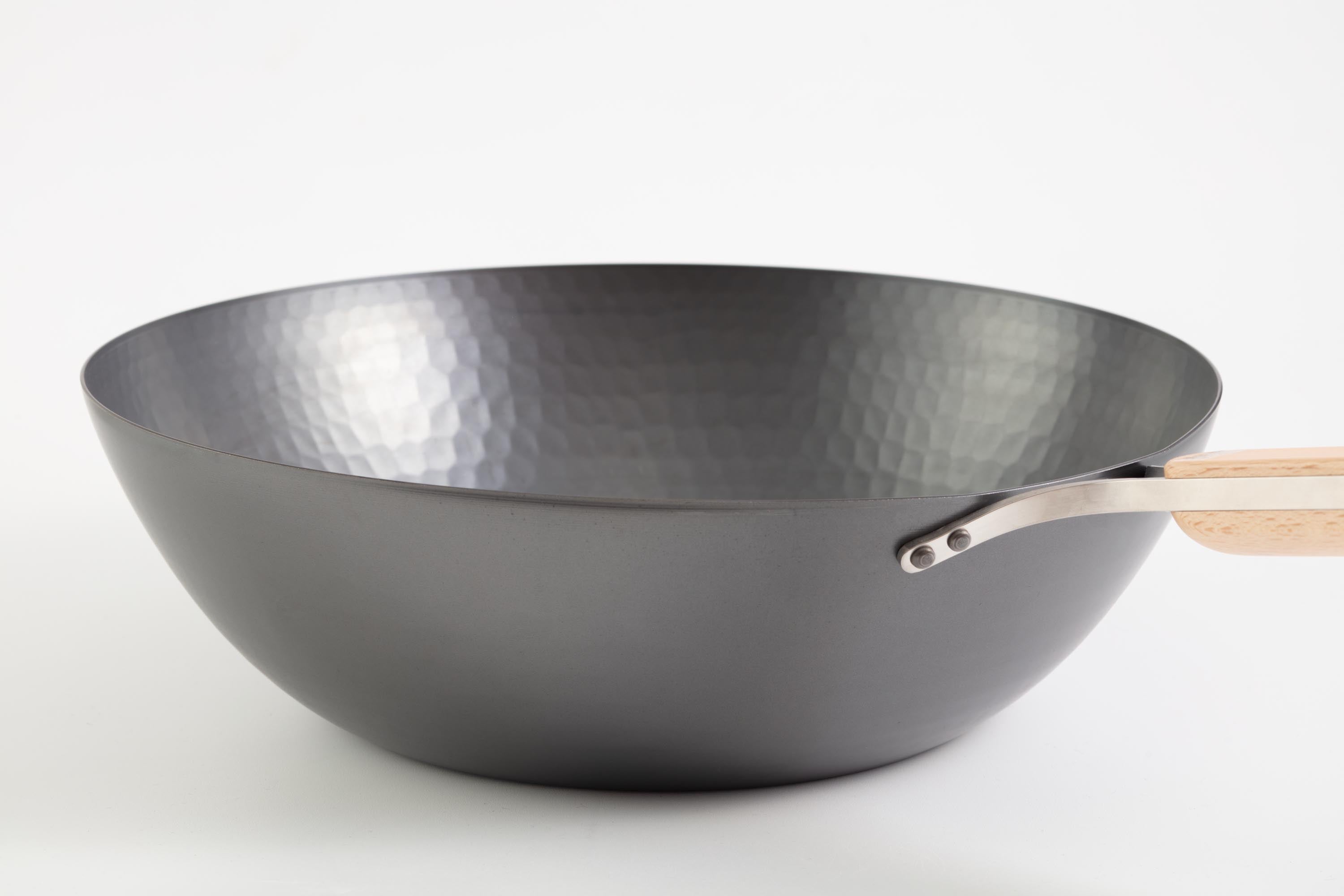
The short answer
- A carbon steel skillet is iron with a little carbon. It is lighter and more responsive than cast iron, and it takes very high heat.
- It sears well, moves from stove to oven without complaint, and cooks eggs cleanly once it is seasoned.
- Its non-stick comes from seasoning, a thin layer of polymerized oil, not a synthetic coating.
- For most home cooks, one 10-inch skillet does the daily work. Add a larger or smaller pan as you go.
A carbon steel skillet sits in a quiet middle ground. It is not as heavy as cast iron and not as fussy as it looks. Once you understand what it is and how it wants to be used, it becomes the pan you reach for without thinking. Here is the plain version.
What is a carbon steel skillet?
Carbon steel is iron with a small amount of carbon added. That is the whole recipe. It is the same family as cast iron, but where cast iron is thick and poured into a mold, carbon steel is rolled thinner. The result is a pan that heats faster, responds faster when you change the burner, and weighs less in your hand.
Because it is mostly iron, it is magnetic, so it works on an induction cooktop as well as gas, electric, or a flame. It is bare metal. There is no synthetic layer between the food and the steel.
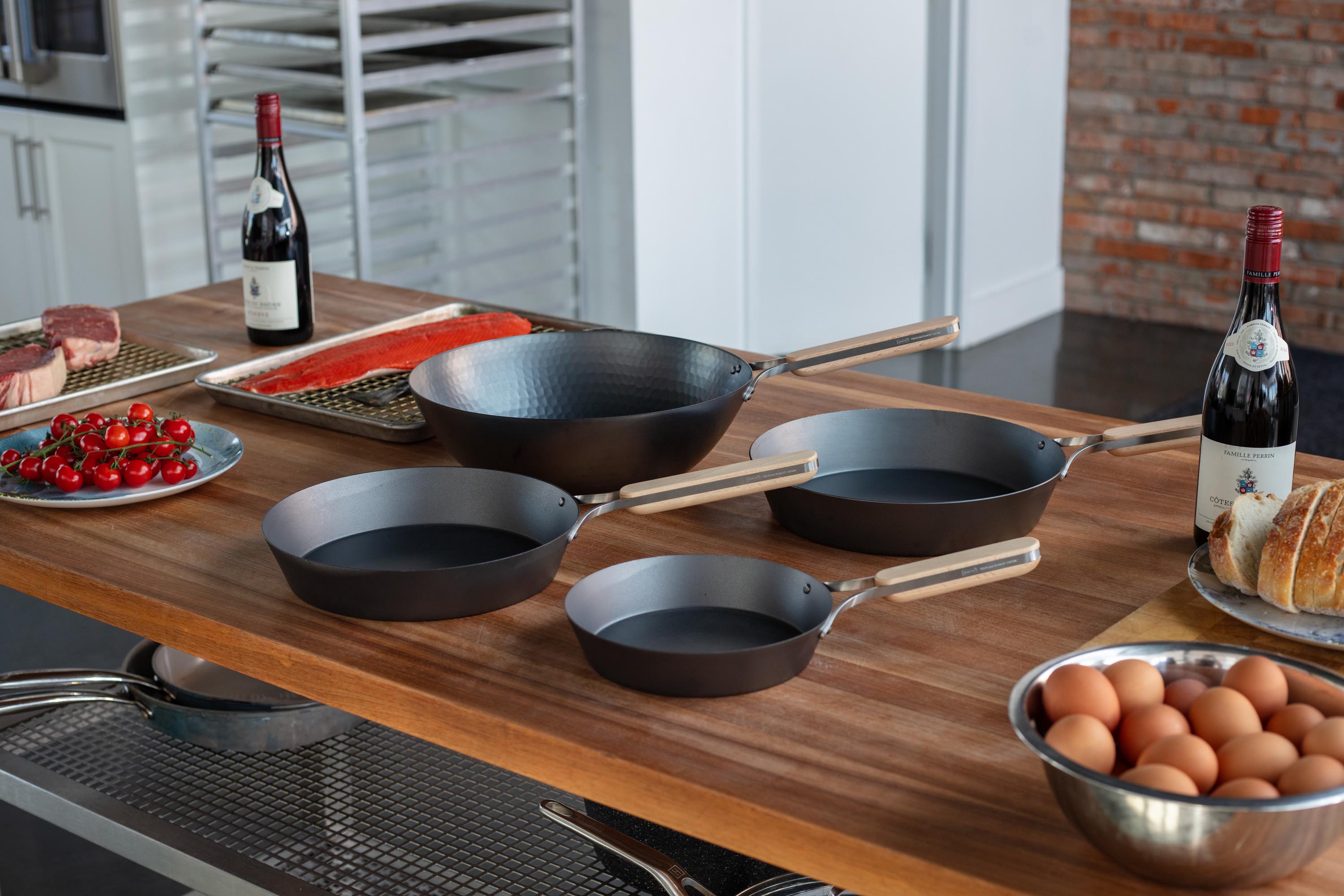
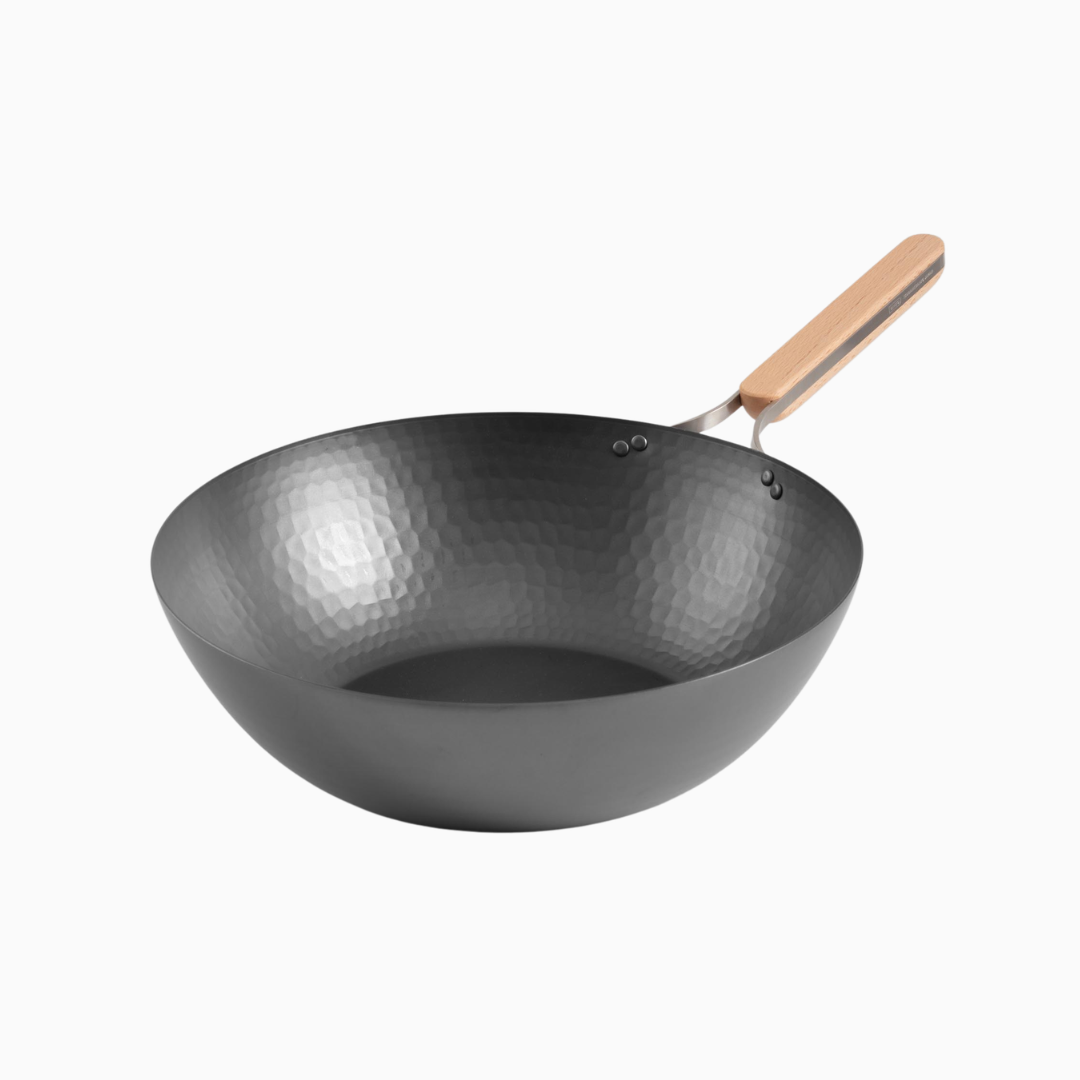
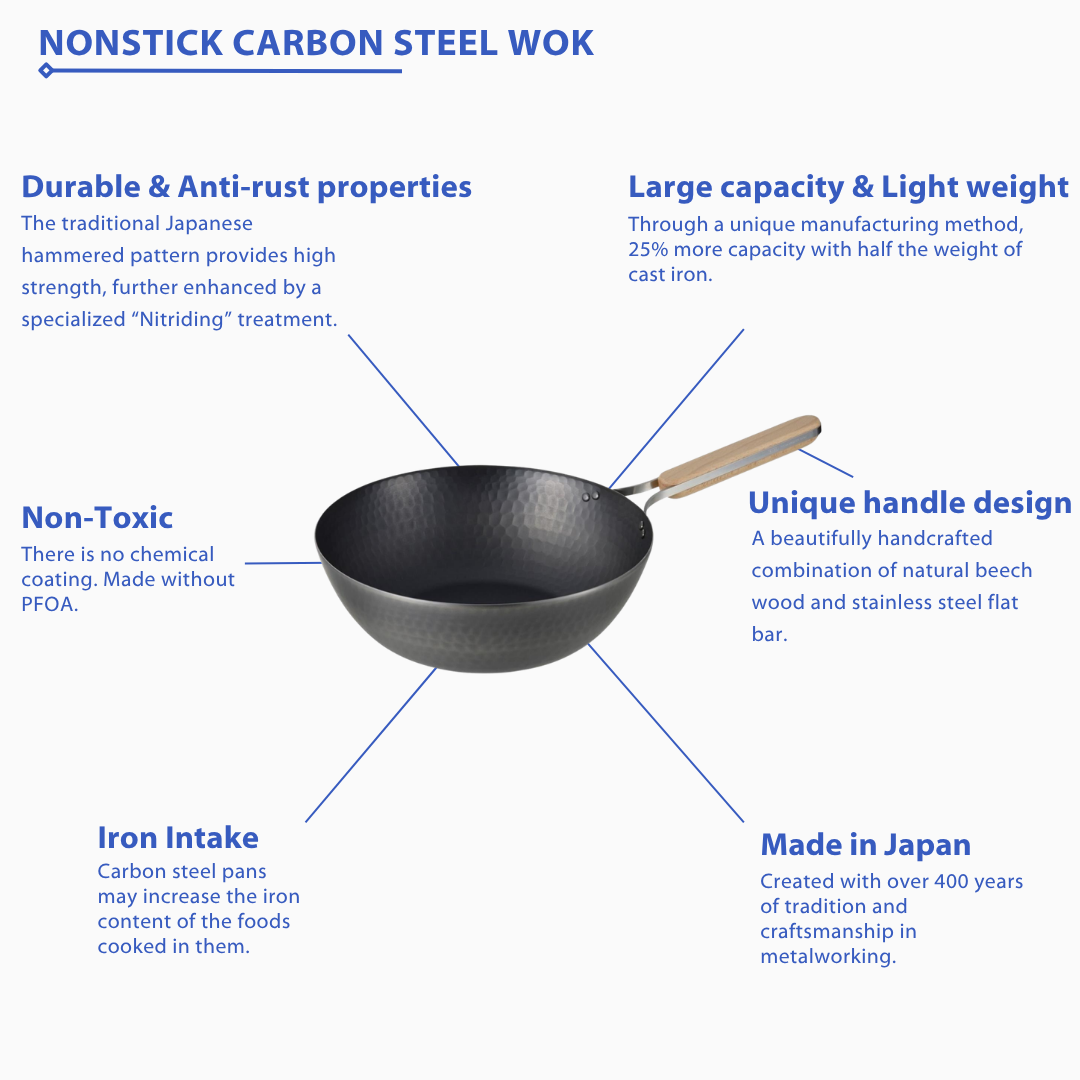
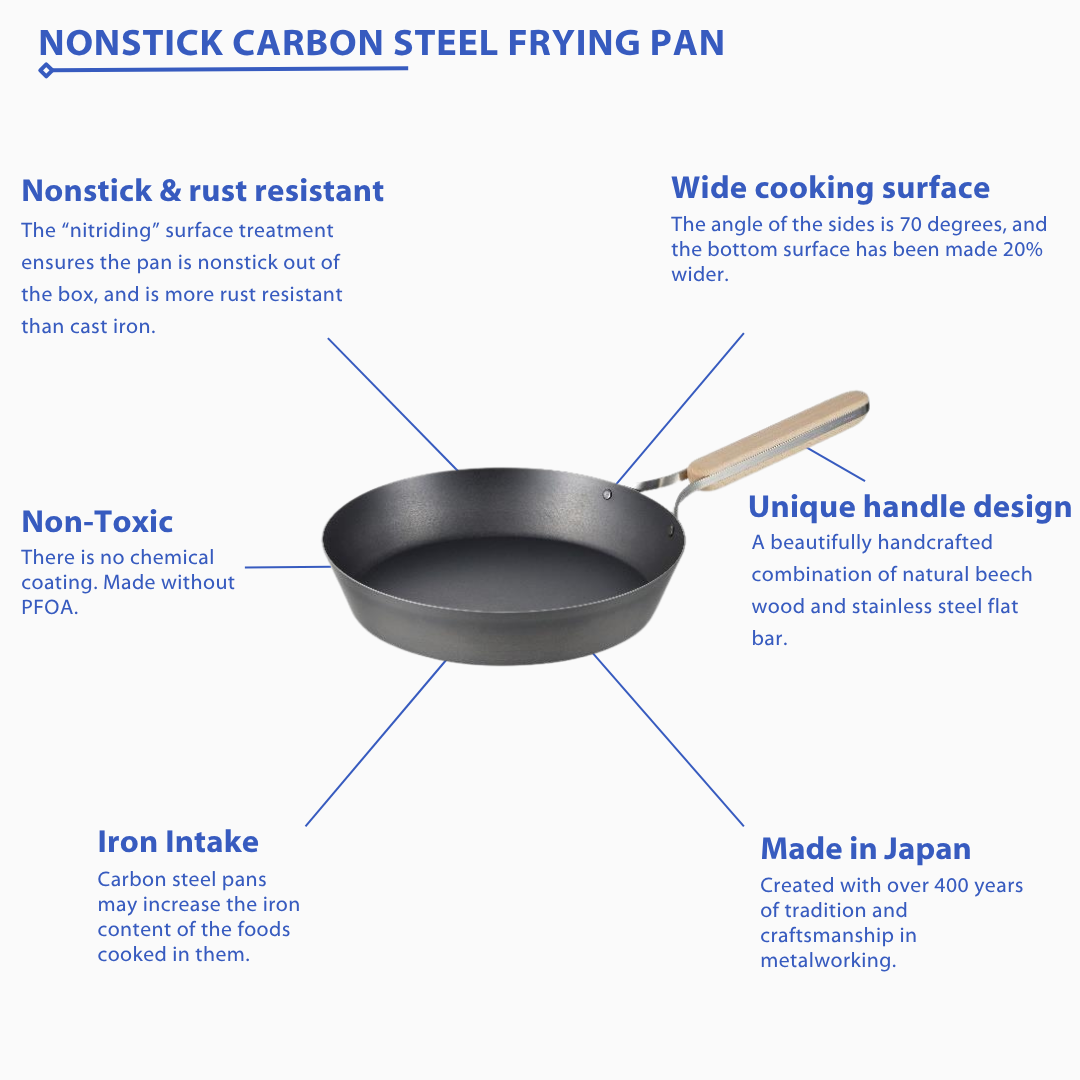
Our Enzo pans start from that bare metal and go one step further. They are nitrided, an eight-hour heat treatment that diffuses nitrogen into the surface of the steel. That makes the surface harder and more resistant to wear and rust. It is a treatment of the metal itself, not a coating, so there is nothing to chip or scratch off. The pans are made in Tsubame-Sanjo in Niigata, Japan, a region that has been working metal for around four hundred years.
What is a carbon steel skillet good at?
Searing is where it shines. A carbon steel skillet takes high heat and holds it, so a steak or a chicken thigh hits the surface and browns instead of steaming. You get a proper crust and the fond, those browned bits stuck to the pan, that make a good sauce.
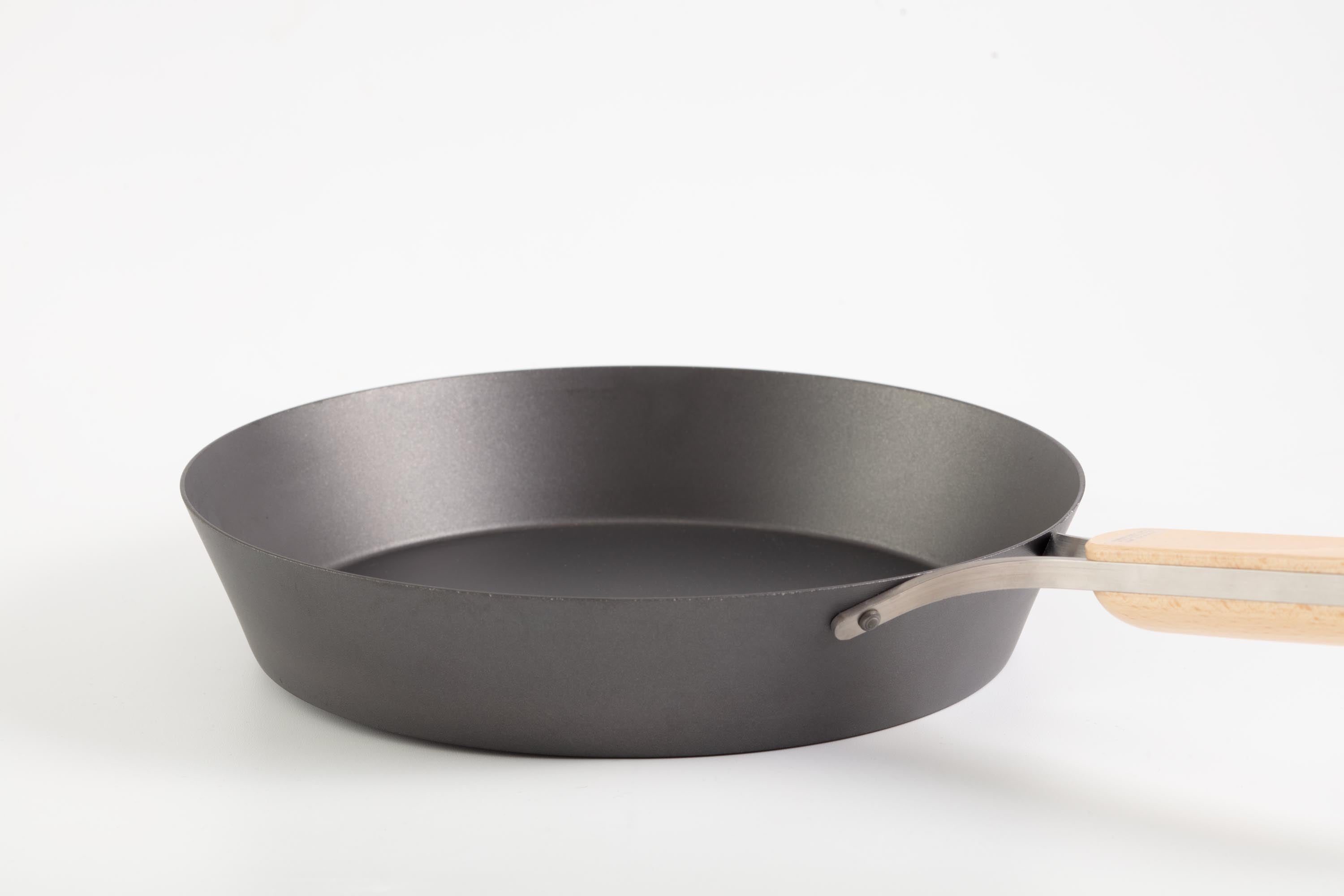
It also goes from stove to oven and back. There is no plastic handle to worry about and no coating to degrade, so you can start a piece of fish on the burner, slide the whole pan under the broiler, and finish it there. The Enzo handles are beech wood with 304 stainless, so treat wood with the usual care around sustained oven heat.
And eggs, eventually. This is the part people doubt. A new carbon steel pan will stick. But as the seasoning builds, a thin film of oil polymerized onto the surface by heat, the pan becomes genuinely slick. A well-seasoned skillet will slide an omelet onto the plate as cleanly as anything in your kitchen. It just asks you to earn it over the first few weeks of cooking.
Carbon steel vs. nonstick vs. cast iron
Against a nonstick pan, the trade is simple. A PTFE or ceramic nonstick pan is effortless on day one and slick without any effort from you. But those coatings wear down, they do not love high heat, and eventually the pan is done and gets thrown out. A carbon steel skillet is the opposite. It asks for a little work up front, then rewards you with high-heat searing a nonstick pan cannot do, and it can last for decades. Its non-stick also comes from seasoning rather than a manufactured layer.
Against cast iron, the difference is weight and speed. Cast iron holds heat beautifully and is wonderful for long, steady cooking. But it is heavy, and it is slow to react when you turn the heat up or down. Carbon steel gives you most of the same searing ability and the same rugged, season-it-yourself surface, in a pan you can lift with one hand and control minute to minute.
If you are wondering about the metal touching your food, we cover the details, including nitriding and what "no coating" actually means, in our note on whether carbon steel cookware is safe.
How do I choose a skillet size?
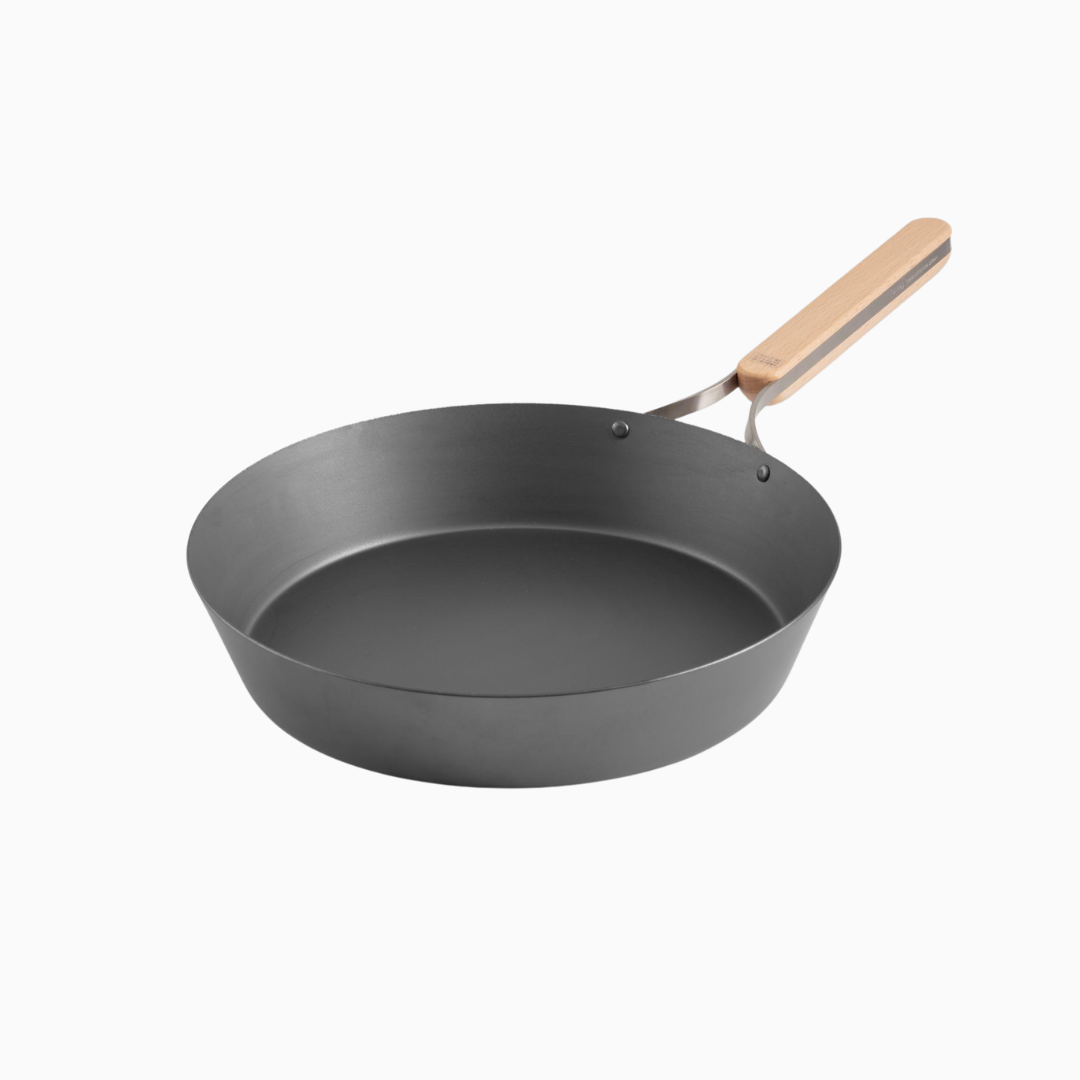
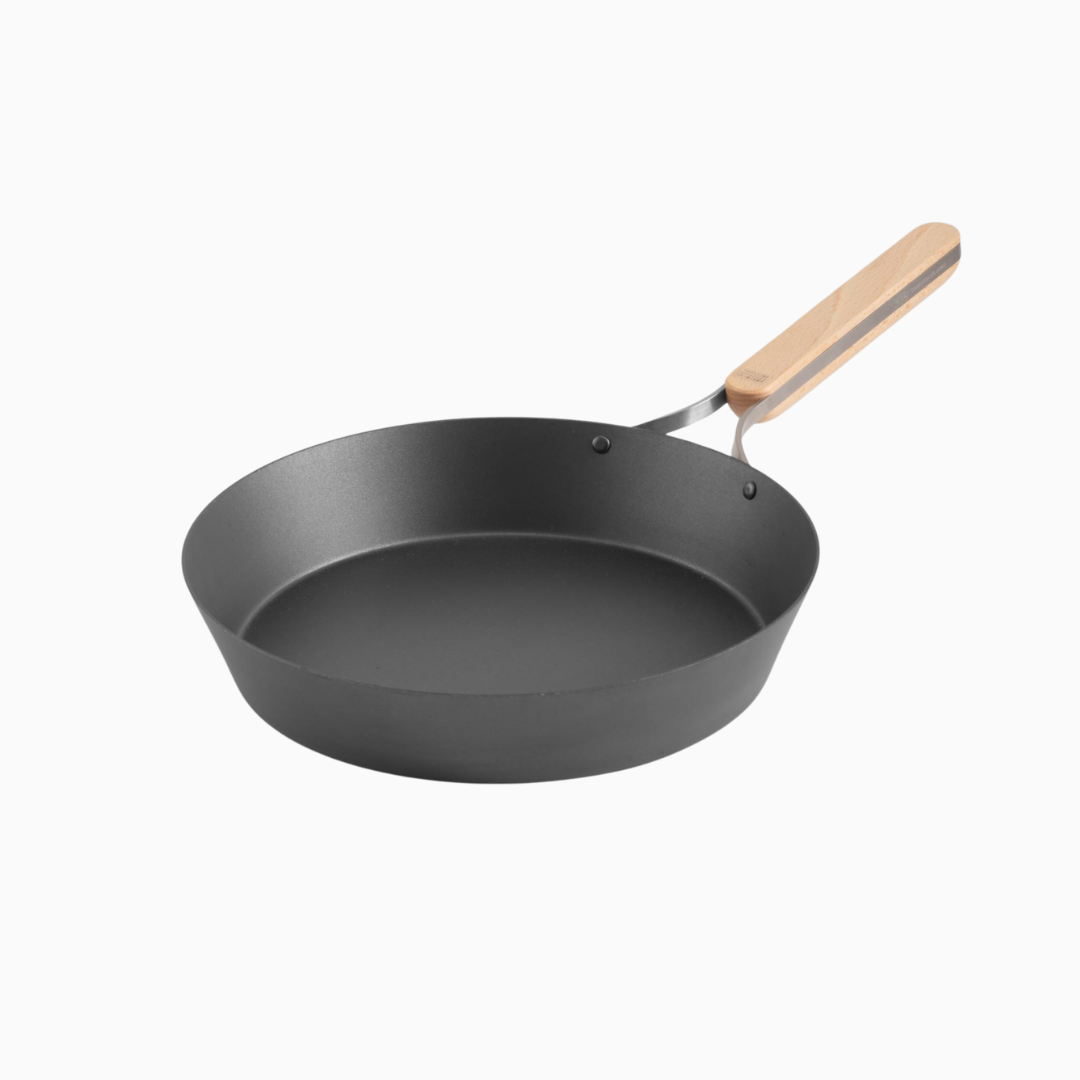
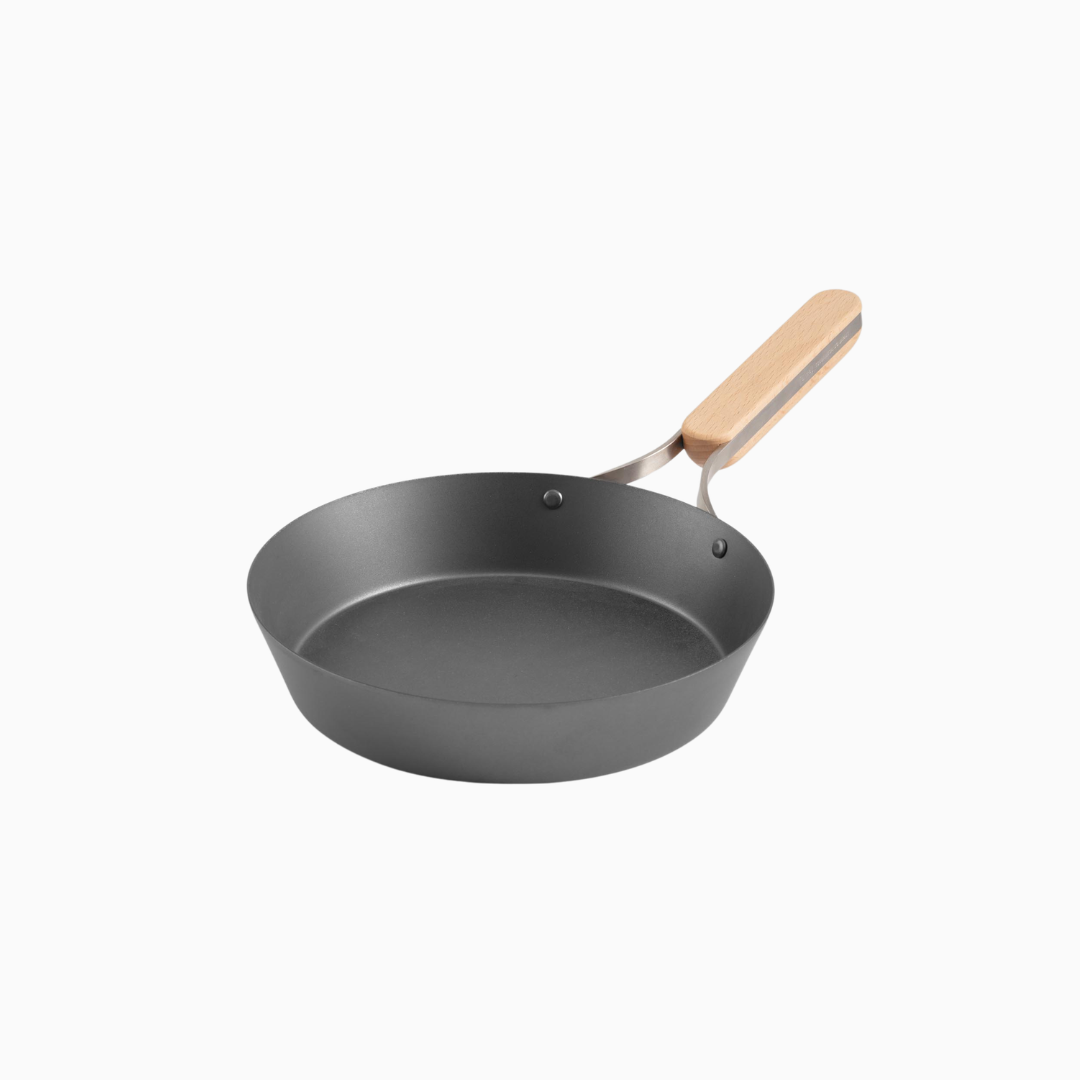
Start with how many people you cook for and how much counter space you want to give up. For most households, a 10-inch skillet is the honest answer. It is big enough to sear two portions or scramble a few eggs, and small enough to handle and store easily. Our Enzo 10" nitrided carbon steel frying pan is the one we would hand a new cook first.
Go larger if you regularly cook for four or more, or if you like to brown a full batch of vegetables without crowding the pan. Crowding is the enemy of a good sear; food steams instead of browning. Go smaller if you mostly cook for one, or want a dedicated egg-and-toast pan. Many cooks end up with two sizes and let the day decide.
Living with a carbon steel skillet
The care is not complicated, but it is real. After cooking, clean the pan and dry it, then wipe on a very thin film of oil before it goes away. Left wet, bare steel can rust. It is not a disaster if it does; rust cleans off and the pan is fine.
One honest caveat: carbon steel reacts with very acidic foods. A long-simmered tomato sauce or a squeeze of lemon left sitting can strip some of your seasoning and leave a faint metallic note. It is not harmful, but it is why most people reach for stainless or enamel when acid is the main event. For everything else, from a morning egg to a Friday steak, the skillet is right at home.
Frequently asked questions
Is a carbon steel skillet non-stick?
Not out of the box. Its non-stick comes from seasoning, a thin layer of oil polymerized onto the surface over time. Once the pan is well seasoned, eggs and delicate foods release cleanly.
Does a carbon steel skillet work on induction?
Yes. Carbon steel is mostly iron and therefore magnetic, so it works on induction as well as gas and electric.
What is the difference between carbon steel and cast iron?
Both are iron with carbon. Carbon steel is rolled thinner, so it is lighter and heats and reacts faster. Cast iron is thicker and holds heat longer but is heavier and slower to respond.
What size carbon steel skillet should I buy first?
A 10-inch skillet suits most home cooks. It sears two portions or a few eggs and is easy to handle. Add a larger or smaller pan later if your cooking calls for it.