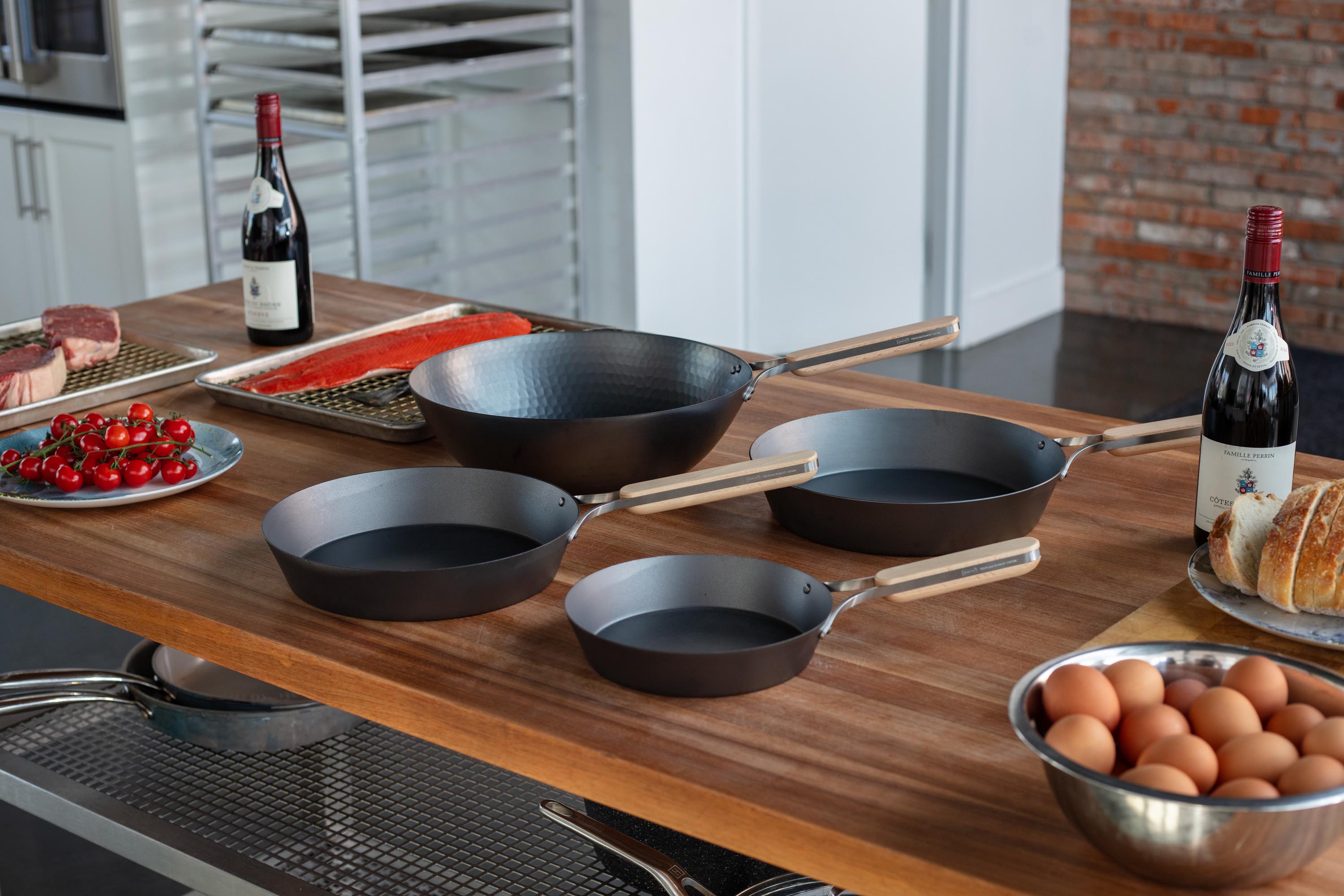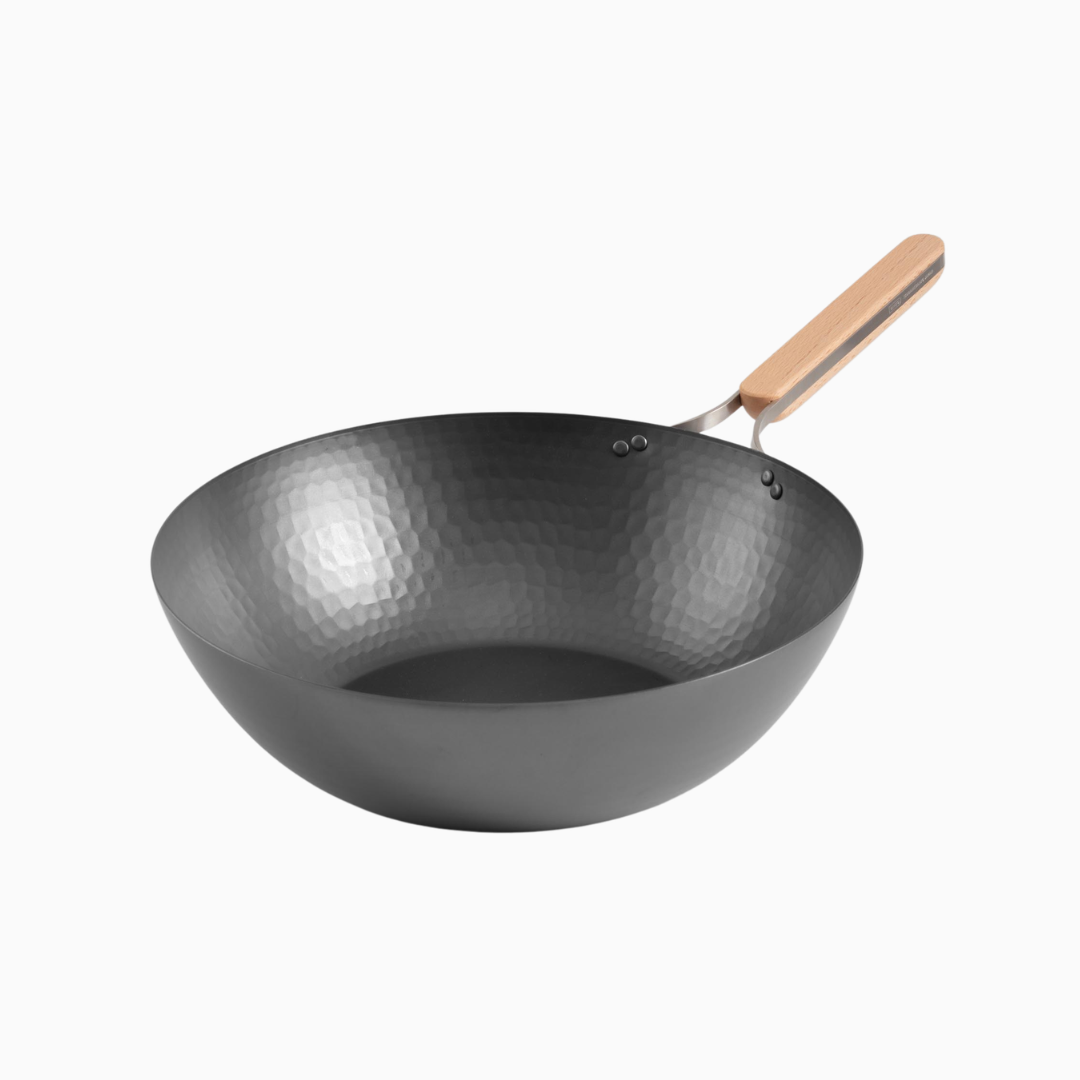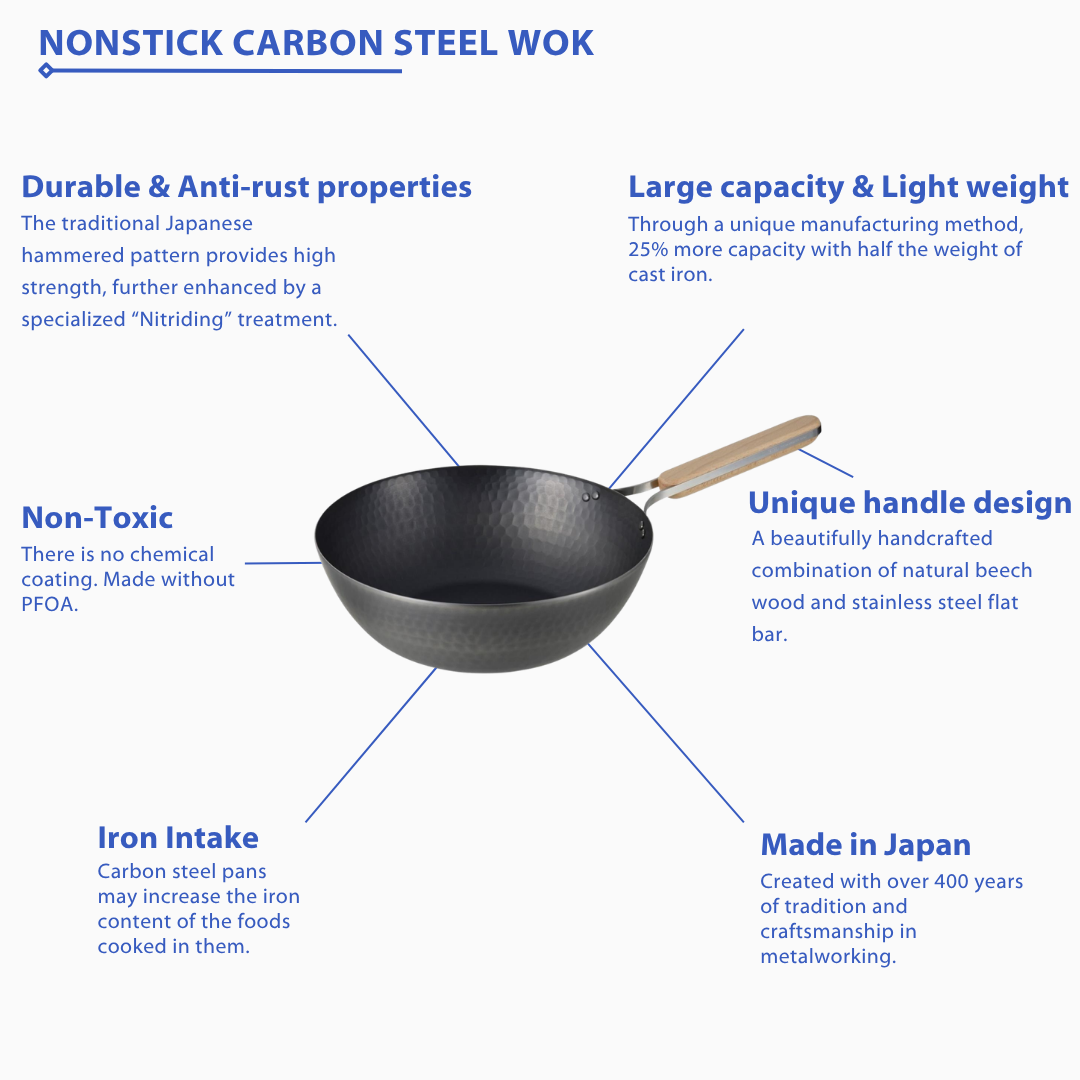
High Heat and Carbon Steel: Why This Combination Is Unmatched
Carbon steel and high heat were made for each other. The pan heats quickly and evenly, the surface handles temperatures that would destroy a non-stick coating, and the results — a proper sear, a real crust, the kind of caramelization that makes a piece of protein taste like it came from a restaurant — are consistently better than what any coated pan can deliver. That said, there is an important nuance: the goal is the right temperature, not the maximum temperature.
The Maillard Reaction
What we call a 'sear' is actually a family of chemical reactions — the Maillard reaction — that occur when proteins and sugars in food are exposed to high heat. These reactions produce hundreds of flavour compounds and create the browned, crusted surface that's the goal of high-heat cooking. For the Maillard reaction to work efficiently, the pan needs to be genuinely hot. The difference between 180°C and 230°C on the cooking surface is the difference between a pale, slightly stuck piece of protein and a deeply browned, naturally releasing sear.
Why Coated Pans Can't Compete
Non-stick coatings begin to degrade at around 260°C (500°F). Most manufacturers actively discourage using their pans at high heat. This creates a fundamental tension: the temperatures required for a good sear are incompatible with the safe operating range of non-stick cookware. Carbon steel, by contrast, thrives at temperatures that would ruin a coated pan. There is no upper limit that matters in home cooking.
How to Preheat Properly
Julien pans respond quickly to burner changes and reach cooking temperature faster than most cooks expect. For searing, the recommended approach is medium heat with a longer preheat, rather than blasting on high from the start. Place the pan over medium heat for two to three minutes. For harder searing tasks, you can increase briefly to medium-high, but prolonged high heat risks overheating the oil, burning food before it can cook through, or warping the pan.
Judge readiness by sensory cues: hold your palm a few inches above the pan — it should feel clearly hot but not violently hot. The oil should shimmer when added. A drop of water should skitter across the surface for searing. You do not need a high-power burner; you need the right pan temperature.
A properly preheated carbon steel pan will show oil shimmering as soon as it's added; the food sizzles on contact and releases naturally when a crust forms. Don't overcrowd the pan — every piece of food lowers the surface temperature. Cook in batches if necessary.
The Results
A proper sear on a well-heated carbon steel pan produces a crust that releases naturally when ready. If you try to move the protein and it resists, it isn't done. Wait. It will let go cleanly, with better colour and more flavour than a coated pan at lower temperatures can produce. This isn't technique mysticism — it's chemistry, and the pan is the prerequisite.
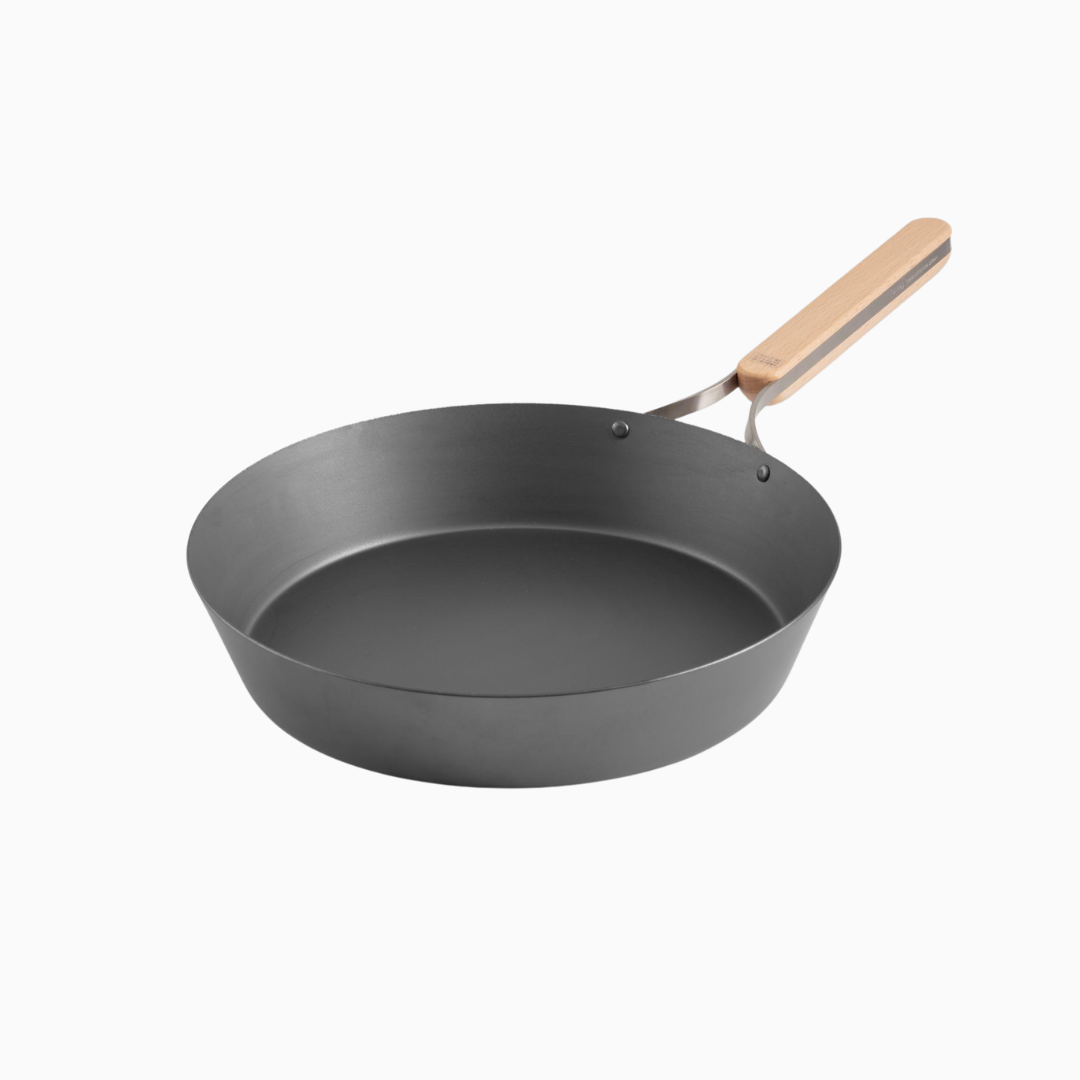
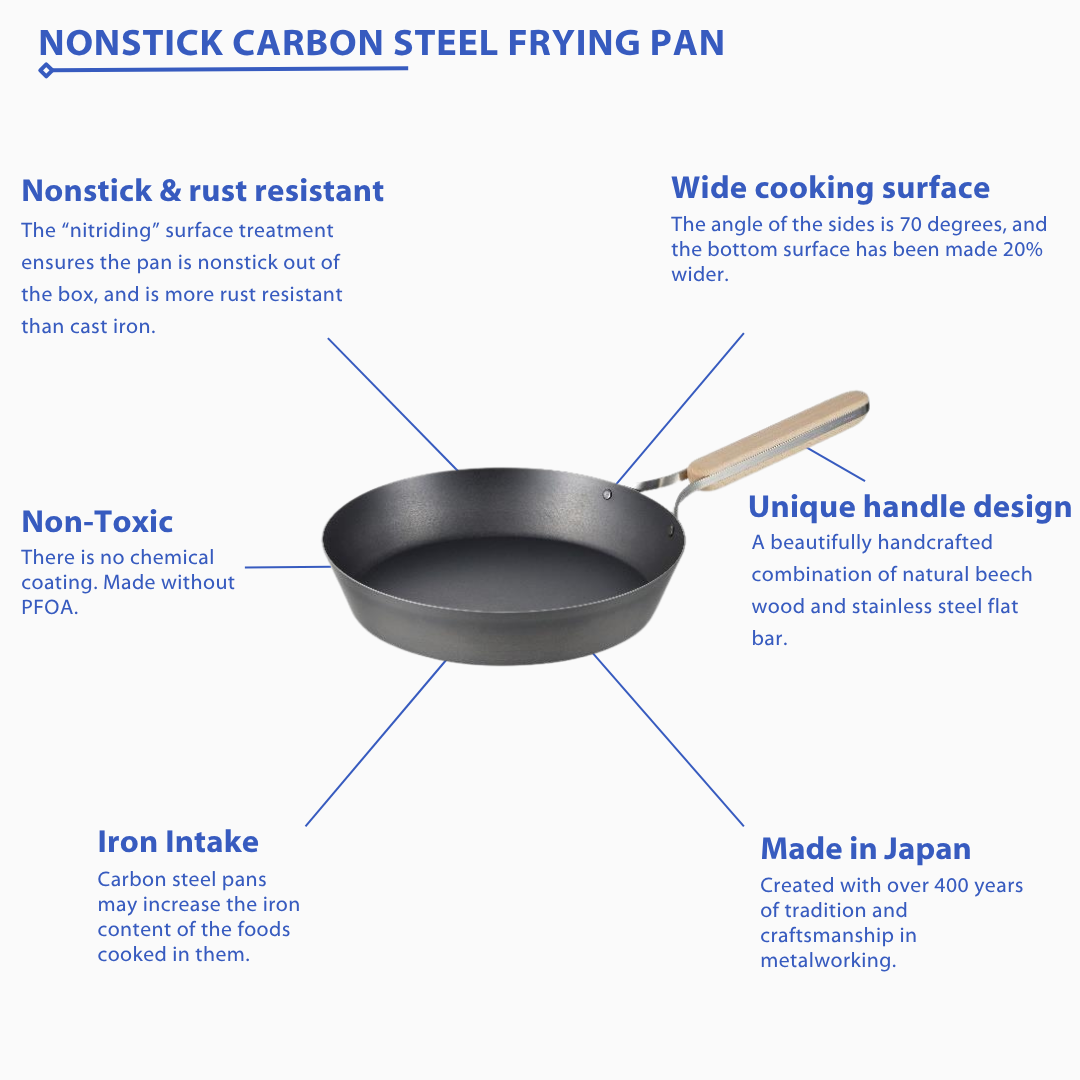
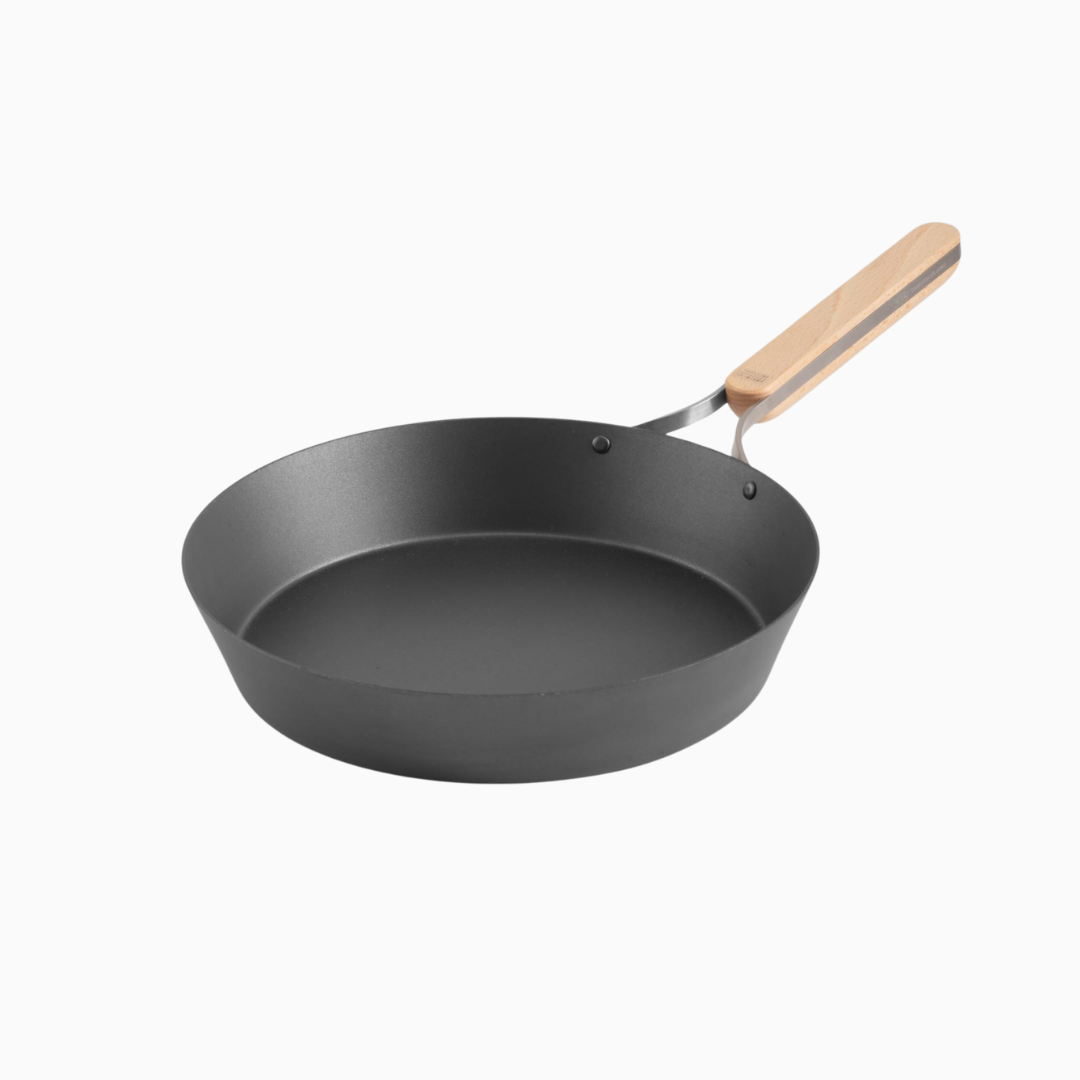
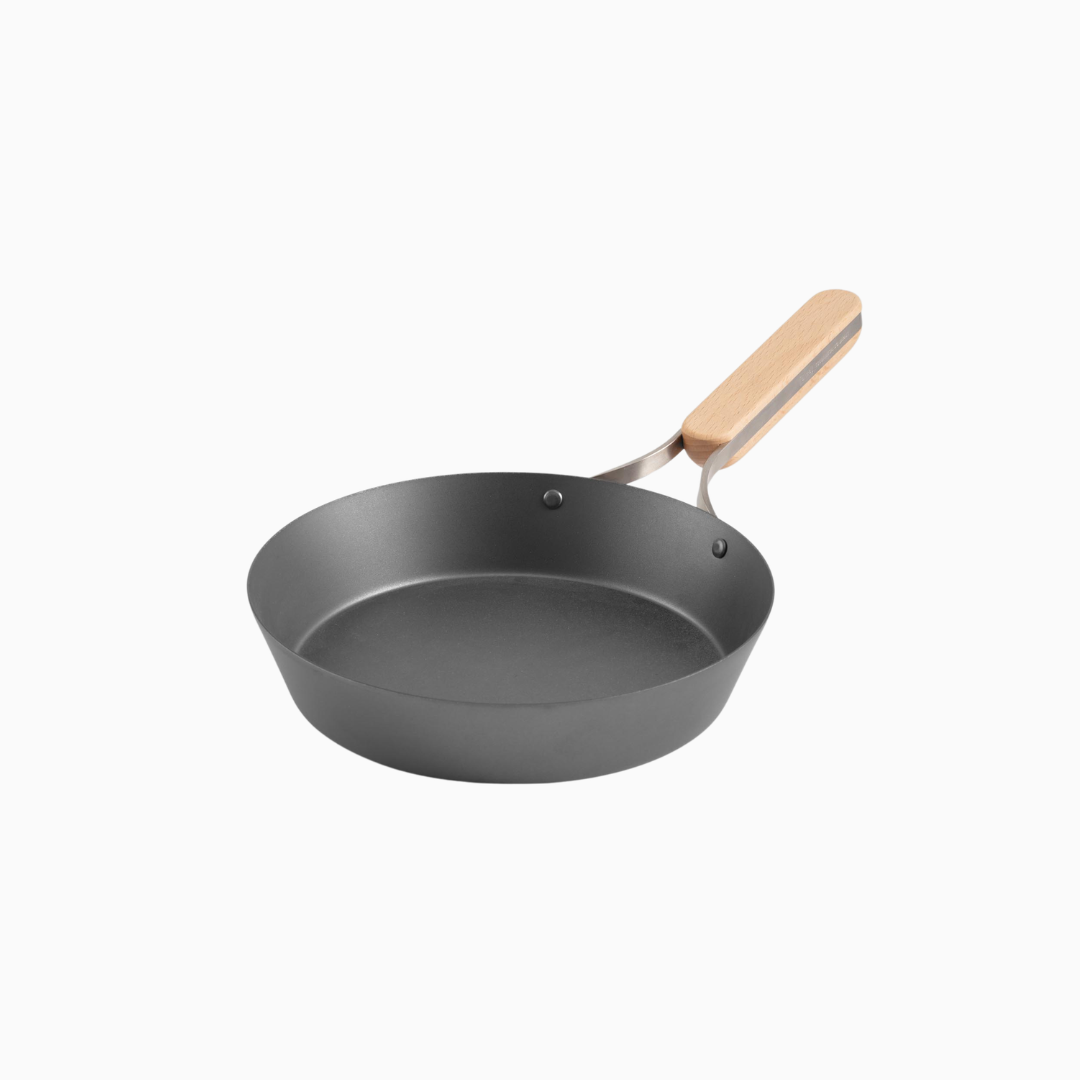
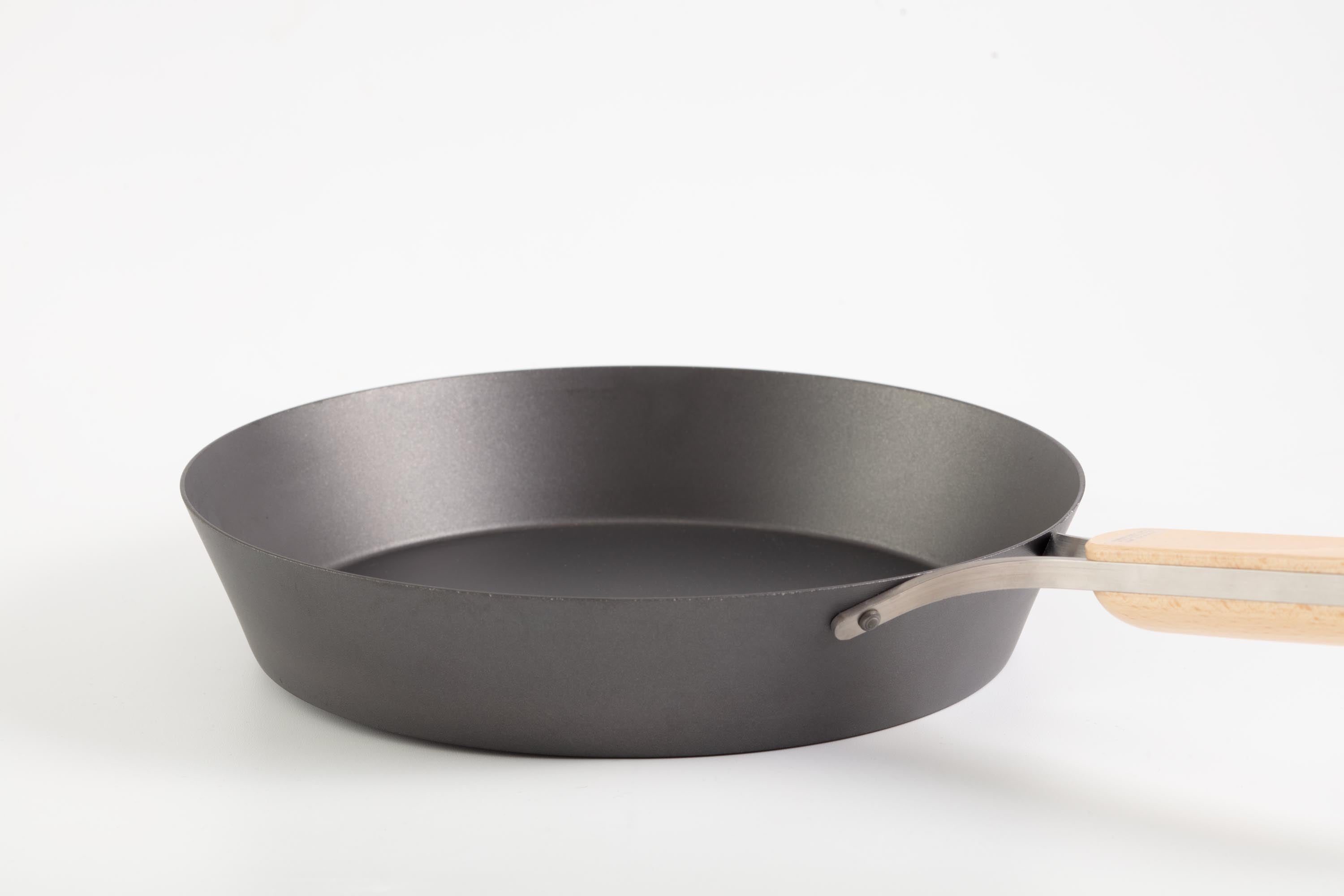
The Julien Enzo 11" Nitrided Carbon Steel Frying Pan was built for the sear. See what it can do.